
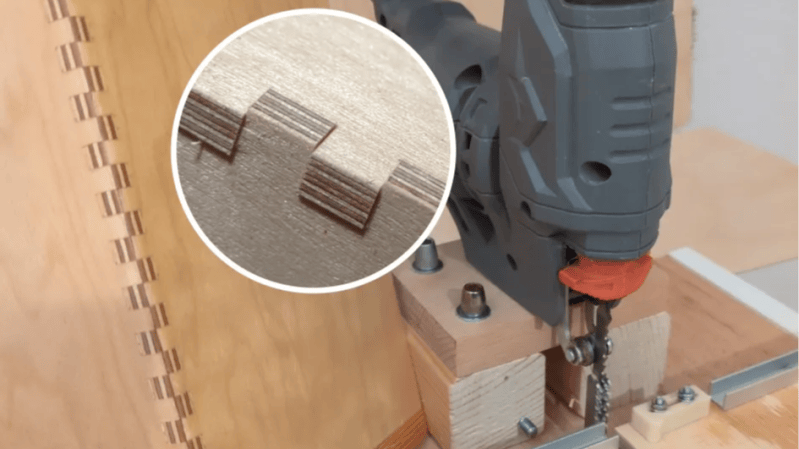
Around these parts, finger joints (or box joints) are usually the product of laser cutting. [bluesyann] shows us a method of using a stationary jigsaw, a custom blade, and 3D-printed jig to create a DIY box joint cutter whose results look impressive. What’s appealing is not just the end result, but the fact that the whole system is made from little more than an inexpensive tool, scrap wood, and common hardware.
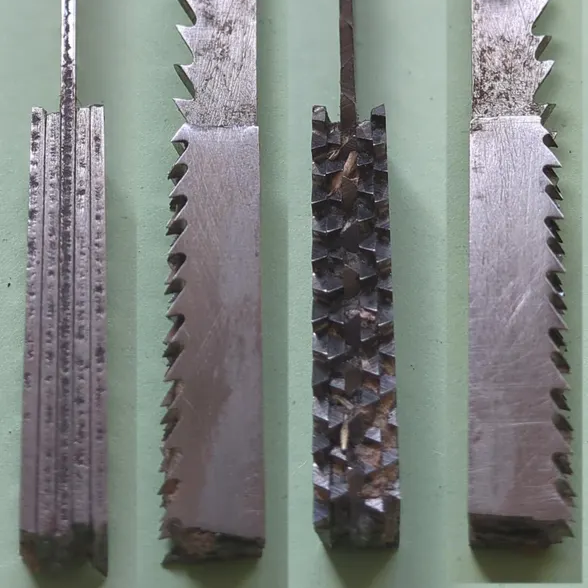
In [bluesyann]’s system, the jigsaw is fixed in place to make a stationary cutter. The saw itself is nothing special; it’s the wide blade that makes the difference. It cuts a notch in a single go, and it’s made by epoxying together multiple blades to make a single extra-wide one. Jigsaw blades are not expensive, and they’re easy to snap into pieces. By using a total of three blades (snapping two of them into pieces) one can create the wide version shown here.
With a stationary jigsaw sporting an extra-wide blade that cuts the same notch every time, all that remains is a way to get the spacing right. The solution there is a 3D-printed jig that each freshly-cut notch fits onto as the next one is cut.
There are a few other details, but those are the important bits. One does have to do a bit of trial and error to get things dialed in, but once they are, it’s off to the races.
If one prefers a less hands-on method of cutting box joints, check out this robotic table saw which automates the process.












Please be kind and respectful to help make the comments section excellent. (Comment Policy)