
 After previously adopting a big Sony Trinitron CRT TV that had been trying to hitch a ride along the side of a road in Italy for at least six years, [Happychoice] didn’t give up on trying to fix it, with the second part showing the TV being more or less fully fixed up.
In the first part of this mini-series, the TV had been salvaged and had most of the dirt as well as local flora and fauna evicted before an attempt was made to fix it. Unfortunately despite the insides looking remarkably clean and intact considering its use as a road-side ornament, that video ended with the controller refusing to power up due to issues with the power supply.
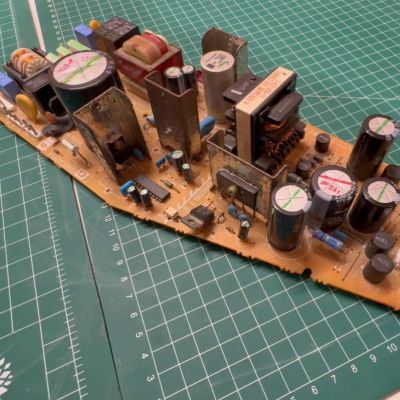
In this sequel we get to see what six years of weather exposure means in terms of what components to replace in a CRT TV like this. Unsurprisingly this means mostly replacing most of the capacitors, at least on the power supply board, as well as the neck board for the actual CRT. A couple of MOSFETs also tested open, so they were replaced too.
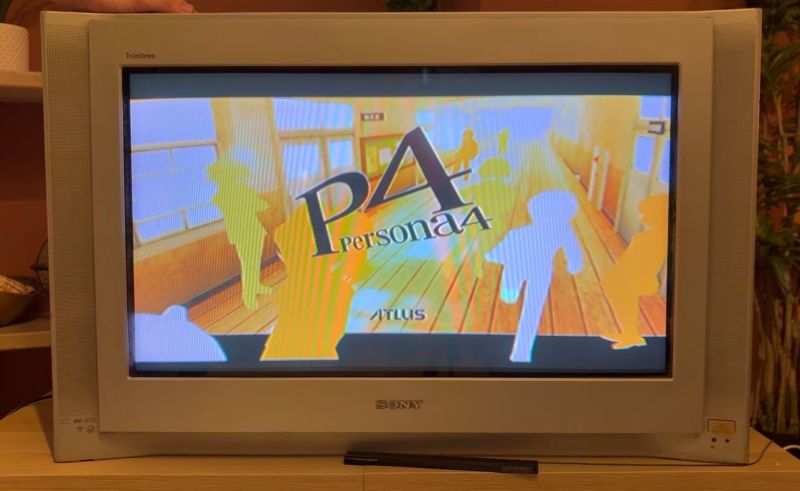
With those fresh new parts the TV fired right up again, and with a Wii console connected it looks pretty spiffy running games like Persona 4. Fortunately modern CRT TVs like these have a built-in service menu that you can access with the remote, so that you can tweak picture alignment and other settings without having to stick a screwdriver into the back of the TV to fiddle with a potentiometer whilst also keeping an eye on the picture.
Although there are undoubtedly more components on the PCBs and of course one grimy speaker to give some TLC, it does show that as long as the tube itself is intact, it’s definitely worth it to give repairing a shot.












That’s actually pretty incredible. I wonder what effect years of UV on the phosphor screen is.. or does that mostly get blocked out by coatings on the glass, etc? I assume the color isn’t the same as it used to be, would be interesting to try to color-calibrate it.
Heroic project!
Randomly clicked about 25% into the video to skip the initial babble.
Landed at 3:25
>we’re getting 9,9 megafarads reading
>measures capacitor in-circuit
>multimeter shows 9,9 millifarads
Facepalmed and stopped watching. Thank heavens for that!
They figured it out and put a disclaimer thet they now know capacitors must be read out of circuit.
9.9 mega?? The largest I’ve heard of is just 4500 farads.
Means you missed
– teh part where he describes the video as taking us on his learning journey aka ‘Lourney’ :-)
– disclaimer immediately after “9,9 megafarads” that he is in fact clueless
Imo the fact dude doesnt really know what he’s doing but hungers for knowledge and perseveres to the point of actually fixing this TV is huge and very encouraging to newbies.
Btw measuring capacitor in circuit and mistaking mili for mega is not the main problem, main problem was relying on capacitance measurement when deciding if the capacitor is faulty instead of using one of those $15 ESR meters.
Oh, I see. I’m glad for him that he got the TV working, but I’m also glad that I didn’t watch the video then.
Where I come from, there’s nothing wrong with not knowing how to do something, but to gloat about – a major transgression it is for one’s pubic image.
That’s crazy, remind me never to move there.
woodr is concerned about their pubic image. Checks out. :grin:
Well, he got it to work didn’t he?
Looking at the still I see cartoon characters and that ubiquitous white line “halo”, probably has the red glare light briefly waving across out of focus in short edited shots.
Phosphors should be safe from the sun behind that high lead content glass. It’s X-Ray proof.
Time to wack out the light gun games that will work with a nice fat crt
Loved my Trinitron monitors.
Their weight? Not so much!