[ErikH] sent in this sweet little device that he and a studymate put together from some spare parts to measure and cut strips of SMD resistors for one of their student organizations. The stepper motor and LCD were salvaged from a printer, an ATMega8 drives it, and a servo drives the cutting mechanism. The video’s not very exciting, but it shows a decent demo of the device.
Grid Enabled USB Microscope
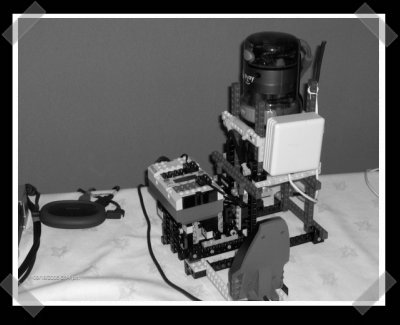
[Jock] sent in this photo gallery showing a Lego Mindstorm automated microscope. I dug up the paper that was published about this hack to find out just what the idea was. It’s a proof of concept showing off automated data collection – the Mindstorms are used to allow the intel QX3 microscope to take data over a grid area. It’s an interesting idea for collecting time series data. The computer interface is a bit overly complex, but the Lego’s make this sort of project accessible to the amateur roboticist.
Parallel Port Logic Analyzer
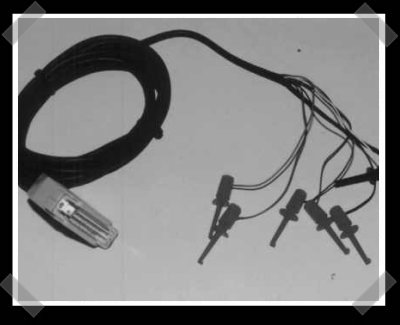
After reading the latest hackit post, [Ben] sent in this older, but simple logic analyzer. The software was written in windows, but the circuit is simple enough, and most hackers I know have more computers than immediate family members. The circuit uses a HC245 octal bus transceiver to feed the 8 data lines on the parallel port. (You can use a variety of chips for this application, most CMOS buffers will probably be fine.)
Hackit: Community Hacking Project?

By popular request, I’ve added a hackit category. Today’s hackit is one of my coffee shop creations. Considering the quality of work we’ve seen, I can’t help but wonder… If the Hack-A-Day community were to come together and produce a joint collaborative hardware project, what could it build? A modular robotics platform? A digital I/O platform for other projects? If you could harness the power of thousands of hardware hacking geeks, what would you ask them to do?
Got a better idea? Let’s hear it.
Replace Your LCD Power Supply
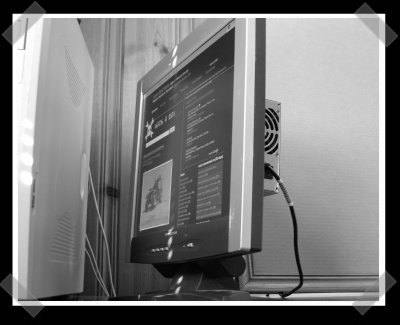
[Computer Guru]’s LCD power supply went out, making it a useless pile of plastic. He used an old computer PSU to replace the defective one. After he identified the outputs on the built-in supply (The one’s I’ve pulled apart were labelled) he stripped down the replacement PSU to provide the necessary voltages.
RGB PIC Color Changer
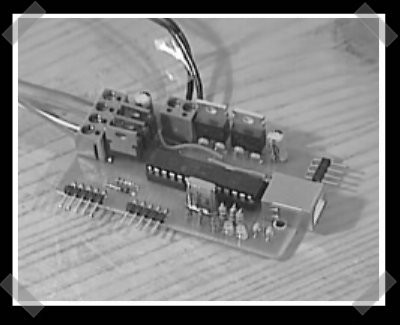
[Ian] put up his RGB LED color changer project over at diylife. It’s a pretty simple project, but well designed and flexible for combining with other projects. He used a PIC18F2550 to drive everything, and some FETs to drive the LEDs. When you connect a USB cable, the color cycling project stops and the PIC responds to simple hex based color commands.
Cesar: Geek Out Your Powerwheels

[Zack Anderson] built this computer controlled autonomous robot (back in 2003) out of an old, ugly powerwheels Jeep. It’s got a full onboard computer with wifi, video camera, SONAR sensors, a robotic arm and it can self-navigate. He’s provided server and client code (I haven’t tried it yet), and The project shouldn’t be a surprise, since he’s been working on entries for the DARPA challenge for a while.