Tempest For Eliza

tempest

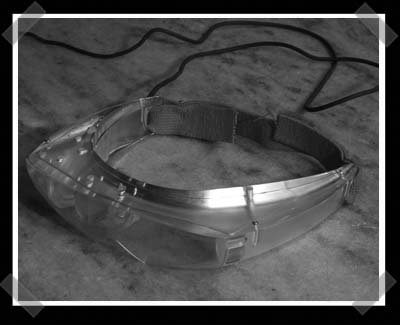
Tempest for Eliza” is a program written by Erik Thiele to demonstrate the RF transmission properties of CRT monitors. The program is capable of transmitting sound over AM frequencies just by the unique way it drives the monitor. The electromagnetic emissions of CRTs can be a security problem as demonstrated by Van Eck phreaking, watching someone’s screen just by collecting RF transmissions. In the late ’90s Ross Anderson developed software to help reduce the RF transmissions of monitors. These specialized fonts combined with shielding can greatly reduce the risk of attack and is something the NSA has been researching for many years.

[thanks gsham]

Continue reading “Tempest For Eliza”

NES Controller For Pocket PC

nes pocket pc

As an emulator enthusiast Oscar was frustrated by the button placement on his Pocket PC. He decided to adapt an NES controller to the PDA. The iPAQ had four buttons plus a D-pad like the controller so he just needed to find a way to translate between the two. The answer came from a Belkin IR keyboard. In addition to the regular QWERTY keys it had the hardware buttons too. He stripped out the necessary board from the keyboard and connected the NES buttons. He left the battery and an IR extension outside of the case because the signal was too weak from a distance. I wonder if it would be possible to use something like [leadingzero]’s NES remote and just translate the button presses since the signal would be stronger. I know it would work with LIRC in Linux, but I’m not sure if there is something similar for Pocket PC.

Continue reading “NES Controller For Pocket PC”

Fast Serial LCD Interface

serial lcd

This is a serial interface for any LCD using the incredibly common 44780 controller. There are a couple different serial interfaces like this on the market, but this project aims to be a superior version. It can use 5 – 30V with an included regulator. It has ESD protection. True RS232 levels mean you can use really long cables. Up to 8 buttons are also supported. This would work great with a car computer. All of the software and schematics are provided. Have a look around the madhacker site for a lot of other cool projects.

[thanks Stuart]

Continue reading “Fast Serial LCD Interface”

Optical ADB Mouse

adb optical

Here’s an easy hack compared to our usual craziness. Reader [Alex Dawson] was having issues with his Apple Pro Optical mouse. The new mouse had broken its USB cable connection internally due to insufficient strain relief. Cases for these mice are epoxied together and working on them is a one-way trip, never to return to their original state. He salvaged an ADB mouse and disassembled it with ease. The optical circuit board fit into the ADB case without any trouble. The button switch on both mice is exactly the same and almost in the same position. The optical sensor does not line up with the hole though. Once the ball ring was fused in place, Alex cut a new slot for the sensor. That’s all it took to end up with modern performance and old school flavor.

Continue reading “Optical ADB Mouse”

Don’t Trust Your Hardware

flash drive

I wasn’t able to see David Maynor’s “You are the Trojan” (pdf) talk at Toorcon, but it’s a really interesting subject. With such a large emphasis being placed on tightening perimeter security with firewalls and IDS systems how do attacks keep getting through? The user: bringing laptops on site, connecting home systems through a VPN, or just sacrificing security for speed.

Peripherals can also be a major threat. USB and other computer components use Direct Memory Access (DMA) to bypass the processor. This allows for high performance data transfers. The CPU is completely oblivious to the DMA activity. There is a lot of trust involved in this situation. Here’s how this could be exploited: Like a diligent individual you’ve locked you Windows session. Someone walks in with their hacked USB key and plugs it into your computer. The USB key uses its DMA to kill the process locking your session. Voila! your terminal is now wide open and all they had to do was plug in their USB key, PSP, iPod

LCD Backlight Replacement

monitor

Backlights are one of the most common failure points on LCD panels. Even though they usually say “no serviceable parts” on the back you might still be able to fix your monitor. Jared Bouck details the removal of the dead cold cathode and replacing it with a new tube and inverter. Not quite as dangerous as opening a CRT, but you still need to be careful with the mercury vapor filled tubes.

[thanks Tom]

Continue reading “LCD Backlight Replacement”

Audio Output From A Serial Port

rs232

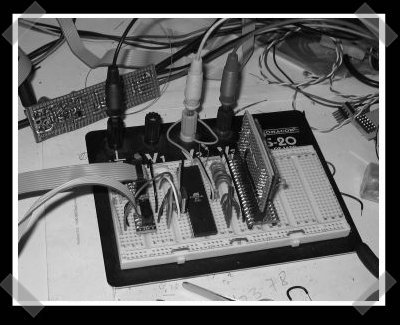
Yes, it is possible to get sound output from a serial port. Sure, it sounds terrible, but what did you expect. [markrages] ttyplay program first resamples the WAV file to the baud rate of the serial port. It then uses Sigma-Delta modulation to encode the analog signal into a binary bitstream. You should really try this out. The picture above is from when I was testing it out since it only took a minute to grab the parts and a second to compile. Mark says audio quality could be improved by using a higher baudrate. There is a lot of noise though. Somebody want to put together a simple RC filter/amplifier; I can actually think of a project this might be useful for. Read more about ttyplay here.

Continue reading “Audio Output From A Serial Port”