Line Following Robot

robot

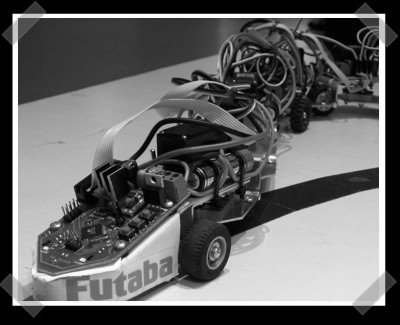
[Greg] has been doing a great job updating DIY Live. The latest entry details a line following robot. These bots are quite common, but Greg provides really thorough coverage of all of the details involved. His particular design features two separate sensors and when the robot reaches the end of the line it will reverse, retracing its steps. He’s got wiring schematics for the h-bridge and other components. He admits that PIC programming is a topic too broad for one post, but he does discuss a few of the necessary logic chunks involved.

Continue reading “Line Following Robot”

Roomba Rover

roomba rover

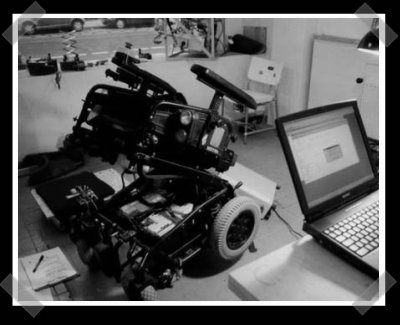
[heathkit] and a friend built this rover a couple years ago. They picked up a first generation Roomba because it had all of the features they were looking for: a good bump sensor, low profile, wheel encoders. Before removing the brains of the vacuum they put it in debug mode and figured out the control pinout. After wiring in a PIC they had rudimentary control of the device. For some higher level processing power they attached a Virgin Webplayer (defunct internet appliance). The Webplayer has a mini-pci slot so they added a WiFi card. Now they can transmit video and SSH into the device for full control.

Continue reading “Roomba Rover”

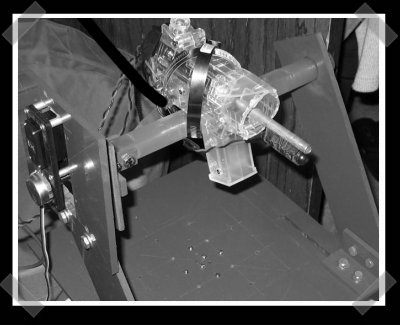
Robotic Sentry Gun

sentry gun

Reader [aaron rasmussen] and his brother Ezra built this awesome robotic sentry gun. The gun is an airsoft replica of an FN P90 and fires 6mm BBs. Pan and tilt are controlled by two hobby servos using a simple controller. Aaron wrote custom software to watch the usb webcam and track targets. There is a video on the site of it being tested

Mac Mini Robot

minirobot
The University of Oklahoma wanted to get a good idea of what it is like to operate a robot using visual and aural sensors before they built one of their own. They started with the Pioneer 3-AT robotics platform. They added a Mac Mini and powered it using a 12V battery and an inverter (this was only a temporary setup). The Pioneer is controlled through a USB-to-serial connection. An iSight camera provides visual feedback. Turning control is jerky over the WiFi connection, but since this will eventually be an autonomous system it isn’t a concern. It is a nice quick proof-of-concept.

[thanks Jason Striegel]

Continue reading “Mac Mini Robot”

Lego Self-adaptive Hand

self adaptive hand

I usually don’t feature LEGO projects because there is already a huge community and probably better places to get your LEGO info. That being said, I couldn’t pass this project up. It has an infrared sensor for detecting objects and only uses three pneumatic cylinders. The most interesting aspect of the hand is its underactuated fingers. The built in “mechanical intelligence” allows for shape adaptation even though there are fewer actuators than degrees of freedom. Don’t worry there’s a link to clear that last bit up.

[thanks ator1]

Continue reading “Lego Self-adaptive Hand”