

This Week In Security: Annoyed Researchers, Dangling DNS, And Hacks That Could Have Been Worse

The author of the BlueHammer exploit, which was released earlier this month and addressed in the last Patch Tuesday, continues to be annoyed with the responses from the Microsoft security research and vulnerability response team, and has released another Windows zero-day attack against Windows Defender.

The RedSun exploit targets a logic and timing error in Windows Defender, convincing it to install the target file in the system, instead of quarantining the file and protecting the system. Not, generally, what you would hope would happen.

Since the RedSun attack requires local access in the first place, it seems unlikely Microsoft will release an out-of-sequence patch for it, however with public code available, we can probably expect to see malware leveraging it to establish higher permissions on an infected system.

Releasing exploits out of spite feels like a return to the late 1990s, and I almost don’t hate it.

University Domains Hijacked

Reported in Bleeping Computer, a group tracked as “Hazy Hawk” has been hijacking unmaintained DNS records of universities and government institutions to serve ad click spam.

The attack seems simple and doesn’t even require compromising the actual institution, using dangling DNS “CNAME” records. A “CNAME” entry in DNS acts essentially as an alias, pointing one domain name at another, which can be used to provide content from an official domain that is hosted on a cloud service where the IP address of the service might change.

A DNS “A” (or “AAAA” if you speak IPv6) record points a hostname – like “foo.example.com” – to an IP address – like “1.1.1.1”. A “CNAME” record points a hostname to another hostname, like “foo.some_cloud_host.com”. Scanning “high value” domains (like Ivy League universities) for “CNAME” records which point to expired domains (or domains on cloud hosted providers which no longer exist) lets anyone able to register that domain (or create an account with the proper naming scheme on the cloud host) to post any content they wish, and still appear to be the original name.

At least 30 educational institutions have been impacted, along with several government agencies including the CDC.
Continue reading “This Week In Security: Annoyed Researchers, Dangling DNS, And Hacks That Could Have Been Worse”

The Twisted History Of Ethernet On Twisted Pair Wiring

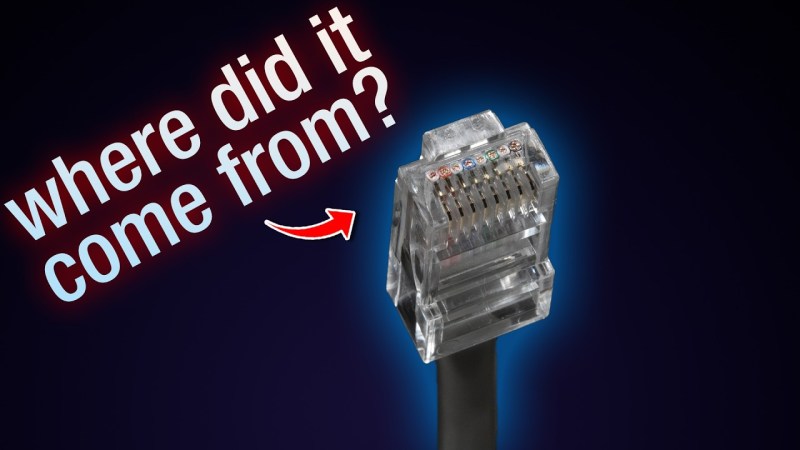
We all take Ethernet and its ubiquitous RJ-45 connector for granted these days. But Ethernet didn’t start with twisted pair cable. [Mark] and [Ben] at The Serial Port YouTube channel are taking a deep dive into the twisted history of Ethernet on twisted pair wiring. The earliest forms of Ethernet used RG-8 style coaxial cable. It’s a thick, stiff cable requiring special vampire taps and lots of expensive equipment to operate.

The industry added BNC connectors and RG-58 coax for “cheapernet” or 10Base2. This reduced cost, but still had some issues. Anyone who worked in an office wired with 10Base2 can attest to the network drops whenever a cable was kicked out or a terminator was dropped.

The spark came when [Tim Rock] of AT&T realized that the telephone cables already installed in offices around the world could be used for network traffic. [Tim] and a team of engineers from five different companies pitched their idea to the IEEE 802.3 committee on Feb 14, 1984.

The idea wasn’t popular though — Companies like 3COM, and Digital Equipment Corporation had issues with the network topology and the wiring itself. It took ten years of work and a Herculean effort by IEEE committee chairwoman [Pat Thaler] to create the standard the world eventually came to know as 10Base-T. These days we’re running 10 Gigabit Ethernet over those same connectors.

For those who don’t know, this video is part of a much larger series about Ethernet, covering both history and practical applications. We also covered the 40th anniversary of Ethernet in 2020.

Continue reading “The Twisted History Of Ethernet On Twisted Pair Wiring”

The Internet Without The Computer: 1990s Style

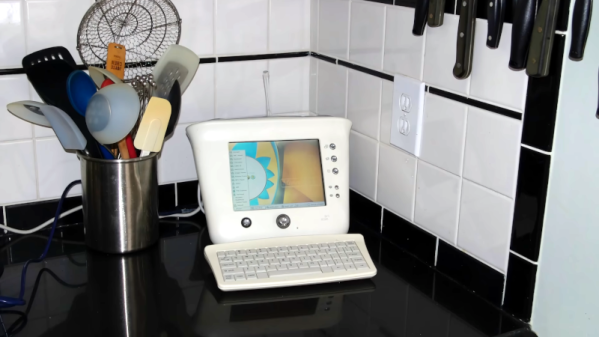
We think of the Internet extending to small devices as a modern trend, but it actually is a good example of how everything makes a circle. Today, we want the network to connect to our thermostat and our toaster. But somewhere between the year 1990 and the year 2010, there was a push to make the Internet accessible to the majority of people who didn’t own a computer. The prototypical device, in our mind, was Microsoft’s ill-fated WebTV, but a recent video from [This Does Not Compute] reminded us of another entry in that race: The Audrey from 3COM. Check out the video, below.

Many devices, like the WebTV, wanted to take over your TV set to save on a display. That doesn’t sound bad today, but you have to remember, the typical TV set in those days was not the high-resolution digital monster you have today, so the experience of surfing the Web on one was suboptimal. The Audrey actually had a cute little screen and a compact keyboard.

Continue reading “The Internet Without The Computer: 1990s Style”









