
In the mid 1970s there were a spate of movies depicting the romance and lifestyle of truck drivers in the southern half of the United States. Over on the other side of the Atlantic these were naturally received not as works of drama but as documentaries, and thus began a craze for British drivers to do up their Ford Capri so in the right light and with your eyes nearly closed, it almost looked like Burt Reynolds’ Pontiac Trans Am from Smokey and the Bandit.
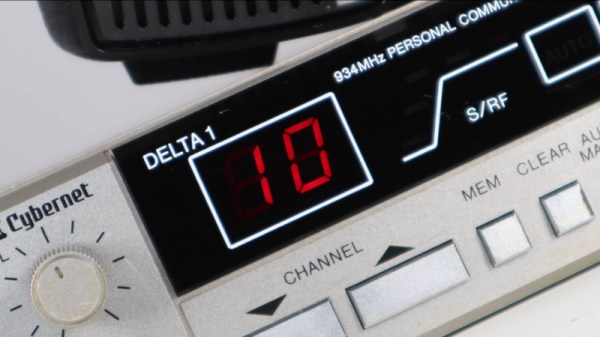
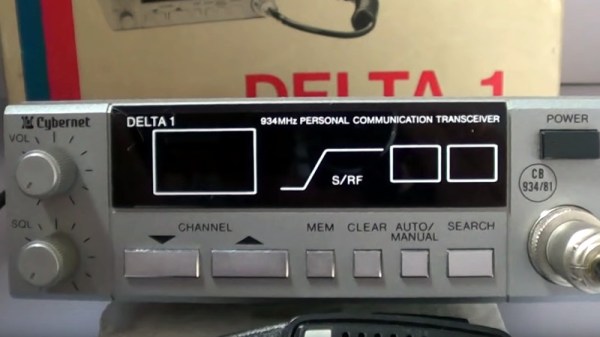
Such a fine automobile was of course incomplete without a CB radio, highly illegal at the time, which led to an underground CB craze and its eventual legalization in 1981. [Ringway Manchester] is here with a tale from that era, of 934 MHz CB, an odd and underused allocation that was eventually phased out for commercial services.
When UK CB was eventually legalized by the government, it was very obvious that they really didn’t want to. Brits got 27 MHz as FM only with meager power and a weird set of frequencies that nobody else had, and a second band way up in the UHF range, at 934 MHz. We remember they originally tried to make a UHF band the only allocation on purpose because it was nearly useless for mobile operation, and Brits only got 27 MHz by fighting back in the political lobbying space.
The video below tells the story of the band, with relatively scarce and expensive equipment leading to it being an exclusive band more similar to the amateur bands, with little resemblance to its raucous 27 MHz counterpart. How much activity there was depended very much on where in the country you were, which of course wasn’t where your Hackaday scribe was as a teenager even if it had been affordable. Eventually the government saw the little flashing pound signs and grabbed it back for a mobile radio service that never materialized, and now the frequencies are part of the mobile phone spectrum.
Have a watch for an odd bit of UK radio nostalgia and some 2020s illegal CB’ers, and if you want more it’s a subject we’ve touched on before.
Continue reading “934 MHz: When The Government Really Doesn’t Want You To Have CB”
![Did this car make you want a CB radio? Stuurm [CC BY-SA 3.0]](https://hackaday.com/wp-content/uploads/2019/10/1978_Trans-Am_bandit.jpg)









