Amiga-Inspired AROS Goes Bare Metal On Raspberry Pi

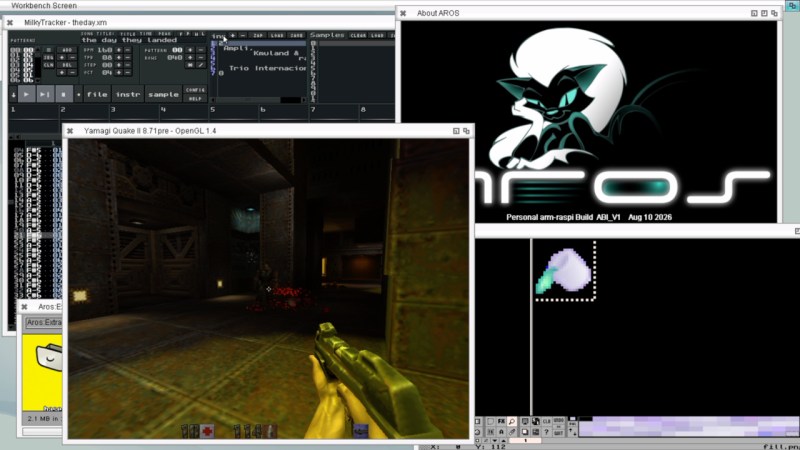
There’s no actual data, but if we had to guess the least-favourite Disney movie of former Amiga owners would have to be Frozen, because none of them will ever be able to “Let it Go”. The Amiga-derived AROS Research Operating System has just been ported to boot bare-metal on the Raspberry Pi, in both 32-bit and 64-bit versions. Yes, there’s a 64-bit Amiga-compatible OS that runs on ARM. It truly is a time of wonders.

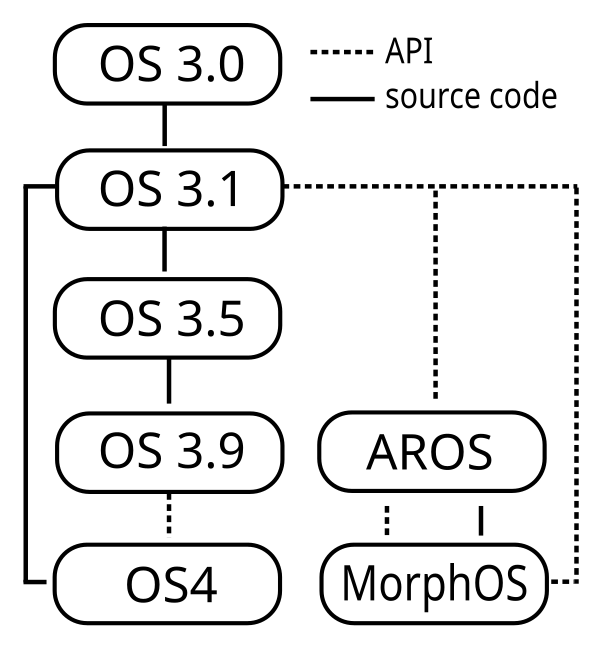
AROS has already been ported to a number of platforms. Besides x86, there’s a PPC port that provided a lot of code to the MorphOS, which you can read about here, and a back-port that brings AROS back to original Amiga 68k hardware. There is even a build for RISC V.

AROS developers are making sure that Amiga legacy isn’t stuck on any given hardware, so they never have to let it go. So while not totally out of left field, this development is “pretty nifty” both in that it gives another ultralight operating system for the Pi, with boot times to rival RiscOS, and another platform for ex-Amiga users to play with that isn’t 40 years old. Previously if you wanted to run AROS on a Pi it was virtualized in Linux, making it similar to all other Amiga emulators.

While some software has been recompiled for ARM, the available software isn’t as full-featured as x86, but that’s almost certain to change as time goes on. It’s early days yet and this build is very much a work in progress. Likewise we expect support for other Pi boards to expand, as while right now the target is the Pi3, the forum threads include discussion of the Pi4 and even Zero2W.

You can check the port out in action in a video by [Dan Wood] embedded below, sent to us by tipster [Stephen Walters]. Thanks [Stephen]!

We have featured AROS once before, thought it’s been a while.

Continue reading “Amiga-Inspired AROS Goes Bare Metal On Raspberry Pi”
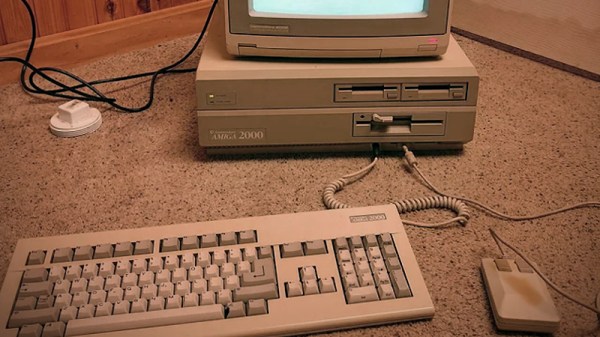
An Amiga 2000 on a carpet floor

Amiga, Interrupted: A Fresh Take On Amiga OS

Serena OS is not just another operating system—it’s a playground for hackers, tinkerers, and Amiga enthusiasts pushing vintage hardware to new limits. Born from modern design principles and featuring pervasive preemptive concurrency and multi-user support, [dplanitzer]’s Serena OS is far from ordinary.

Running on Amiga systems with a 68030 or better CPU, it challenges traditional OS concepts by ditching threads in favor of dispatch queues, akin to Apple’s Grand Central Dispatch. The result? A dynamic, flexible kernel that combines forward-thinking design with retro charm.

The real innovation in Serena is its kernel, which uses a virtual processor concept to manage system resources efficiently. Instead of threads, Serena dynamically adjusts a pool of virtual processors based on dispatch queue needs, ensuring tasks are executed with precision and speed. Interrupt handling is also unique: interrupts are converted into semaphore signals, allowing the code to handle these signals at its convenience without missing any, making hardware interactions more controlled, especially where timing is critical.

For Amiga enthusiasts already customizing their setups, Serena OS offers new possibilities. It shares some spirit with projects like AROS (Amiga Research Operating System) but adds its own twist with object-oriented design and cross-platform goals. Whether you’re developing software for your classic Amiga or exploring new hardware interfaces, Serena OS provides a robust and adaptable foundation.

AROS: Run An Amiga OS Like It’s 1993

We read this article on oddball open-source operating systems by [Bryan Lunduke] of the “Linux Action Show” podcast, and it caused us to play around in an Amiga-like operating system (running as a VM) for an hour. We’re pretty sure that you’ll succumb to the same fate. But even worse, the article is just the first in a series. There goes your weekend hacking productivity for the foreseeable future.

AmigaOS_3_and_clonesAROS is an open-source, API-compatible rewrite of the Amiga OS. Now, AROS is no fancy-schmancy AmigaOS4. No sir, the AROS project started in 1995 and settled on Amiga OS API version 3.1, and it stays true to its roots.

But this doesn’t mean that you’re going to have to give up the creature comforts of life in the 21st century. Get yourself a full-fledged AROS distribution, like icaros desktop, and you’ll find a pretty beefy ecosystem of applications included. It’s mostly what you’d want out of an Amiga — games, audio, video, and graphics editing software, a WebKit-based browser, and even a super-minimal word processor.

It’s retro, it’s sexy, and it’s fun. Just the ticket for running on that unused craptop gathering dust in the corner. (It’s also reported to run on Raspberry Pi running Linux.) Still not convinced? Lemmings.