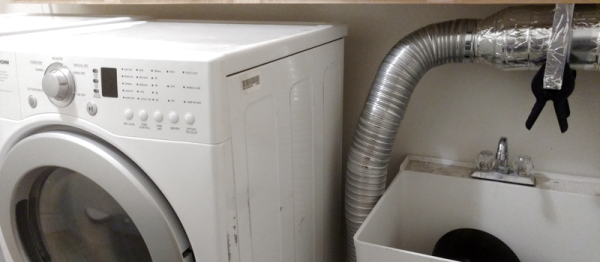
It seemed utter madness — people living in hot desert climates paying to heat air. At least it seemed that way to [David Thomas] before he modified his tumble dryer to take advantage of Arizona’s arid environment.
Hanging the wash out to dry is a time-honored solution, and should be a no-brainer in the desert. But hanging the wash takes a lot of human effort, your laundry comes back stiff, and if there’s a risk of dust storms ruining your laundry, we can see why people run the dryer indoors. But there’s no reason to waste further energy heating up your air-conditioned interior air when hot air is plentiful just a few meters away.
[David]’s modification includes removing the gas heating components of the dryer and adding an in-line filter. He explains it all in a series of videos, which at least for his model, leave no screw unturned. It’s not an expensive modification either, consisting mostly of rigid dryer hose and copious amounts of aluminum duct tape. He mentions the small fire that resulted from failing to remove the gas igniter, so consider yourself warned. The intake filter and box were originally intended for a house air-conditioning system, and required only minimal modifications.
This is a great build, being both cheap and easy to implement as well as being environmentally friendly without requiring a drastic change to [David]’s lifestyle. It makes us wish we had a similar endless supply of hot air.