Airport runways seem pretty simple, just another strip of asphalt or concrete not unlike the roads that our cars drive upon every day. We can even use these same highways as landing strips in a pinch, so you’d assume that the engineering for either isn’t that dissimilar. Of course, you can use a highway for an occasional emergency, but a runway that sees the largest and heaviest airplanes taxi, take off and land on a constant basis is a whole other challenge, as detailed in a recent [Practical Engineering] video and its transcript.
When you consider that an Airbus A380 the take-off weight is up to 550 ton, it’s quite clear what the challenge is for larger airports. Another major issue is that of friction, or lack thereof, as the speeds and kinetic energy behind it are so much higher. One only has to look at not only runway overruns but also when one skids off sideways due issues like hydroplaning and uneven friction. Keeping the surface of a runway as high-friction as possible and intact after hundreds of take-offs, tail-strikes and other events is no small feat.
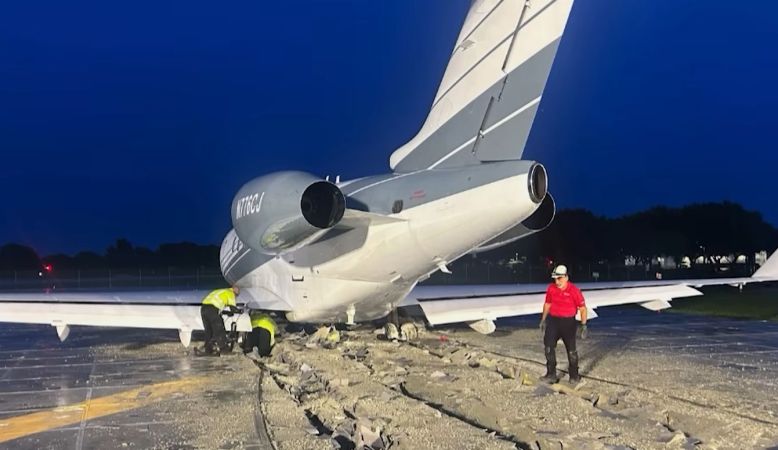
Of course, the other part of runway engineering is for when things do go wrong and an airplane enters the runway safety areas, or overrun zones. This usually provides some flat and clear space where an airplane can safely bleed off its kinetic energy, with the collapsing surface of the EMAS technology being one of the best demonstrations of how this can be safely and dramatically shortened.