Illustrated Kristina with an IBM Model M keyboard floating between her hands.

Keebin’ With Kristina: The One With The Ultra-Thin Split

But sir, it is wafer-thin. That’s how they get you! Just when you couldn’t possibly justify building another keyboard, let alone owning one, along comes the Kambala by [aroum2].
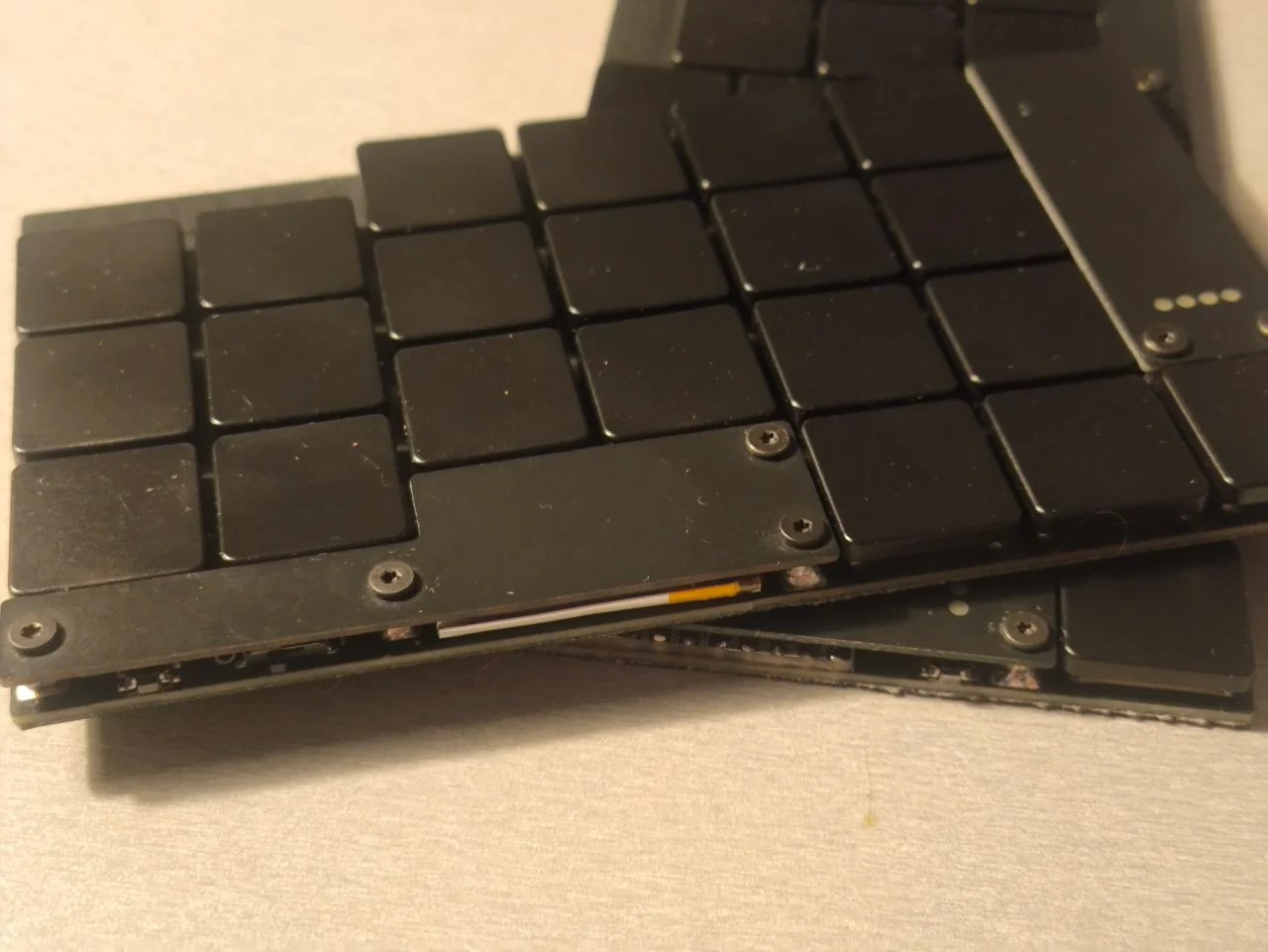
A wafer-thin keyboard in triple black.
Image by [aroum2] via reddit
Now, ‘Kambala’ means a few things, but here it refers to fish, as evidenced by logo and matching themed PCB key chain shown in the gallery.

This catch is so flat because of the switches: PG1316S, and 42 of them. These are better known to some as Kailh butterfly switches, and are meant for laptops. But, this is Hackaday.

No matter what you call them, those switches are controlled by a nice!nano V2-compatible controller, which allows for ZMK firmware support. There’s a 110 mAh battery and four status LEDs, and best of all, the charging indicator is in the fish’s eyes.

[aroum2] might share the files later. Here’s hoping!

Continue reading “Keebin’ With Kristina: The One With The Ultra-Thin Split”
Breathing New Life Into An Old Key

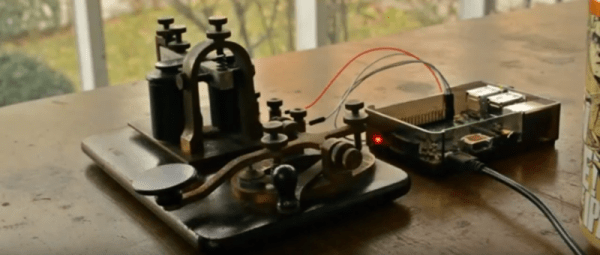
For most of us who have experimented with Morse code, the oldest key we are likely to have used will have been a piece of military surplus kit from the Second World War era. [Kyle Gabriel] however is a lucky man. His grandfather left him his key-on-board telegraph practice set, a vintage key and telegraph sounder arrangement used to learn Morse code in the days when the telegraph was king. Rather than keep the set merely as an heirloom, [Kyle] set about bringing it up to date by interfacing it to a Raspberry Pi and writing a Morse reader program.

Along the way [Kyle] had to contend with debouncing the switching signal from the key, considering an RC network before settling on a software debounce timer. He provides a brief synopsis of the mechanics of Morse decoding software, and a demonstration of the code in action which you can see in the video below the break.

[Kyle’s] decoding software, beatbybeat, is on GitHub. We can see it will be a useful tool for anyone interested in Morse, or who is writing their own Morse software.

Morse code has featured on these pages more than a few times over the years. Of relevance to this piece are an Arduino decoding Morse code, a more up-to-date practice oscillator with a home-made key, and a couple of other vintage telegraphs reading RSS feeds and reading emails.

Continue reading “Breathing New Life Into An Old Key”

Using A Touch Sensor As A Telegraph Key

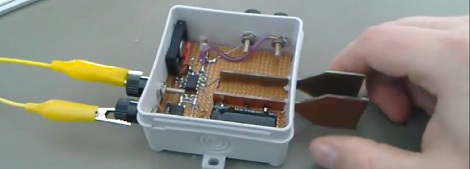
[Sebastian] is learning Morse code and CW radio, and of course he needed a telegraph key. Instead of using the terribly unergonomic paddle style key, he built a capacitive touch iambic key over the course of a few evenings.

An iambic key usually has two switches. When one switch is closed, it will transmit a ‘dit’. When the other switch is closed, it will transmit a ‘dah’. Instead of using mechanical paddles, [Sebastian] brought his iambic key into the 21st century by using a touch sensor. An ATtiny45 measures the time it takes for a single metal plate to fully charge. It’s the same idea behind the wonderful Arduino CapSense library.

This isn’t the first capacitive-touch iambic key we’ve seen; this little guy is just a pair of metal contacts and resistors that plug right into an Arduino. With an ATtiny45, [Sebastian]’s build is a full-blown iambic telegraph key that plugs right into his CW rig. You can check out the walk through of the project along with [Sebastian] trying out his iambic key after the break.

Continue reading “Using A Touch Sensor As A Telegraph Key”

Doing It Right With A Morse Code Keyboard

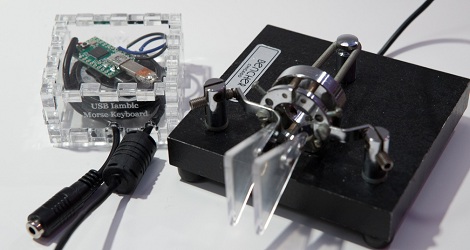
Hackaday has seen dozens of Morse code keyboards over the years, but [Hudson] at NYC Resistor finally managed to give that idea the justice it deserves. He built a USB Morse code keyboard with the same type of telegraph key the pros use.

For his project, [Hudson] got his hands on a wonderful iambic paddle that is usually hooked up to CW rigs. Unlike previous Morse keyboards we’ve seen, [Hudson] used iambic paddles, a telegraph key with one lever for dits and another for dahs. Because the dits and dahs are separate electrical connections, it’s extremely easy for the microcontroller – a Teensy – to parse the Morse code and send the correct letter to the computer.

[Hudson] also added some audio feedback for the dits and dahs, and designed a laser-cut enclosure for the Teensy and speaker. Check out the video of the iambic keyer keyboard in action after the break.
Continue reading “Doing It Right With A Morse Code Keyboard”