Screw Drive Tractor Hasn’t Conquered Canada Yet

[REDNIC79] lives somewhere in Canada where key terrain features include mud and snow. Half pontoon boat, half auger, screw-propelled vehicles excel in this kind of terrain as long as you’re okay with going really slow.

In his 11-and-counting part video series, [REDNIC79] goes through the conversion of a lawn tractor into a slow, theoretically unstoppable, Canadian screw-propelled tractor. He welds a frame, plonks some beefy chains on it, and throws a few hefty looking bearing mounts on there to boot. Then he makes some screws out of gas tanks; which was an enormous amount of work.

It was time to fire up the tractor. On the first muddy incline encountered, the tractor ceased to move. The culprit? A cracked transmission housing. Ouch. The end of the shaft holding the chain for the right screw was unsupported. When the shaft turned, it imparted its rotational force, but there was also an unconsidered down force on the end of the shaft, which resulted in a moment the bell housing wasn’t designed for.

Undeterred, [REDNIC79] welded the housing back together and threw a bearing on the end of the offending shaft to balance the moments. He fired it up, engaged the transmission, and the right screw bearing pillow block completely shattered. Ouch again. We can safely begin to assume that screw-propelled vehicles see a lot of forces.

[REDNIC79] hasn’t shelved the project yet. His next plan is to beef up the supports and build a much larger set of screws with smaller blades out of some propane tanks. This should reduce the force the power house needs to put out. Video of the first fail after the break. Continue reading “Screw Drive Tractor Hasn’t Conquered Canada Yet”
Mini EV Tractor

Odd-Looking Mini EV Yard Tractor Is Made From Plywood And Bike Parts

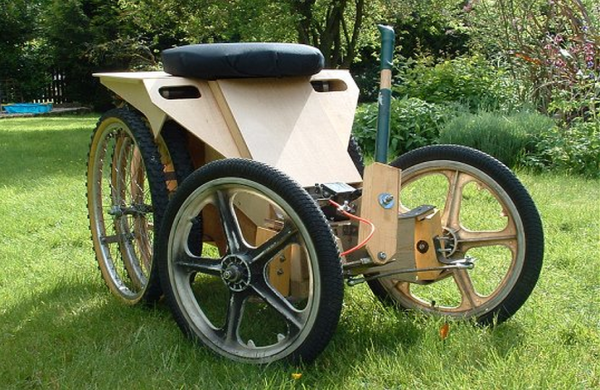
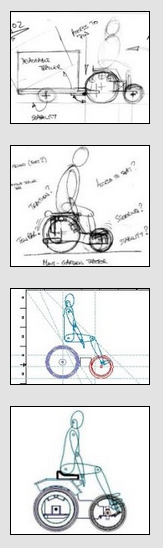
Mini EV Tractor[Ian] likes to build small Electric Vehicles and his most unique project is certainly this yard tractor. During the design phase of the project [Ian] came up with a few requirements to ensure that this vehicle would be useful around the house. First, it had to be maneuverable in tight spaces. This was accomplished by the short wheel base and small diameter front-steering wheels. Next, it had to get great traction as leaving torn-up grass around the yard was not going to cut the mustard. Four mountain bike drive wheels used in the rear double the traction while at the same time distributing the friction over twice the surface area of the grass. To increase the traction even more, the rider’s seating position was intentionally put directly over the rear wheels.
The frame was kept simple by using plywood as structural members. Two 40Ah 12v batteries are set low between the front and rear axles and power the 4 DC drive motors. The motors are connected to the axle by means of sprockets and chains which results in a 36:1 reduction. That’s a large gear reduction and limits the tractor to a top speed of 12 km/h (7.5 mph). Bike tires front and rear were used because they are easily available and are super low-cost. And of course, a tractor wouldn’t be complete without a trailer hitch to tow around plants, rocks, wood or any other general yard debris.

[Ian] makes plans for his mini EV tractor available on his website. If your kid is envious of this electric tractor, maybe you can make him one of these


Restoring An Industrial Tractor

tractor

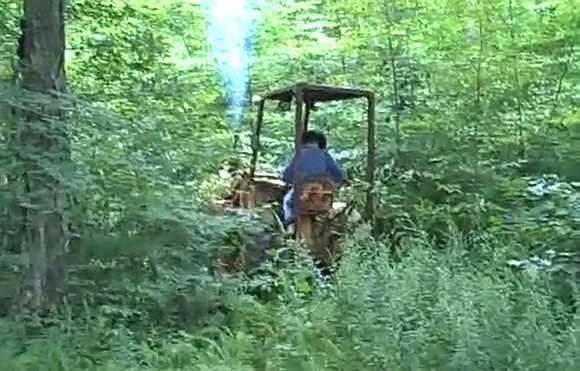
[Nickolas] dropped us a tip about a Youtube channel where [stevewatr] documents the restoration of an Oliver 770 tractor through no less than 133 videos. These videos span the last year, starting with finding the tractor in fairly dense undergrowth. He spends quite a bit of time troubleshooting the engine, explaining his thought process, and showing all of the steps he takes to get the tractor running reliably again. He also delves into fixes for the electrical and hydraulic systems.

In his tip, [Nickolas] said he just couldn’t stop watching, and we agree, this is really a fascinating series. One of the things we love about these videos is that [stevewatr] doesn’t filter out his mistakes. That means we get to see his failures and successes… Everything from how jump starting wasn’t possible with a small jumper wire, to getting the engine to start cold without a primer. That’s the beauty of our fail-of-the-week posts. Absorb it all, and you’ll be prepared when you run into related problems yourself.

[stevewatr’s] last video doesn’t show a completed tractor, so we look forward to seeing what happens as the project progresses. Even if you aren’t interested in having a tractor of your own, you can certainly use some of this information while building your own personal mech. Give it a try!

A Chicken Tractor To Call Home

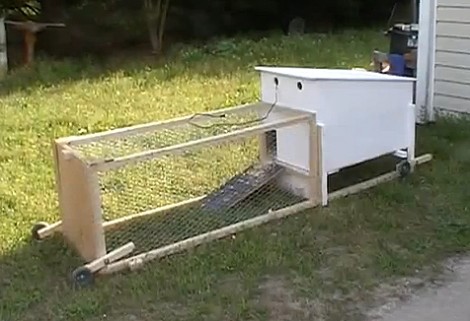
[Dino] didn’t want to keep the baby chickens cooped up when he was at work, but he didn’t want them to escape, or become a juicy treat, either. His solution was to build this chicken tractor. It’s a complete chicken ecosystem with wheels, kind of like a double-wide trailer for our feathered friends. On one end is a small coop that contains food, water, and an incandescent light bulb for heat. The other end is a chicken-wire box that lets the young birds stretch their legs and get some fresh air.

It’s easy to see the wheels which flip down when [Dino] needs to move the contraption. Like we said, he puts it out when he goes to work, selecting different parts of the yard so that the grass gets evenly fertilized. It’s a nice solution if you don’t have enough area to dedicate to an automated chicken coop.

We’ve embedded [Dino’s] video after the break. He covers the beginning and end of the build, and fills the middle of the video with a time-lapse recording of the construction process.

Continue reading “A Chicken Tractor To Call Home”

Global Village Construction Set

The Global Village Construction Set is an open hardware initiative aimed at sharing tool-building knowledge. They believe that to build civilization you need forty basic tools, eight of which they’ve already prototyped and made available on their wiki. Included in these is a tractor which reminds us of a beefy bobcat. It has a soil pulverizing attachment which can be used to break down soil and feed it to their soil brick compressor. That machine spits out compressed dirt bricks which are used as building materials. They’re stacked on concrete footings and then limewashed to protect the un-baked bricks from water erosion. Does this remind anyone else of real-life Minecraft?

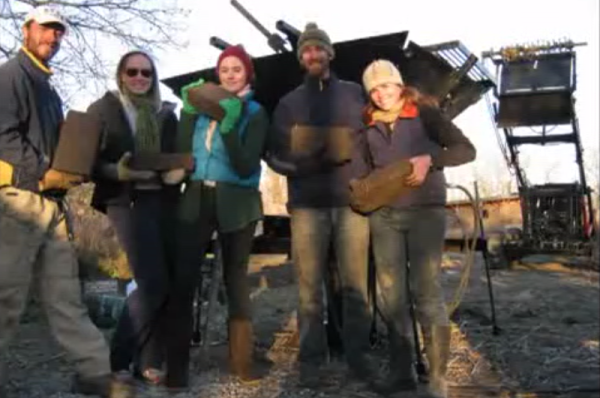
Above you can see a group of Open Source Ecology developers showing off bricks in front of the machine that made them, with the tractor/soil pulverizer to the right. Take a look at the videos about the construction set and brickmaking after the break. And learn more by perusing their weblog.

If you think an apocalypse is on the way you might want to buddy-up with these folks. They seem to know what they’re doing.

Continue reading “Global Village Construction Set”