
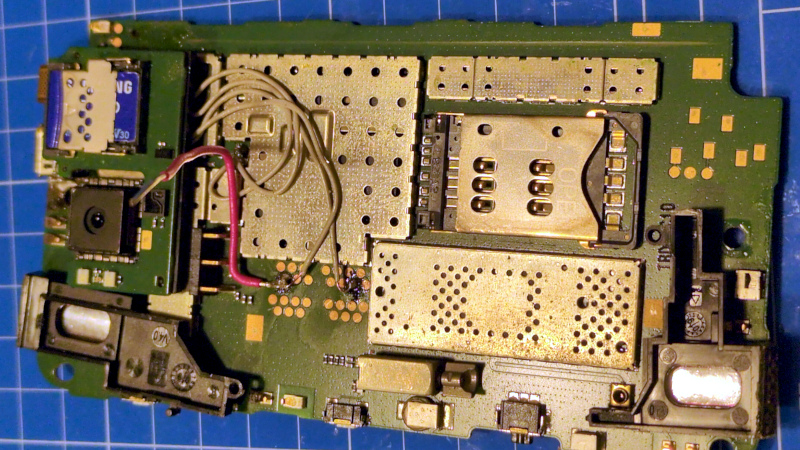
Can a long-obsolete Linux phone from 2009 be of use in 2025? [Yaky] has a Nokia N900, and is giving it a go.
Back in the 2000s, Nokia owned the mobile phone space. They had a smartphone OS, even if they didn’t understand app distribution, they had the best cameras, screens, antennas, the lot. They threw it all away with inept management that made late-stage Commodore look competent. Apple and Android came along, and now a Nokia is a rarity. Out of this mess came one good thing, though: the N900 was a Linux-based smartphone that became the go-to hacker mobile for a few years.
First up with this N900 is the long-dead battery. He makes a fake battery with a set of supercapacitors and resistors to simulate the temperature sensor, and is then able to power it from an external PSU. This is refined to a better fake battery using the connector from the original. The device also receives a USB-C port, though due to space constraints, not the PD identifiers, making it (almost) modern.
Because it was a popular hacker device, it’s possible to upgrade the software on an N900. He’s given it U-Boot, and now it boots Linux from an SD card and functions as an online radio device.
That’s impressive hackability and longevity for a phone, if only we could have more like it.












Did something like this 10 years ago. It was not really daily drivable back then.
The term “daily driver” for cellphones being co-opted from car culture is so cringe worthy. “Daily drivable” —for a phone? It’s as absurd as everything nowadays beating to death the word “crafted” or the term “hand-crafted.” STAHHPP…get some help.
Would you like the term EDC – every day carry – instead?
Why not? Ditched my N900 just for the lack of processing power and no android app store.
Would totally buy a new one with a modern processor and some way to run android apps.
Check out Jolla’s upcoming phone and SailfishOS. I’ve been using a C2 daily for over 6 months now. It is a rough experience, but at the same time I love it. I can manage with the native apps most of the time. It also runs most android apps. But, expect bugs, outdated software, and a steep learning curve. You’ll get to give both google and apple a middle finger each though. Also, ssh access with full ownership of your device is nice.
could you install ffmpeg then you can play iptv with terminal
It’s a pity the project from a while back to give the N900 a replacement motherboard (new 4G capable cellular modem, better CPU and a few other things) and a new software stack (that presumably would have included a modern web browser that could actually browse the large chunks of the web that the stock N900 browser can no longer visit) never really got off the ground.
Can’t speak to the n900 but i had the n810 and Maemo is a testament to the relative strengths of Android, as Linux skins go. Maemo used more open source components than Android did, but Nokia didn’t thoroughly debug or integrate these components and it comes off as a mess, the worst mistakes of each component compounded into a bad user experience and a bad developer experience.
I recently tried to re-use my n810 for something it should have been perfect for, playing mp3s over wifi. I immediately ran into a problem i vaguely remembered from back in the day…all sound i/o is through a version of esd (Enlightenment Sound Daemon) hacked to work with their proprietary dsp. A buggy hacked version of esd, which has about a 30% odds of crashing in any given hour. Needs a reboot, not merely restarting the daemon, to recover.
Unlike raspberry pi, no one had been telling me fairey tales about its openness so i was not surprised to meet a wall when i searched for source to their hacked esd. But i didn’t search very long, maybe it is more open than the i/o drivers on the raspberry. anyways, it’s garbage. Nokia lost the smartphone war for a reason.
you could get whole software source, if you were asked Nokia to provide you. it was written on your unpacking/setup manual. you never did RTFM… it had been requested few times only – fella next to me fulfilled those requests.
My N900 works, but sadly has outlasted the phone network. Shame, I loved the little thing and am peeved the upgrade board never happened.
So much hate.
In the good Earth, the FTC blocked Microsoft’s obviously monopolist acquisition of Nokia’s mobile phone business. This allowed the extremely well- reviewed N9 to flourish, the N10 saw Intel successfully enter the mobile space, forming a stable three- ecosystem mobile market.
The relatively open Meego (Maemo) kept a check on Android’s worst anti- consumer practices, and Nokia’s human- centred design prevented the rise of the “glass sandwich”
“The relatively open Meego (Maemo) kept a check on Android’s worst anti- consumer practices” Unfortunately, no. It was never going to be. Consumers want something that works better than Maemo did. The trick to the “worse is better” trap is that you have to do the things people actually want well enough, otherwise it’s just worse.
As one of those, who (as part of larger team) did every public Maemo/Meego device, I can say you’re very far from actual situation (back then).
For until official death of S60, the Linux team had been always in second row. We weren’t starved for resource, yet we were kept on somewhat short leash. N9 should have been first one up to actual consumer’s standards.
We were pushed under MSFT bus – Elop just couldn’t miss slaughter, he was there to re-plug mobile device business into MSFT at any price. Nearly same time, Nokia made also first MSFT phone, and HW photo button had been pulled out from N9, and given to MSFT.
Another factor you conveniently miss – Android at the time was crap. In all aspects. They were not pushed out by Apple and effectively survived battle for largest marker share only because in critical moment we were removed from scene…
This list can be longer, but… have a great holidays ;)
“…and now a Nokia is a rarity.”
Which is probably for the best, because anymore the phones they make are nowhere near the indestructible legends of yesteryear. I bought a Nokia a few years back because of their reputation for quality, and it was quite possibly the worst phone I had ever owned, which is a real shame.
I still have a Nokia in working order. I flashed it with a custom pwnphone operating system.