
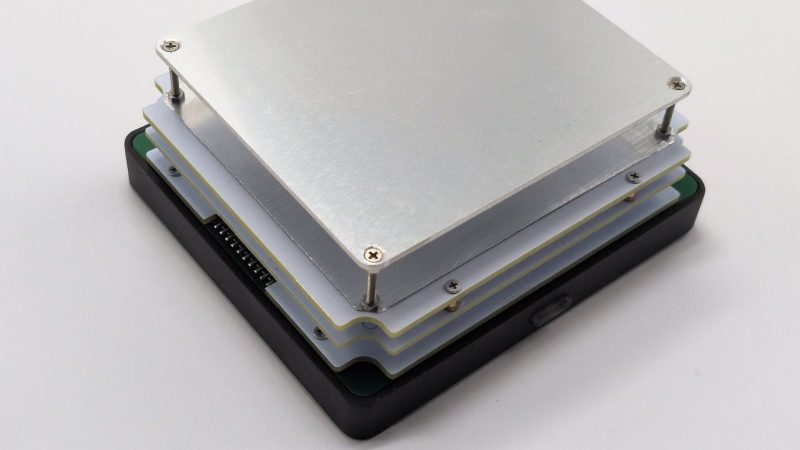
If you’re working with surface mount components, you’re likely going to want a reflow plate at some point. [Vitaly] was in need of just such a tool, and thus whipped up a compact reflow plate that is conveniently powered via USB-C.
This reflow rig is designed for smaller work, with a working area of 80 mm x 70 mm. There are two options for the heating element—either a metal core PCB-based heater, or a metal ceramic heater. The former is good for working with Sn42Bi58 solder paste at 138 C, according to [Vitaly], while the latter will happily handle Sn63Pb37 at 183 C if the dirty stuff is more your jam.
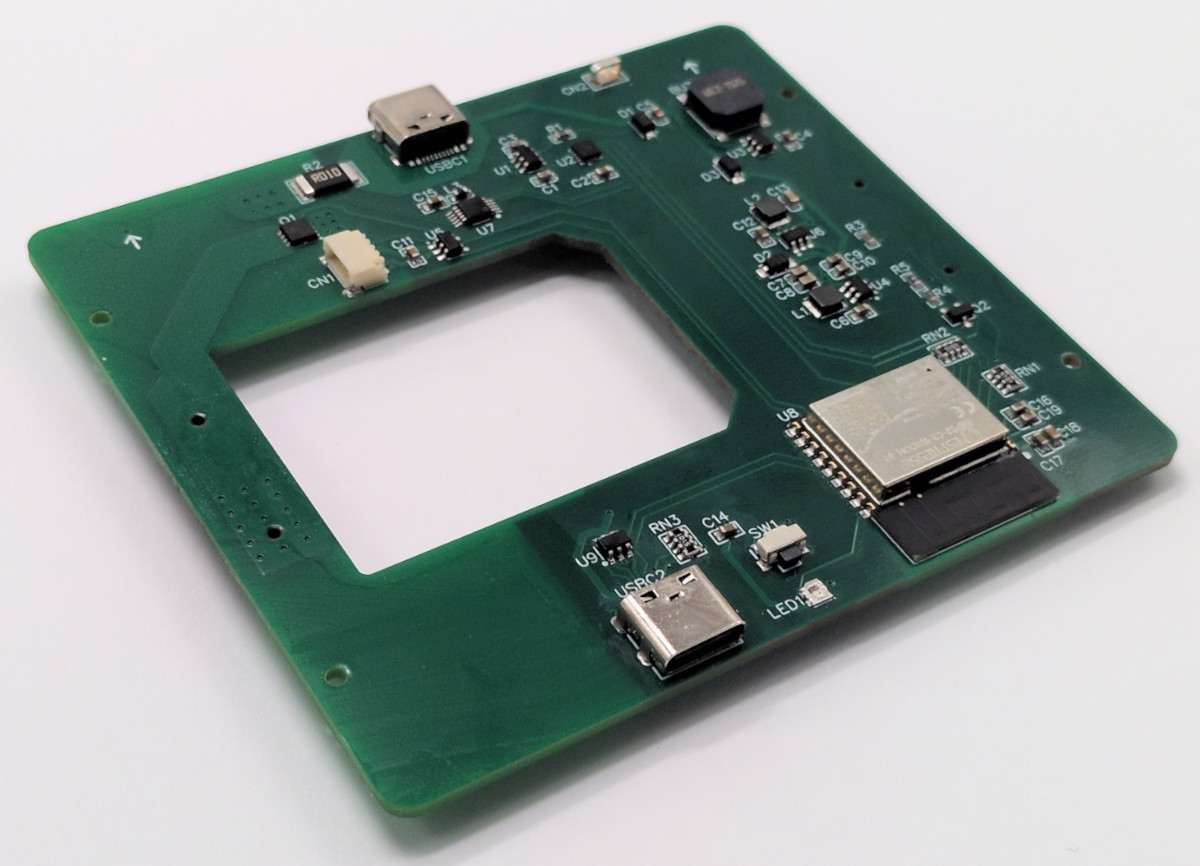
Running the show is an ESP32-C3-WROOM, which serves up a web-based control panel over Bluetooth for setting the heating profiles. Using Bluetooth over WiFi might seem like an odd choice at first, but it means you don’t have to add the hot plate to the local wireless network to access it, handy if you’re on the move. It’s also worth noting that you can’t run this off any old USB charger—you’ll need one compatible with USB Power Delivery (PD) that can deliver at least 100 watts.
If you’re needing to whip up small boards with regularity, a hotplate like this one can really come in handy. Files are on GitHub for those eager to build their own.
This isn’t the first time we’ve seen USB-C powering a small reflow plate. Of course, if you make your PCBs self heating, you can sidestep all that entirely.












Lost me at web based bluetooth control panel
We as humans have figured temp control without involving “infrastructure”
I guess he built it like he wanted it but seems a bit overly complicated to me.
Probably still better than old Vötsch thermal testing chambers. They have a 1×8 character LCD and five buttons, and most of the time what you want to do is to set a temperature and turn it on.
Simple, right? Probably press + and – to set temperature and then “OK” or something? Nah, you need to navigate multi-level menus on the tiny LCD, with gems like returning to previous menu after 5 seconds of idle and some menu options only activating after you hold OK for a few seconds, while others activate immediately.
In both cases the driving idea is probably to allow advanced features like multi-step heating profiles, but engineers should still remember to keep the simple use cases simple.
You are right. To just run the same reflow profile again and again – a single button is enough. But for configuration and tuning, embedded display with couple of buttons is not much useable, IMHO.
Not only that, with a 1×8 you will be waiting for text to march across the display….
that doesn’t help you much if you want to be able to leave the room or have control from your workstation. You can always make your own design.
In what universe do you need to remote control a 80x70mm hotplate from another room
It’s saved MY life more than once!
It would be much more convenient if it ran from 120V AC. Most USB power supplies can’t output 100 watts.
A lot laptop supplies can give you 100 W USB-PD. Otherwise you can order one. Also its quite save to use.
But where the heck I can get 120 AC?
*safe
(Edit would be convenient)
Most parts of the world don’t have 120VAC. We have 220V. Only Americans and those influenced by them still use that crappy low voltage. Can’t even make a speedy cup of tea on 120VAC.
More then enough USB supplies around and the standard works in every region of the world. Using it is the future. And it goes mucht higher then 100W these days.
Where are you in the world that has 220V?
Most places are either 230 V or 240 V. The remaining 10% or so is either 120 V or 100 V.
Speedy cup of tea? What are you talking about? My 120 V on-demand water heater on my kitchen countertop makes a 90 C mug of tea in less than 50 seconds. Less time than it takes to actually steep. (yes, mug. call me a heathen.)
Wow. I can’t possibly imagine being able to just read into that and realize that by 120V AC he meant “whatever your local line power is”. I mean that kind of thinking is so tough… one might need a parts cooler for their forehead!
Look at this https://www.aliexpress.com/item/1005009049417279.html. Just 25$ for single port 140W. All you need – just read the documentation :). Multiport 140W USB PD chargers are about 40-50$. And all are ok at both 120 and 220 V AC.
i’m in favor of usb for a ton of reasons but it still rubs me the wrong way to see an extremely over-capable power supply used for just dumping a large wattage through a resistive load. you’re putting wear and tear at the limits of its specs onto an expensive and rare device, for no real benefit.
(otoh i’ve come to enjoy my lithium battery powered soldering pencil. so who knows? maybe everything is cheap and common now)
Look into BOM doc. USB PD 3.1 140 W is just 25-30$. That’s much better than embed something comparable into every device.
that’s, on the one hand, a good price for sometihng so capable. but on the other hand, are you joking??? to run a hot plate you do not need anything remotely that capable or expensive. resistive loads, even with feedback control, are simply not a complicated thing to drive from wall power.
and i maintain that you’re running it at the limits of its capability and you’ll wear it out, the connector if nothing else. it’s a connector designed to be small first and carry a lot of current second, which is very different from a connector designed to carry a lot of current.
How is it over-capable and how is it an expensive and rare device? USB PD chargers capable of 100 or 140 W are common now and relatively cheap