
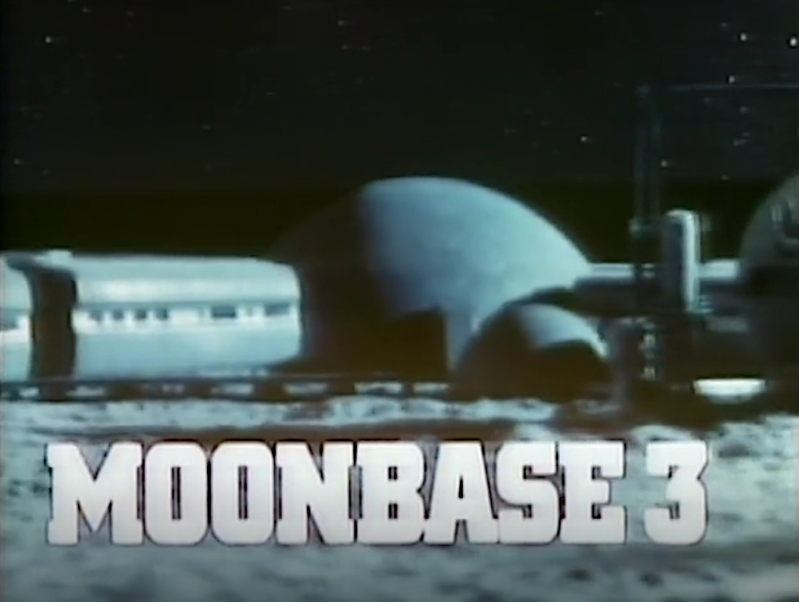
It is a safe bet that nearly all Hackaday readers like to at least imagine what it would be like to build and live in an orbital station, on the moon, or on another planet. Moon bases and colonies show up all the time in fictional writing and movies, too. For the Hackaday crowd, some of these are plausible, and others are — well — a bit fanciful. However, there’s one fictional moonbase that we think might have been too realistic: Moonbase 3.
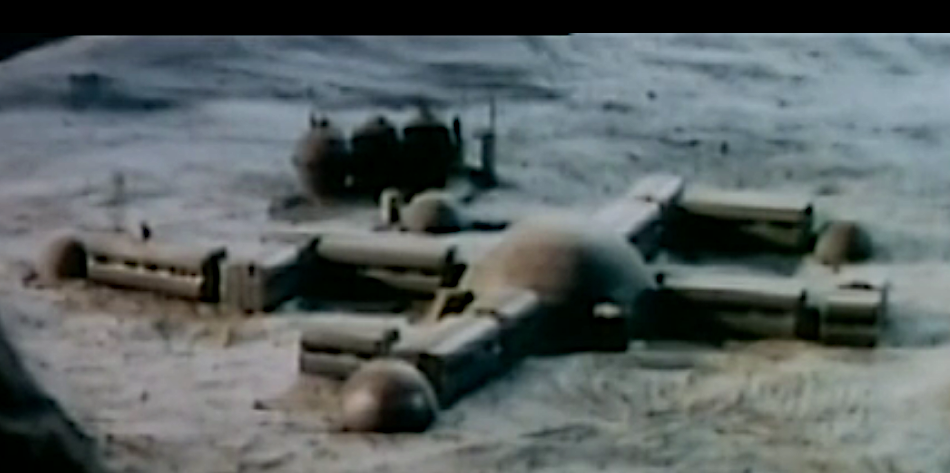
If that didn’t ring a bell, we aren’t surprised. The six-episode series was a co-production between Twentieth Century Fox and the BBC that aired in 1973. To make matters worse, after the initial airings in the UK, Australia, and New Zealand, the video master tapes were wiped out. Until 1993, there were no known copies of the show, but then one turned up in a US television station.
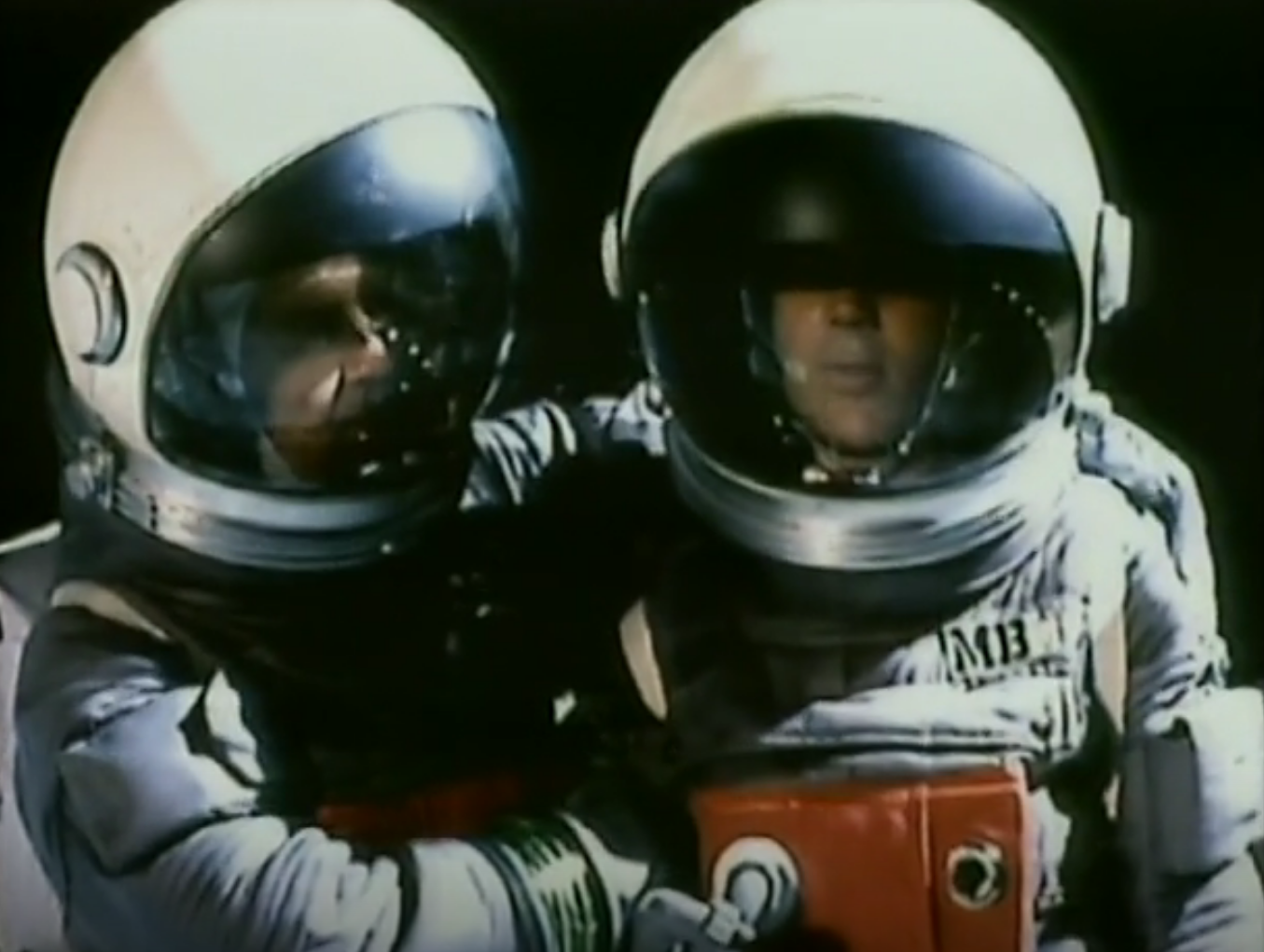
The show had many links to Dr. Who and, in fact, if you think the spacesuits look familiar, they made later appearances in two Dr. Who episodes.
Consider the year 1973. Four years earlier, the US went to the moon after essentially starting from scratch ten years earlier. The show was set in the far future of 2003, so it is easy to imagine that a lot would happen in the next 30 years. Sadly, that wasn’t the case, but you can hardly blame the writers.
The premise was that there were five moonbases, each with a number. The US and Russia had Moonbases 1 and 2. The Europeans had the titular Moonbase 3. China and Brazil had the final two moonbases.
The goal of the Moonbase was to conduct scientific research on materials such as foamed metals and exotic fuels. Of the six episodes, the final one is amazing and redeems the rest of the series. However, overall, the show is competent but nothing special. However, as I mentioned, it is almost too realistic.
The Realism
The show had a real science advisor, BBC science correspondent [James Burke], later of “Connections” fame, so things looked mostly good. The NASA-like chatter is realistic, and they talk about computers using nouns and verbs like the Apollo computers, but which didn’t turn out to be especially accurate in the far future of 2003. The producers’ aim was to make a realistic program and stay away from “bug-eyed monsters.” It is true, though, that one episode at least hinted at monsters, but, in the end, it turned out to be a false alarm.
The tech isn’t amazingly realistic, but none of it is just crazy fantasy either. But the true realism — and the part that might have prevented it from being a big hit like Star Trek or Dr. Who — was the story content itself.
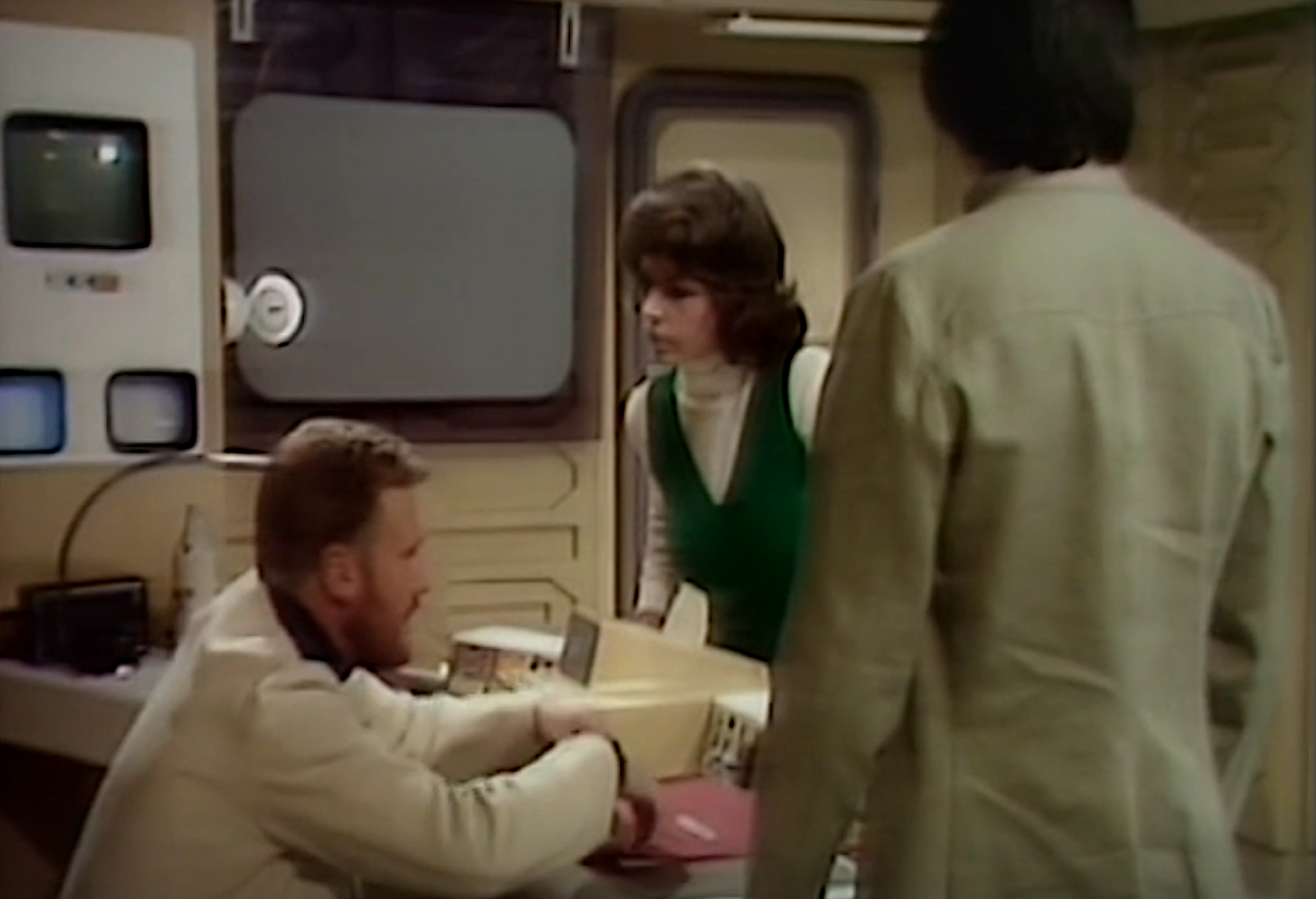
Most of the stories show people in slightly futuristic-looking offices talking about how to maintain their funding from Earth. If you’ve ever worked on a government project, you know this is probably the most realistic thing you could do on a show like this. It is also tedious and boring.
Sure, there are stories about psychological stress, accidents (which, of course, threaten funding), and erratic scientists. There’s a Mr. Scott-like engineer who needs rescuing by a Russian — heady stuff for 1973. But the thread through it all is worrying about budget cuts or a shutdown order.
That said, none of the episodes are especially bad, either. The first episode, “Departure and Arrival,” has the old director leaving and a new director arriving, which makes it handy to introduce everyone to the audience. The other episodes were filmed in a different order than the airing order, so it doesn’t hurt much to skip around, but we’d suggest saving the last episode for last.
We don’t write TV dramas, but we imagine the same could be said of most genres. If you made a realistic show about the police force, the fire department, and a hospital emergency room, too much realism would probably be a real drag. No one wants to see the department have mandatory safety training or check hoses for defects. There might be some excitement, but the ratio of excitement to mundanity is probably pretty lopsided toward the boring.
Some of what the show predicted came true: Russia and the US would cooperate in space. The moon did have ice. But like most shows of its era, it missed the boat on things like personal communication, flat screens, and other modern tech.
Unrealistic
Not that it is all realistic. For some reason, the low gravity on the moon is only apparent outside the Moonbase, but there doesn’t seem to be any artificial gravity. The model work leaves something to be desired, and while you can excuse it as quaint, other shows of the same time or earlier did better.
To build drama, the characters had to make mistakes. A lot of them. “Oh! I ran out of oxygen!” “Drat! My spaceship was throwing an error, but it fixed itself, and now it’s back!” Things like that. It is hard to imagine that, given the hostile environment and the cost of a base like this, the people would be so careless.
The final episode features a scientific project that’s hard to imagine, but I won’t say more because I don’t want to spoil the best episode.
Of course, there are plenty of technical errors if you consider what really happened in 2003, but you can forgive those.
Your Favorite
I don’t mean to pan the show. You should hang in there for episode six. I don’t recommend skipping right to it, either. It may not become your favorite moonbase, but the show is highly watchable. You can find a few copies of the entire series on YouTube. There are also a few copies on Archive.org.
What’s your favorite fictional moonbase? We wish some of the planned moonbases had become real, but alas, they, too, were fictions. While not a moonbase, the Great Moon Hoax was fictional, even though it claimed to be factual.












I dunno, after trying to recapture the excitement of my youth by re-watching “Space: 1999”, I think budget cuts and oxygen leaks sounds pretty good.
But, wow, 1999 had such cool hardware!
And it was feasible in principle, at least.
The black/white monitors were real and well suited for that environment.
In the real world, up to 800 lines of resolution was common in security/surveillance applications using mono video monitors and cameras.
The computer technology shown was a little bit dated, though.
But not too unrealistic, either. In space, using older, proven technologies might have been prefered. Such as mainframes and mini computers.
Throughout the 1970s, CP/M and MP/M 1.0 were also available, for example and could run on 8080 and 68k systems.
An multitasking/multiuser system using terminals and voice synths were possible.
MP/M II in action: https://hackaday.io/project/163683-the-thing-fpga-stm32/log/165910-the-mpm-experiment
Schematics of that kind (video terminal, sstv etc) were in Elektor, 73s magazines.
So it would have been possible to build something like Moonbase Alpha for real, including a big view screen for communications/surveillance etc, given the resources needed.
A team of radio amateurs or electronic and computer hobbyist would have been able to do that, even. :)
Now, building the Eagles would have been another thing.
I guess this would have required a bit more, um, ambitious work.
They were more sophisticated than the STS, after all. :)
cool hardware, cartoon villains.
Does it get better than Moon (2009) with Sam Rockwell?
That is certainly one good movie, nice visuals and an interesting plot and cast. Although the cast is pretty limited in number.
That’s a bit unrealistic, though. In reality, we Europeans would have had been the very last. As usual. 🥲
There wouldn’t really be a European moon base per se. It would be an extended broom closet in the US-Russian moon base, about 4.5 by 7 meters in size, and half of it would be taken up by NASA life support gear and storage cabinets.
YMMD! 🤣
I bet the Brazilian base was the party base! Moon Carnival would have rocked!
29 minutes in to the first episode, they point out the artificial gravity indicator
I must have glazed on that one.
“The premise was that there were five moonbases, each with a number. The US and Russia had Moonbases 1 and 2. The Europeans had the titular Moonbase 3. China and Brazil had the final two moonbases.”
This is a weird sentence to me as someone from the Netherlands. You probably mean the EU trade agreement, which isn’t Europe (it’s a confusing name I know) and didn’t exist when this aired. The United Kingdom, Russia, Switzerland, Norway etc, are all European countries, but not EU controlled countries. It’s like saying something like “Asia did this, but China did that”.
Everyone knows the real base is on the far side of the moon.
The European Space Research Organisation (ESRO) was founded in 1964, so there was already cooperation between multiple European countries even before ESA came into being in 1975.
That’s fascinating. As someone who’s from Germany, this is a different worldview.
I’ve always being growing up seeing these countries as a friendly neighborhood,
as individual countries with a shared culture and long, interwoven history.
But maybe that’s because of our own place in history and notable lack of patriotism over here, not sure.
We tend to identify either locally (town, federal state) or as Europeans, I think.
Exceptions might be football events (or other sports events) and the remembering of our old philosophers, artists and tinkerers, maybe. Fairyales and music, too, maybe.
Can’t speak for all my fellow citizens, of course. ex GDR citizens may feel different, also. Anyway, it’s not important, also.
Just surprises me that people of other European countries don’t identify as part of the group or team so much, it seems.
By “Europe”, I’m not thinking of the continent but rather of an loose European community (not just former EC).
The former western Europe (politically/culturally) in particular, including new members such as our neighboor Poland.
Countries that also shared certain standards (say PAL/SECAM and 220-250v/50Hz).
If I was thinking of the continent as such, as a mass of land, then Eurasia would put it better, I guess.
It would also include Russia and China (since it’s mentioned before).
Anyway, just thinking out loud here, since I think sharing such views is interesting.
I don’t mean to derail the discussion whatsoever. Sorry for talking so much!
From outside Germany, the union looks like a shotgun marriage where the Euro is simply a renamed Deutsche Mark, and its adoption was forced by rapid international credit dumping and partially manufactured economic crises after the late 80’s “casino economy” that destabilized the smaller economies and forced them to switch to the common currency, to stop their own currency from becoming Zimbabwe dollars in respect to the foreign debt they owed.
As a result of different social cost and tax structures between countries, the real purchasing power of the Euro is greater in Germany versus in the neighborhood, but the exchange rate is 1:1 because it’s a common currency, which makes business, money and jobs flow towards Germany, which makes many of the neighbors resent the deal but unable to leave the union because it would be such a massive ordeal as proven by the UK.
And if you look at the PIIGS countries, after joining the eurozone they simply continued borrowing money from the other EU members and importing stuff without developing their economies, which lead to the European debt crisis around 2009-2014.
Germany was very stern and demanding in the handling of the crisis, and everyone else had to join in to bail the PIIGS out, but the main reason why Germany didn’t say anything before the whole thing blew up, was because they were on the exporting side…
I see. The money again, sigh. To our defense, the Euro wasn’t our idea. We were happy with the DM.
To my understanding, the Euro rather was introduced because of distrust torwards Germany, which then somehow backfired.
The Euro was the price to pay for getting the “OK” for our re-union, so to say.
There’s a YT video that describes it, I think.
As usual, it should be taken with a grain of salt.
The story of such things is both simple and complicated same time.
https://www.youtube.com/watch?v=-XpExJgWcHg
PS: Despite popular belief we’re not all rich people over here.
A lot of countries envy Germany and its citizens for wealth, but don’t see the other side of coin.
The last time our living standards were high was ca. by mid-90, I would say. That’s why 80s and 90s nostalgia is still a thing, I guess.
Torwards year 2000, the costs of reunion (one pays for two) became more and more visible in old W-Germany
and the difference between poor and rich citizen increased a lot.
Subsequently, the life quality of average person was starting to become basically being halved (ex GDR was bancrupt and its old industry was nolonger competing anywhere on globe, things had to be sold at scrap value.
Sadly, I admit. On top of that, the East Germans still don’t even like us, still struggle in job market.
We wanted to help them, I think, but that help never had been good enough or not been appreciated. Maybe rightfully, even. I don’t know. Sigh.).
You can compare the electrical power costs per KWh in 1990 and with the following years if you like. Or ask an LLM, whatever.
Prices have steadily increased over the years, but not the income.
We’re basically suffering voluntarily for the success of the country.
And the poorest don’t even dare to complain anymore, because they feel ashamed.
Anyway, my point is that the ecomic wealth of a country doesn’t say much about the wealth of its citizens.
The financial success in exports of 2000s and early 2010s Germany was barely felt by the citizens here.
The costs of living are on an all high since the mid-late 90s, I would say.
But that’s just my personal observation, so please don’t take it as a fact value.
The whole money topic is something that makes me sick.
“We work to live, but we don’t live to work.” Best regards.
You’re still in the top 5 in terms of median income and minimum wage in the EU, just behind Belgium and Luxembourg etc.
It’s middle class poverty: you have to start limiting the wine budget and switch from BMW to a Volkswagen to make ends meet.
Also, when Germans go abroad as tourists, they like to spend no money whatsoever.
A German tourist bus pulls up to a service station. Behind it comes a truck with a field kitchen. They have dinner on the parking lot, fill up the trash cans and leave. For this reason, the toilets in the service stations have signs in German saying “WC for non-customers costs 1€”.
We’re horrible when being traveling, I agree. Especially in Mallorca.
No idea why, though. A switch gets switched somehow.
Most of my fellow citizens can’t explain that, either.
The country is,
No my friend, that’s a bit of an exaggeration.
Maybe true for the richer boomers with big pension,
but many of the younger ones don’t even have a car anymore.
Same goes for the poor elders with a small pension.
They can’t afford it. Fuel, insurancy, the high cost of the driver’s license..
Seriously, years ago I have been down at the lower class level and could not buy anything except cheap, basic groceries (still better quality than in the US though).
Such as toast bred, bag soup, ice tea, milk, eggs and boxes of bag tea etc.
Paying the rent and costs of water and power/gas took most of the money.
The problem with Germany is that we expect to have an intact safety net in place over here.
Which totally was the case in 20th century, still. Again 80s/90s..
We’re not like the US citizen who prepare for the worst, in short.
So if you fall through the net in Germany for whatever reasons
and have financial troubles on multiple ends (bad luck),
then German bureaucracy will be a rollercoaster ride. A hell of it!
That’s when we Germans envy our European neighbors, I suppose.
Except France or UK, maybe. They have same rigid bureaucracy, too, I believe.
Ok, back on topic. POV: You’re not left on street (yet), but it’s a lot of work to get back on feet.
You must fill out forms about all your finances in order to get a basic social pay that’s barely covering costs these days.
In addition, all your fellow citizens knowing it -who’ve never been there before but nevertheless do know better- will give you envious looks and think you’re a social parasite (social envyness is a very bad German habit, I despise it).
They try to make you feel guilty, want you to feel like a thief.
But you have an fully intact healthcare insurance again, at very least!
So you can recover, at least. For the next fight comming.:
If you earn anything on your own, to break free from JobCenter, to improve your situation, then that amount will be billed on you.
Unless you play by its rules and do lots of meaningless stuff.
Or until you get a real job on your own that earns you enough money to completely say goodbye to JC.
Hiw can I explain? It’s like a lifebelt been thrown on to you on a sea, basically.
You get some help that keeps you from drowning (financially),
but once you’re about to manage to climb out of your misery (by earning some extra money),
the JC pushes you in the sea again (takes it away, your’e back at start, drowning again).
That’s one of the reasons that Germans remain in poverty for so long.
Fighting off the JC is like fighting with a very temperamental ex partner.
It will argue and argue and use anything you’ve ever said against you.
(Disclaimer: I’m merely talking about my own experience, it’s my personal opinion.
Anything said is not to be take at fact value.)
Would be a very weird distribution of income if many people are very poor, yet the median income for the country is among the top 5 in the EU.
Yeah, that’s the common complaint. People just want to give up and rest on unemployment/social aid, and they become paralyzed, so it always has to be a bit uncomfortable to stay in that situation. That’s the reason why UBI is a good idea in principle, but a horrible idea in practice, because gradually that sort of a social safety net catches all the people who don’t actually want to do anything and they fill up the system.
Now the issue about the welfare trap, where the state will give you money but then do their best to keep you from getting a job and a life, is about the left parties intentionally creating these traps to keep their voters. More poor people with complaints means more votes for socialism. It’s happening all over the world in social democratic countries – Germany is not special, we have the same issues.
The ugly truth about welfare is that it’s very possible to live on handouts by minimizing your expectations and skirting the rules. I’ve seen young men who structure their life around the minimum handout they can get without even trying – they just fill the paperwork and appear at mandatory job interviews and outright tell you they won’t be coming to work, they’re just making appearances.
So they get subsidized housing, utilities, and a couple hundred euros of “spending money” on top, and they basically scrounge up enough cash collecting bottles or begging and borrowing to buy a computer to play games all day. Minimum income, minimum expenses, just eat and sleep.
After so many years of doing that, they become unemployable because they have no skills, no ambition, and they’re mentally and bodily broken – can’t even perform manual labor. It’s estimated that half the unemployed population is like this.
Oh dear, no. Just no. That’s the stereotype I meant before.
That’s why I’m just telling from experience. Please don’t twist my words, okay?
The socially weak in Germany rarely “complain” anymore, they’re depressed and sad and quiet.
Because they know they don’t count in politics, their needs are ignored.
Currently, the basic law about dignity is the only thing that speaks in favor of them, still.
Things is, people usually want to do something meaningful in life and want to be needed. No matter where on earth.
Living from social support all time like this is no “holiday”, even if others may think so.
The live quality is very low, too and people despair, they resign mentally.
Those who never have experienced it are often envious,
while driving a big car, go to restaurant, go shopping and go traveling a couple of times per year.
In the 90s, it was a little bit different, still. More fair.
The social net hadn’t been so aggressively being restricted in every way.
Back then people got a reasonable amount of support,
so they could concentrate on getting back on their feet again, rather than solving existancial problems 24/7.
The current situation in Germany is a bit like the pilot episode of TNG,
in which the space jellyfish got barely enough food so it could be controlled by the inhabitants on the planet.
Also, numbers show that the current, even harder upcomming restrictions this year do cost more money to the country than just providing proper support.
The change is mainly a political agenda, to blame the poor. Actionism, basically. Our Tr*mp counterpart loves it.
The change is unecessary in reality, because the number of people requiring social aid is insignificant compared to total population.
Yet same time, anyone of us may need social aid in life.
So the support should remain fair to the benefit of all of us.
Some links:
https://tinyurl.com/2vyxrtec
https://www.hrw.org/report/2025/03/24/it-tears-you-apart/poverty-and-gender-germanys-social-security-system
PS: I’m afraid, that’s all I can say about the matter.
I don’ t like to off-topic anymore, either. It makes me feel uncomfortable, to be honest.
The comments should be about Moonbase 3, rather.
– Which ironically also covers conflicts on earth countries.
The last episode addesses the sillyness of nations and talks about an unified earth, basically.
I can understand why a german wouldnt necessarily feel comfortable identifying as a german, given the historical baggage pinned on to each german.
Thanks. That’s indeed a thing.
Until ca. the 2010s, I think, we barely dared to mention our nationality in online communities, in fear of being seen as a Nazi again.
My generation was raised with the guilt culture, too. In school, mainly.
Despite my grandmother, my father and me being totally innocent.
She was a helpless little girl when WW2 started and the rest of us wasn’t even born yet.
(My grandmother was very open to talk about Germany’s horrible actions in WW2 and that we lost rightfully.)
But still, it makes sense that we must continue to have to learn to cope with such stereotypes and all the Nazi stuff.
Because, “we” are the bad guys, after all. We’re used to it.
The only thing good about it is, I think, that we made peace with our part in history and that we are willing to freely remember
the past on our own and make sure that it won’t happen again.
Not just because of guilt, but also in order to take responsibility.
For the past, but also the far future.
We’re on a mission, so to say. It’s our obligation that things won’t be forgotten or repeated.
That’s why so many young Germans in the comments are warning about the current geopolitical landscape.
They see history repeating itself.
Rounded corners but at least they straightened the sides of the picture tubes. I did that back then with a friend’s large portable TV with a hot chassis that fell and broke the plastic case but still worked. We had junked a console TV for it’s case. A plywood front insert with straight sides and round corners held the tube and made it safe for kids and pets but I made those future looks in ’73.
I find it totally unrealistic (not watched yet).
The very idea that everyone would not call their first base on the moon base number one is ridiculous. Logic and politics rarely overlap.
“artifical gravity system, totally believable”
“Naming protocol, Totally outrageous Who came up with this garbage. ”
lmao
I remember watching this as a kid when it was first aired. Most of the episodes were clearly forgettable over the passage of time apart from the one really good plot line. It must have made a significant impression on me at the time since I can still remember it including some of the graphics. Still it was 1973 and I was a kid. The competition at the time was pretty limited for kids in the UK, Stingray, Thunderbirds, Captain Scarlet and of course Dr.Who.
It’s a realistic theme, since the point of space programs seems to be to perform difficult research in the most difficult place it could be conducted, despite it being unnecessary for the point of the research, in order to justify the cost of said space program.
Thanks for writing this up Al, will have a look. Might be a gem like the hitchhiker’s guide I found through the podcast…
This reminds me of how I still can’t get over that all the media claimed that the movie ‘the martian’ was so scientifically correct.
And then you had people parroting it.
Whoever ran the PR for that movie was pretty damn skilled.
And then there was Star Cops that somehow did a lot better while still being engaging enough. Hell, I still think they were good enough to have at least three seasons.