
Disposable cameras are a fun way to get into classical photography. However, they can also be a valuable source of interesting parts that can be put to other uses. For example, as [Billt] demonstrates, their viewfinders can be repurposed into a rather interesting lens for more serious cameras.
[Billt] was lucky enough to score a grabbag of used disposable cameras from a local film lab, and tore them down for parts. He was particularly interested in the viewfinders, since Kodak equipped its disposable cameras with actual plastic lenses for this very purpose.
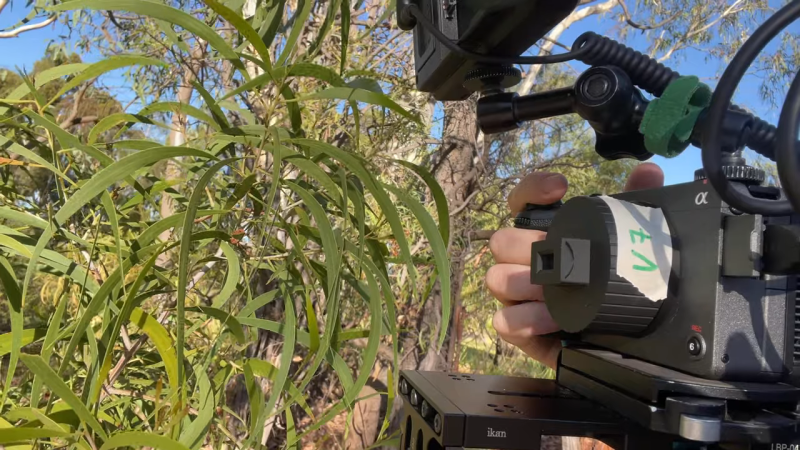
[Billt] wanted to see what these lenses would do when thrown on the front of a proper digital camera, and set about designing a mount for that purpose. The 3D printed part was designed to mount one of the viewfinder lens assemblies on the front of any Sony E-mount camera. In a rather nifty trick, [Billt] realized the lens assembly could be installed in the adapter by pausing mid-way through the 3D print to drop it in. The only unfortunate thing? The lenses didn’t really work, and all the camera could see was a haze of unfocused light.
With the aid of some cardboard experiments, [Billt] decided to make some changes. The front element of the viewfinder was dumped, with the rear element being used solo instead. This was fitted to the adapter on a simple slide mechanism so that focus could be reliably adjusted. With these changes, the lens came good, and provided some really interesting shots. It’s quite a cropped lens and it can achieve a very close focus distance, as little as 1 inch in testing. It’s quite sharp in the center of the image, while softly blurring out towards the edges—something that sounds very familiar if you’ve used one of these disposable cameras in the wild.
Sometimes it’s fun to grab a random piece of junk to see if you can turn it into something good. Video after the break.










When these cameras were in their heyday, Kodak received over 97% of them back for recycling, making them one of the most recycled items in the world. In the trade they were called “single-use cameras”, because unlike other plastic artifacts, there were not “disposable”, they were re-used.
Everything was ground and added to the mix for molding. The optical elements were always made from virgin plastic, though even these elements were ground and used as feedstock for non-optical items.
That’s awesome! I always felt guilty using the things!
They were perfectly and easily reusable, with a normal 35mm cartridge inside them.
The only trick was that the film was wound out of the cartridge into the “take up spool” when reloaded, and using the camera winds the film back into the cartridge after each shot, so it is all back in the cartridge at the end.
I can’t recall what the original film was, but I used to use Kodak multispeed press film that had wide latitude i.e. you could set the camera iso anywhere from 100 to 1000. (Probably Kodak Ultramax 400 today)
I had one with two lenses of different focal lengths. I think it was a Kodak one, but I never saw one again, and regretted not keeping it, as it was before I started reusing them.
The only caution about home re-loading of these cameras is to be careful if the camera has a flash. The capacitor discharge could cause a nasty shock.
I still have a couple on the shelf. The label says Kodak Gold 800 film.
You are right about that, I recall that the cap is definitely charged when you touch the pcb. I’d forgotten that part of the experience
Funny, we harvested a bunch at my local hackerspace just for the flashes and their HV capacitors. :)
yuk. One can see way too much the glasses of the dude, and not enough the image through the lens.I wish AI would delete humans from such videos. They don´t bring anything useful. Talking heads just eat your time.
Why not use the actual lens of the disposable camera instead of the one in the viewfinder?
The Kodak ones were really good lenses, I put one on my M43 mirrorless, glued into a body cap.
You needed to pixel peep to see anything wrong with the images.
Later Olympus would lean into this idea with body-cap fixed lenses.
(The rando no brand ones however, were a whole other story)
It’s really surprising how good a plastic lens can be. I wasn’t involved in the manufacture of the lenses in the single-use cameras, but I did work with the team on lenses Kodak made for another firm’s Blu-Ray players. The lenses were aspheric and the molds were diamond turned to a tolerance of 1/10th wave (about 40nm) over the full form. The molded lenses were accurate to ¼ wave.