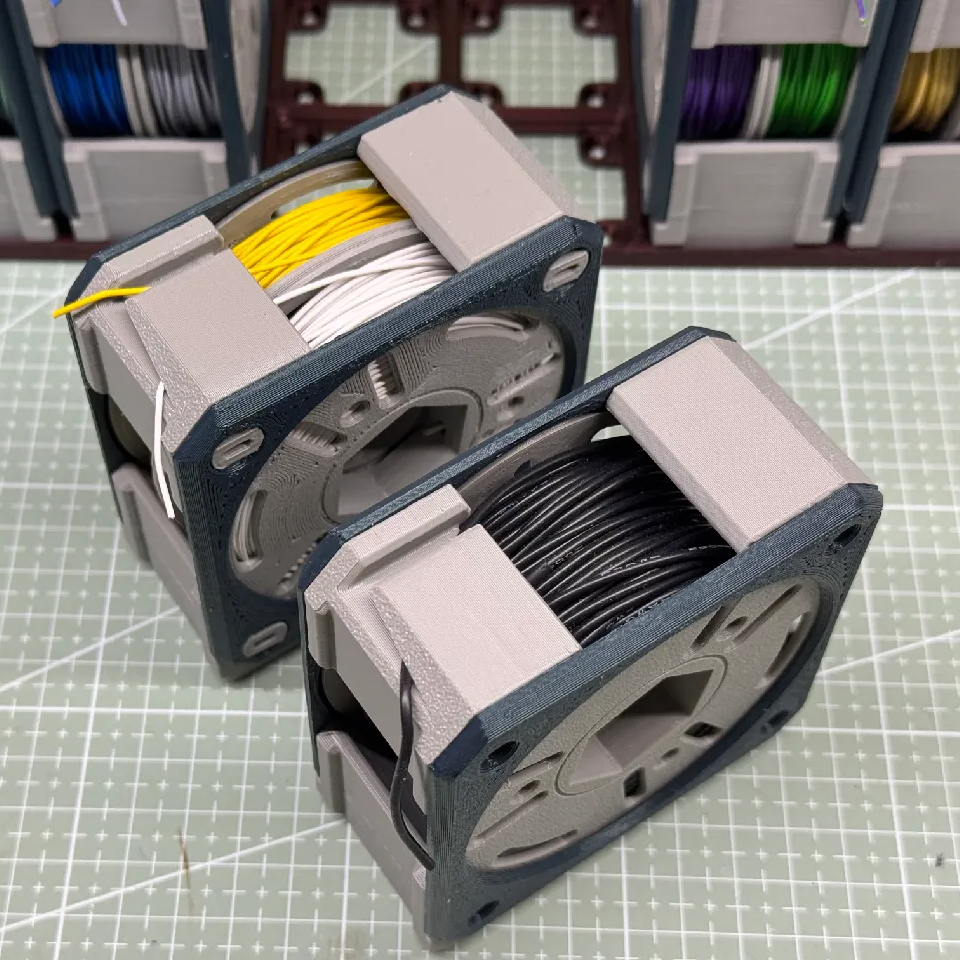
The big white thing is is the CO2 exhaust bag.

Liquid CO2 For Grid Scale Energy Storage Isn’t Just Hot Air

There’s folk wisdom in just about every culture that teaches about renewable energy — things like “make hay while the sun shines”. But as an industrial culture, we want to make hay 24/7 and not be at the whims of some capricious weather god! Alas, renewable energy puts a crimp in that. Once again, energy supplies are slowly becoming tied to the sun and the wind.

Since “Make compute while the wind blows” doesn’t have a great ring to it, clearly our civilization needs to come up with some grid-scale storage. Over in Sardinia they’re testing an idea that sounds like hot air, but isn’t — because the working gas is CO2. 

The principle is simple: when power is available, carbon dioxide is compressed, cooled, and liquefied into pressure vessels as happens at millions of industrial facilities worldwide every day. When power is required, the compressed CO2 can be run through a turbine to generate sweet, sweet electricity. Since venting tonnes of CO2 into the atmosphere is kind of the thing we’re trying to avoid with this whole rigmarole, the greenhouse gas slash working fluid is stored in a giant bag. It sits, waiting for the next charge cycle, like the world’s heaviest and saddest dirigible. In the test project in Sardinia — backed by Google, amongst others — the gas bag holds 2000 tonnes and can produce 20 megawatts of power for up-to 10 hours.

Continue reading “Liquid CO2 For Grid Scale Energy Storage Isn’t Just Hot Air”
Print Your Own Standardized Wire Spool Storage

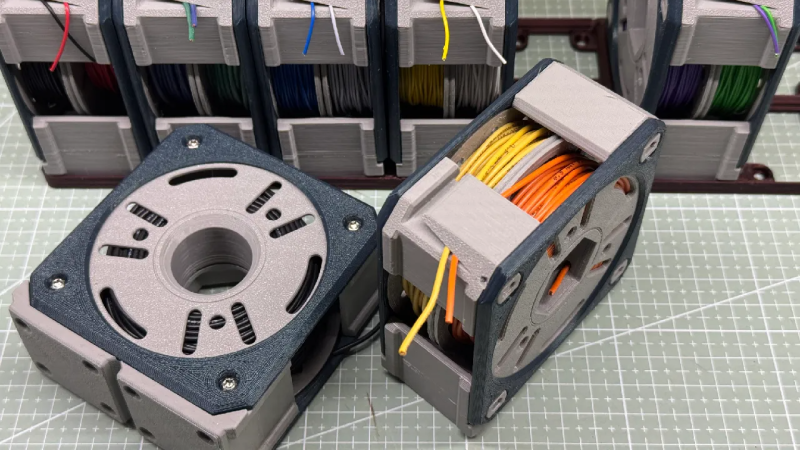
Hardware hackers tend to have loads of hookup wire, and that led [firstgizmo] to design a 3D printable wire and cable spool storage system. As a bonus, it’s Gridfinity-compatible!

The slot to capture loose ends is a nice touch, and the units can be assembled without external hardware.

There are a lot of little design touches we love. For example, we like the little notch into which the wire ends are held, which provides a way to secure the loose ends without any moving parts. Also, while at first glance these holders look like something that goes together with a few screws, they actually require no additional hardware and can be assembled entirely with printed parts. But should one wish to do so, [firstgizmo] has an alternate design that goes together with some M3 bolts instead.

Want to adjust something? The STEP files are included, which we always love to see because it makes modifications to the models so much more accessible. One thing that hasn’t changed over the years is that making engineering-type adjustments to STL files is awful, at best.

If there is one gotcha, it is that one must remove wire from their old spools and re-wind onto the new to use this system. However, [firstgizmo] tries to make that as easy as possible by providing two tools to make re-spooling easier: one for hand-cranking, and one for using a hand drill to do the work for you.

It’s a very thoughtful design, and as mentioned, can also be used with the Gridfinity system, which seems to open organizational floodgates in most people’s minds. Most of us are pinched for storage space, and small improvements in space-saving really, really add up.