
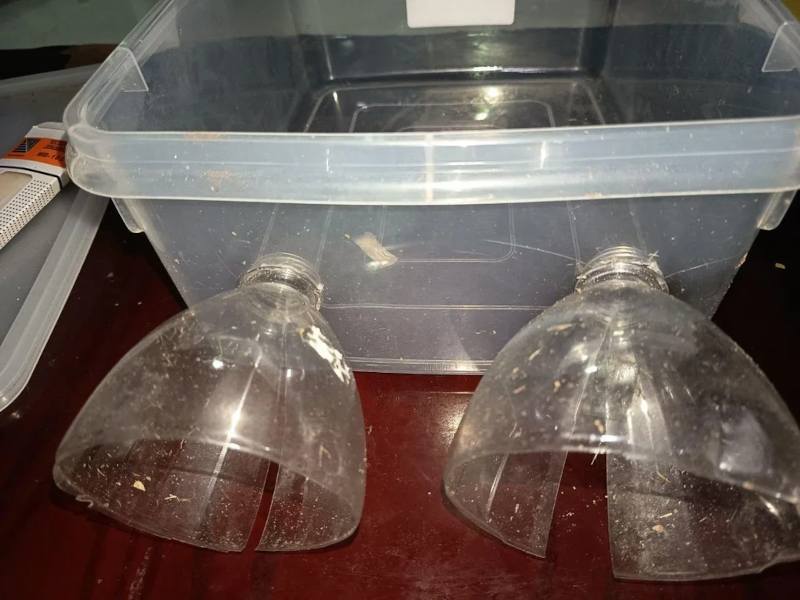
If there is one thing we took from [azwankhairul345’s] environmental monitor project, it is this: sensors and computing power for such a project are a solved problem. What’s left is how to package it. The solution, in this case, was using recycled plastic containers, and it looks surprisingly effective.
A Raspberry Pi Pico W has the processing capability and connectivity for a project like this. A large power bank battery provides the power. Off-the-shelf sensors for magnetic field (to measure anemometer spins), air quality, temperature, and humidity are easy to acquire. The plastic tub that protects everything also has PVC pipe and plastic covers for the sensors. Those covers look suspiciously like the tops of drink bottles.
We noted that the battery bank inside the instrument doesn’t have a provision for recharging. That means the device will go about two days before needing some sort of maintenance. Depending on your needs, this could be workable, or you might have to come up with an alternative power supply.
This probably won’t perform as well as a Hoffman box-style container, and we’ve seen those crop up, too. There are a number of ways of sealing things against the elements.











Commendable effort. Though continuously collecting and transmiting real-time data is overkill for a battery powered solution. A remote weather station, generally, only needs to measure and send hourly, though rain-fall and wind-speed are conti uous, and can last for weeks, if not longer on a 9 Ah battery.
Harvest the wind for power. It’s not much on a small station, but should be enough to do burst transmissions when it’s important.
please make a Gaiger counter too
A Geiger counter is overkill. Usually if you are worried about radiation, your public services are more worried than you could ever be.
i’ve yet to find an environmental sensor project requiring a microcontroller any more powerful than an ESP8266. i built a whole REPL-style interactivity system in Arduino C++ and there was room leftover to do OTA reflashes.
https://github.com/judasgutenberg/Esp8266_RemoteControl