
Sometimes you just know that you have the best ever idea for a hardware product, to the point that you’re willing to quit your job and make said product a reality. If only you can get the product and its brilliance to people, it would really brighten up their lives. This was the starry-eyed vision that [Simon Berens] started out with in January of 2025, when he set up a Kickstarter campaign for the World’s Brightest Lamp.
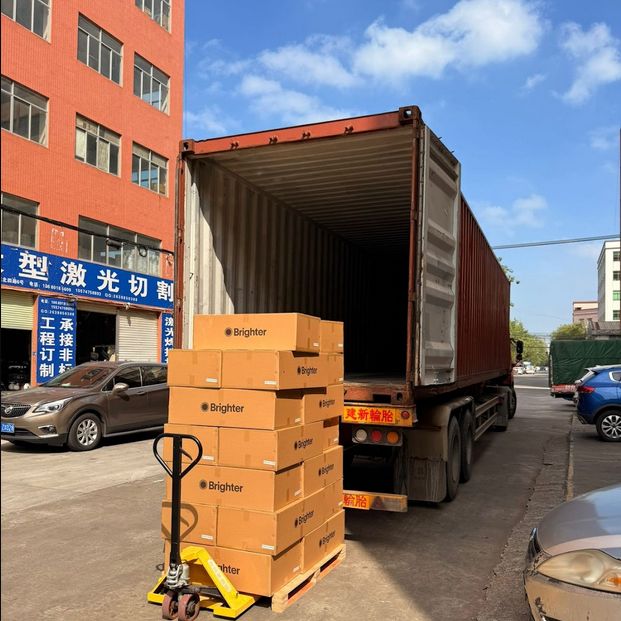
At 50,000 lumens this LED-based lamp would indeed bring the Sun into one’s home, and crowdfunding money poured in, leaving [Simon] scrambling to get the first five-hundred units manufactured. Since it was ‘just a lamp’, how hard could it possibly be? As it turns out, ‘design for manufacturing’ isn’t just a catchy phrase, but the harsh reality of where countless well-intended designs go to die.
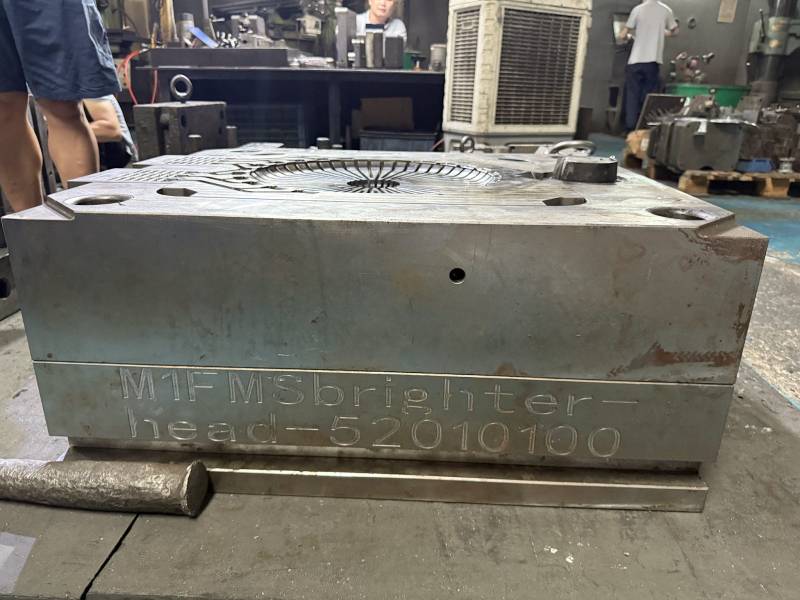
The first scramble was to raise the lumens output from the prototype’s 39K to a slight overshot at 60K, after which a Chinese manufacturer was handed the design files. This manufacturer had to create among other things the die casting molds for the heatsinks before production could even commence. Along with the horror show of massive US import taxes suddenly appearing in April, [Simon] noticed during his visit to the Chinese factory that due to miscommunication the heatsink was completely wrong.
Months of communication and repeated trips to the factory follow after this, but then the first units ship out, only for users to start reporting issues with the control knobs ‘scraping’. This was due to an issue with tolerances not being marked in the CNC drawings. Fortunately the factory was able to rework this issue within a few days, only for users to then report issues with the internal cable length, also due to this not having been specified explicitly.
All of these issues are very common in manufacturing, and as [Simon] learned the hard way, it’s crucial to do as much planning and communication with the manufacturer and suppliers beforehand. It’s also crucial to specify every single part of the design, down to the last millimeter of length, thickness, diameter, tolerance and powder coating layers, along with colors, materials, etc. ad nauseam. It’s hard to add too many details to design files, but very easy to specify too little.
Ultimately a lot of things did go right for [Simon], making it a successful crowdfunding campaign, but there were absolutely many things that could have saved him a lot of time, effort, lost sleep, and general stress.
Thanks to [Nevyn] for the tip.












there is a reason i only use local european suppliers: chinese ones never say no, even if they should. nor do they raise an alarm if something seems off.
Beware, many “local” shops often just middlemen for Chinese suppliers. You give them your design files, they forward them to a factory in China who actually makes the parts. And you get the privilege of paying them a nice 10% fee on top of the manufacturing costs.
Chinese hate saying no, but they also appreciate good documentation. So 9/10 if your documentation is good, you’ll get the parts without any problems.
Seems like that’s a lesson. Specify everything otherwise the factory won’t have time to design what you didn’t.
I think the other lesson here is to do a preproduction batch and test. I see some blame on the manufacturer here and some of this seems like someone needed to save some money and possibly cut an important step out of the production process.
Finding shops that can manufacture goods outside of Asia for a price that is saleable is brutal. I remember getting quotes from machine shops for an idea I had… It was about 50x above business reality with slow unguaranteed supply. Things are different now, and regional, but physical products are hard to pull off if you avoid the world leaders at making them.
Right.. I’m sure a lamp that costs half a million a piece would be a great success.
And I’m sure you are a manufacturer and swimming in money.
“It’s hard to add too many details to design files”
IME it’s actually easy to add too many details that cause the price to soar or critical specs to be overlooked in a confusing mess of a drawing. Not as easy as underspecifying details, but still pretty easy. Finding the balance is an essential part of the art of engineering products.
I have rescued many projects by simplifying the documentation for projects my employer originally contracted out to consultants who added too many details.
I think they key mistake this guy made is not indepependently specifying every part. You have to treat each component like its own product, and understand how it will be manufactured, and what the manufacturer will need to know to do it. The idea that you wouldn’t have a drawing of the cable with wire lengths, or a drawing of the knob. Seems crazy to me.
Due to CNC usage I find repeatability is actually extremely good. If evey part is fully specified with no guesswork, you can design a product in CAD, and it should come in looking exactly like your design.
Tollerancing is the only part thats a bit tricky, because you can’t really justify tollerancing everything in consumer product up front. Luckily if you make a mistake and and a part turns out to be a lot more variable than you expected, the result is usually just poor fitment, which can often be compensated for during assembly.
“Due to CNC usage I find repeatability is actually extremely good. If evey part is fully specified with no guesswork, you can design a product in CAD, and it should come in looking exactly like your design.”
One major issue is that the product you design in cad is very often NOT designed for manufacturing. Many parts have to be completely redesigned before tooling for injection molding or die casting can be designed. People prototyping their ideas on 3d printers has actually made this issue much worse. Designer/inventors/wantrapreneurs get a 3d print thats “perfect” in their hands and assume its just a quick boolean operation or two, and some CNC time away from mass production. So many designs arent practically machinable. So many more have no consideration for draft, no understanding of part ejection, flow dynamics, etc. Theres a LOT more to designing for manufacturing than just designing the product in CAD the way you think it should be.
There was a funny video I saw recently where someone started with a simple design and then posted on Twitter “adding complexity every day until Send-Cut-Send cries uncle.” SCS were good sports and played along and it was hilarious, but also very much highlighted designing for manufacture.
Wantrapreneurs! I’m adding that to my vocabulary. Shame it doesn’t work in Dutch.
Please don’t, business operations are a different skill area, and being disrespectful to someone you personally think isn’t important can cost you real money. Telling a CEO their drawing looks stupid without tolerance notation will cost your firm millions in sales, and future orders.
DFM is factory specific, heavily coupled to existing equipment, trained staff, and tolerance standards. Mold making is also a trade, and most inexperienced people won’t have intuition about flow, wear, or cycle time.
China can produce all levels of quality, but has a different culture on design.
3D printing gives complexity for free, but cycle times measured in days instead of seconds. Irrelevant in most consumer markets.
Try to conduct yourself with integrity, and respect the unknown.
I think you’re misunderstanding “Wantrapreneurs”. Its not entrepreneurs who are trying to start a business, but people who claim they “want” to become an entrepreneurs but they never do anything. We all know this one guy who’s like this. In my case, he’s me! Its all good fun.
In my very limited entrepreneurship experience, telling people exactly this (but needless to say, sugarcoating it heavily) is the absolute best way to win the trust of the said CEO.
There are too many “yes sir” brown nosers who will make you believe your perpetual motion magnet machine is one step away from mass manufacturing, and is absolutely going to change the world. But only as long as you have the coin, of course
There is a Dutch expression “luchtkastelen bouwen”. Building castles in the sky. Ideas that look pretty in your mind and in drawings, but have no foundation so can never be build.
It’s not quite the same meaning as it’s more about the idea, than about the person. But I think it’s a good alternative.