
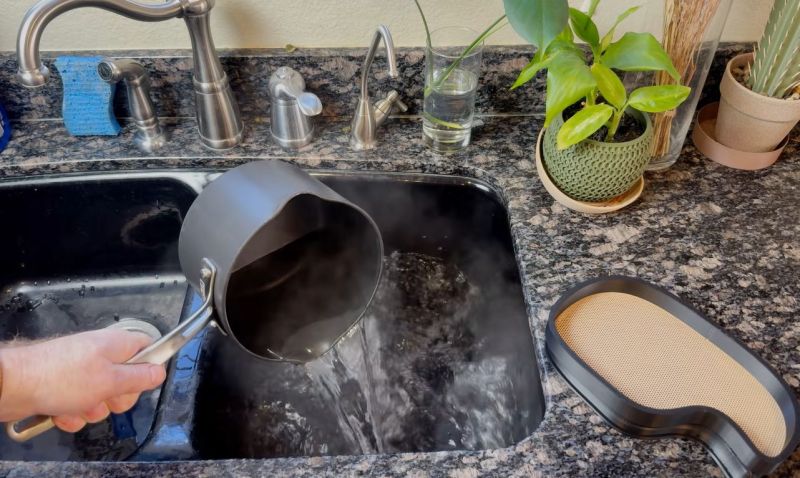
Thermoforming is the process of softening a material enough so that it can be tweaked into a new shape, with the source of the thermal energy being not particularly relevant. Correspondingly, after [Zion Brock]’s recent video on his journey into thermoforming PLA with a mold and a heat gun, he got many comments suggesting that he should use hot water instead.
We covered his previous video as well, in which he goes through the design steps of making these grilles for a retro-styled, 3D printed radio. The thermoforming method enables him to shape the curvy grille with a heat gun and two-piece mold in a matter of minutes, rather than spending hours more time printing and removing many supports.
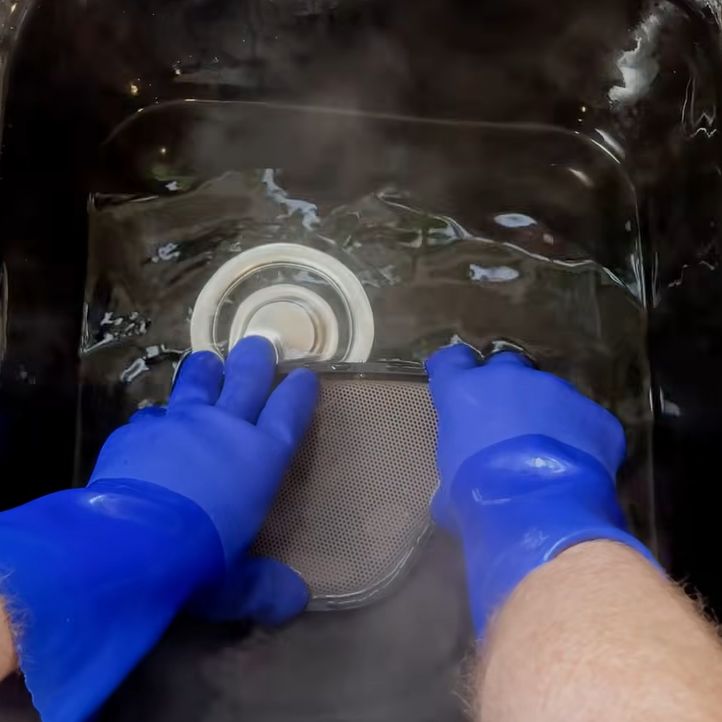
Theoretically using hot water instead of hot air would provide a more equal application of heat, but putting your hands into 70°C water does require some more precautions. There’s also the issue that PLA is very hygroscopic, so the part requires drying afterwards to prevent accelerated hydrolysis. Due to the more even heating, the edge of the PLA that clamped into the mold also softened significantly, causing it to pop out of the mold and requiring a small design modification to prevent this.
Basically, aqua-thermoforming like this has many advantages, as its slower and more consistent, but it’s less straightforward to use than hot air. This makes both a useful tool when you’re looking at doing thermoforming.












3D printed some PLA tiaras for the kids the other day. Just print them flat, put them on a curved surface (I used a pan) and pour boiling water. Instant curved.
Instant is the coffee Lewis, death is instantaneous.
For a long time e-NABLE (https://enablingthefuture.org/) has been promoting a 3D printed prosthetic hand with the socket formed by laying a flat 3D printed plate over a 3D printed buck. The plate is softened in hot water first, then hardens again after cooling.
Apparently there aren’t enough micro plastics in our water supply
The problem is more plastic waste making it into the ocean where weather and currents break it down into micro plastic.
He should try mineral oil
Or maybe hot sand, less to clean up.
Yeah just dump more microplastics into your local sewage >.>
Hmmm.. I guess hot water could work…
What was going through my mind as I read the original project the other day was “will this work with a plastic that takes a higher temperature, like PET-G. Maybe if the mold couldn’t take that then a negative of the mold could be printed then the actual mold casted in plaster or something.
I just don’t like putting effort into making things that are one hot day in a car, a room without A/C or maybe even just outside in the sun away from destruction.
Re: the microplastic concerns… Unless you’re wearing and washing nothing but all-natural fibers, I suspect that ONE t-shirt will do more damage to the environment than a lifetime of submerging PLA parts into hot water. Let’s get real.
Yes, most microplastics are from clothes, paint, and tear and wear on coated surfaces. Latex paint is more acrylic than latex generally speaking, and most tile floors in stores/public buildings are covered in floor wax, which is modified acrylic. Wood gym floors have layers of urethane plastics. Bricks are sealed by polymers. Tires are only about 28% natural rubber, the rest being nylon, SBR, steel, and polyethene.
One can look up studies on percent causes of microplastics, but you won’t find stuff like thermoforming with hot water to even be a percent of it all. It is a waste of time and effort to put pressure on this stuff when advocating for public transit, natural fabrics, and eco-friendly paint will have a impact hundreds if not thousands of times greater.
‘Microplastics’ is just thoughtless derp.
The original Lexan forming technologies for aircraft canopies used hot oil, and hot sand is a very good “dry” means of heating plastics (ask any optician – it’s how they heat temple bars to adjust them), though there’s no convection to keep the temperature well-distributed. Perhaps a fluidized bed system with hot air?
“Microplastics” – sigh. This is going to keep a lot more researchers fed than actual problems proven.
If you want a stable water temperature you could use an immersion circulator normally used for sous vide cooking in a water bath.
To avoid having to put your hands in hot water you could print a press style jig which would apply even pressure for more consistant results.
Another option to soften plastic would be to use steam, for example from an upright clothes steamer but that would be harder to control and less effective than using a heat gun.
For fast and repeatable results then vacuum forming would be the best. Soften the plastic in an oven then vacuum form it on the mold. I saw a couple of YouTube videos on how to build your own vacuum former.