
You may or may not know, but printf is a Turing-complete language, once you exploit all the strange and wonderful format characters in it (especially %n). But who has time to write code as printf modifiers? Now, thanks to [sebsite], you can at least write in a slightly higher level assembly language and compile to printf. Practical? No. Cool? Undeniably.
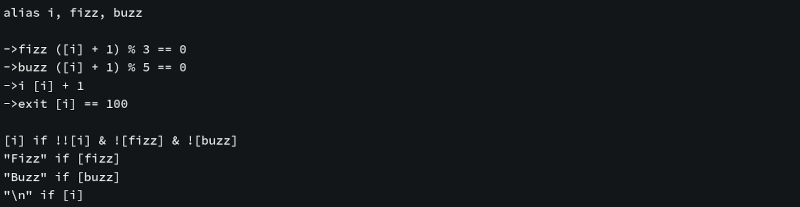
As an example, the page shows fizzbuzz written in the assembler:
alias i, fizz, buzz

->fizz ([i] + 1) % 3 == 0
->buzz ([i] + 1) % 5 == 0
->i [i] + 1
->exit [i] == 100

[i] if !![i] & ![fizz] & ![buzz]
"Fizz" if [fizz]
"Buzz" if [buzz]
"\n" if [i]
The alias keyword defines constants and, owing to default values, sets i to zero, fizz to one, and buzz to 2. The “arrow” statements store a result into a variable (so the first assignment sets the resulting value into fizz).
You need C23 to compile the assembler. Good luck trying to decode the output.
The printf function can even play tic-tac-toe. If you think considering printf as Turing-complete is weird, we wouldn’t disagree. But we also think it isn’t the weirdest thing we’ve seen, either.












Can it run doom?
Bold of you to assume it isn’t already.
Is the
<
pre> tags necessary for it to work?
Nope, that’s HTML formatting leaking into the code block. ;)
Here I was thinking of the DOS command….
Glad I wasn’t the only one!
Regular expressions can be almost as good as simple lambdas. The trick is not terribly new, but rather too obscure to notice.
I’ve fudged a lot of stuffs in the Oracle regular expressions and results are blazingly fast, if one takes time thinking things properly. Debugging is a bummer, since it may fly sideways when/if not planned properly, but once it works it works darn well. Turing complete, I dunno, never bothered to investigate or care, probably.