
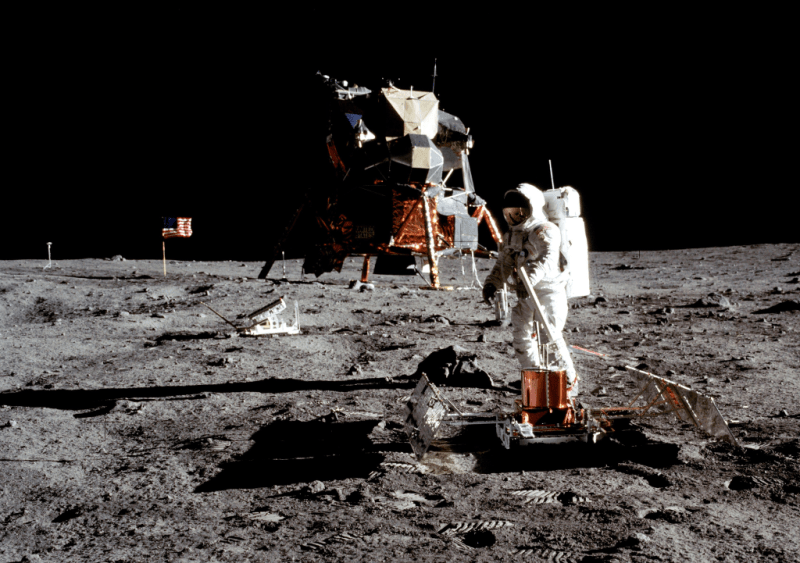
As I write this, four astronauts are on their way around the moon for the first time in 50 years. A lot us have asked ourselves just exactly why you’d send people out that far when the environment is so hostile and we have increasingly competent robots that could do the jobs in their place. If anything, that’s even more true now than it was back in the day of the Apollo program, when the remote operations capability was a lot more constrained. But having people, potentially in the near future, on the lunar surface remains qualitatively different.
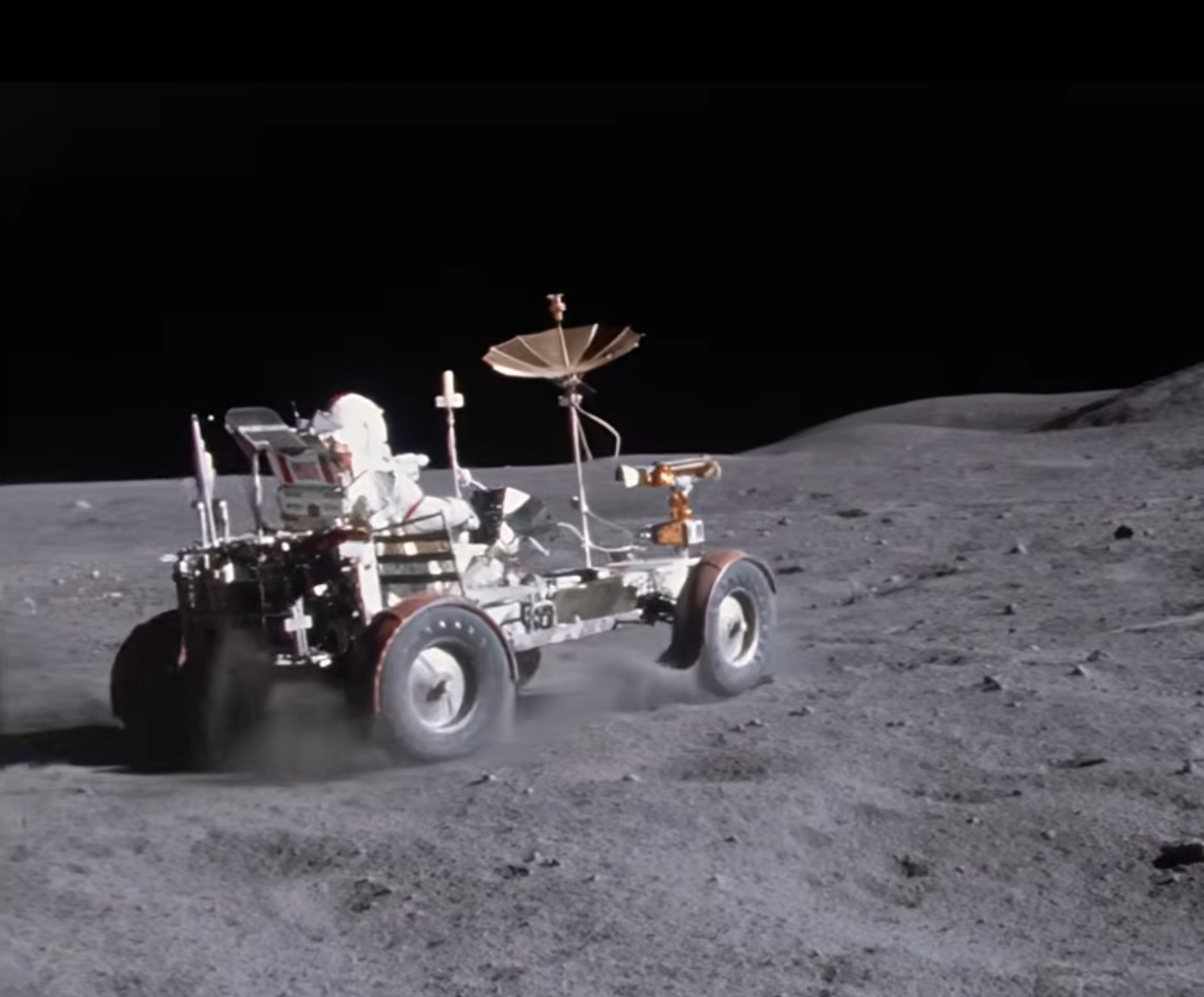 I was recently re-watching some of the footage from Apollo 16 when the astronauts were driving around in the Lunar Roving Vehicle, and the discussions that they’re having about the lunar geology that they can see for the first time with their own eyes is very convincing. Having people in situ tightens the loop of “hey, that’s interesting”, “let’s take a closer look”, and “I wonder what that means” in a way that minutes or hours of transmission time, and sterile observation of photos on a computer monitor just break. In comparison, our Mars rovers move excruciatingly slowly, the data comes back through a very thin pipe, and it takes months or years to analyze.
Of course, there is danger to human life; it’s a lot more expensive to get people safely to, and importantly back from, the moon than it would be with a disposable robot. Comparison with the Mars rovers is also unfair because travel to Mars is another scale entirely. Even if it does make sense to send humans for exploration on the moon, it may not make sense to do the same on the red planet, in the near future or ever. Given all that, I’m stoked that we can see through the robots eyes, but if all else were equal, I’m sure that we’d learn more from human explorers.
While in a lot of ways the Artemis I and now the Artemis II missions are underwhelming in comparison to the many “firsts” of Apollo, I absolutely appreciate them for what they are: a shakedown trial of a set of technologies and practices that we used to grasp, but which have atrophied over the last five decades. If a new generation of scientists is to put feet onto regolith, we need to learn to walk before they can run, or rover. In that spirit, I’ll be crossing my fingers for the future of manned spaceflight over the next week and a half.












This is where we should have been in 1975.
All politics and money problems aside, we should have been courageous enough as a country to continue to explore the Moon. The ASTP (Apollo-Soyuz) should NEVER have been the final Apollo mission.
the case for humans on the moon is that you can deploy telepresence systems with zero lag with the operator sitting in a shirt sleeve environment rather than crammed into a space suit. and if that robot ever breaks down you either walk it to an airlock, or have another robot walk it to the airlock if it cant walk, and then be able to affect maintenance. sure beats a bunch of people in mission control debating the best way to avoid a rock and then waiting several seconds to see if it worked. if you want to build permanent lunar infrastructure at a useful pace, thats how you do it.
It’s not a race.
Until you realise we are one disaster away from a great filter.
What about reusing some of the hardware left on the moon by the “old” missions in the future moon base missions ?
E.g. may be the rovers, fitting them with new batteries, cameras and comm hardware ?
Not thinking in terms of cost but of cargo space and weight in the future missions.
Best regards,
Daniel F. Larrosa
Montevideo – Uruguay
Cosmic rays do amazing in circuit modifications to electronics and you cant really harden them to prevent that mod. Stuff on the moon is probably trash sad to say. But what can i know, i just built sattelites in LEO
Was going to say pretty much similar. Though I would be curious to know what condition the rubber-and-piano-wire tires look like these days, as well as the fenders (especially the one John Young had to field repair after an accident with a survey hammer).
The reasonable place to build a moon base is near the poles, where sun doesn’t set. All the Apollo hardware is near the equator.
Moon dust is like asbestos. It sticks to EVERYTHING due to it being electrostatically charged by the solar wind AND it’s radioactive because of neutron activation. All those visions of astronauts going outside to “build bases” or “do science” is pure copium.
I don’t really understand what’s the point of sending people there just so that they can sit locked in a tin can for months. They already do it on ISS and what are the measurable scientific gains from that?
Why do people climb a mountain? Because it’s there.