
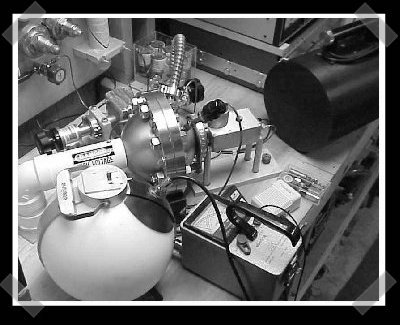
It’s staring to feel like a theme week. [Eric] reminded me of this 17 year old who built his own fusion reactor. Being me, I had to look around for more. I found the open source fusor research consortium. I found plans, research, and this fusor built by Richard Hull. It’s his fourth version – definitely worth checking out. Essentially, all the atmospheric air is removed via vacuum. Then you add a bit of deuterium gas, some high voltage and if you got it right, bask in the glow of your own personal fusion reaction. (Just watch out for X-ray leaks.)
Preamp Recycling
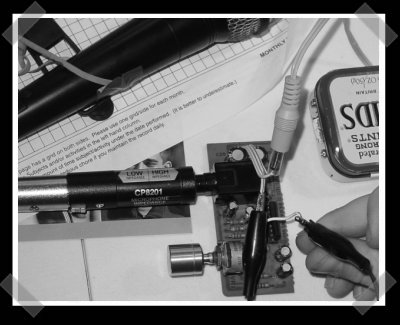
[lgbsneak] found a good source of pre-amps to fill his needs. Some older receivers, like his old Kenwood KA-305 have modular pre-amps. So it’s just a matter of ripping out, powering it up and tossing it into an enclosure. Now he’s got a handy 9v battery powered pre-amp for field work.
Build Your Own Laser Spectrograph

The news is awash about a 17 year old girl who won a $100,000 scholarship for her spectrograph, but nobody actually linked to information about the thing. After some digging around, I located [Mary]’s web site. It’s a work in progress, but I found an early version of her spectrograph build. The picture shows her project with a spectrograph head made for a meade telescope. Hopefully she’ll get documentation of her spectrograph head up soon. This is one of the better uses I’ve seen for a 5mw green laser.
I forgot to mention her sweet dobsonian telescope build. Very nice work.
PIC Cluster Computing
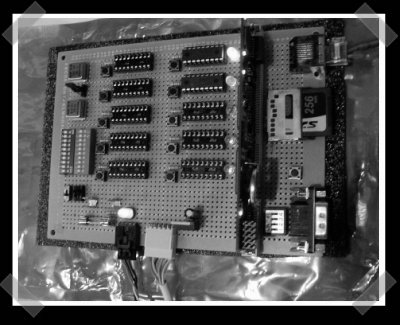
[silic0re] sent in this uh, totally different take on micro-controller applications. The hardware is impressive. It’s built to carry up to 10 dsPICF3012 controllers (30 mips each), and has ethernet, SD, Serial and i2c thanks to an imsys SNAP module (similar to gumstix). This is, as far as I know, the first PIC controller cluster built. The software is still a work in progress- for now it’s just pretty, but he deserves points for originality. His site’s a bit slow, so try the coral cache.
(I woke up this morning thinking that I’d end up eating my words on my ‘first time’ statement.)
Shortened Usb Pcmcia Card

[Rune] got tired of seeing the side of his USB card hanging out of his laptop. He cut it down and re-assembled it to keep all of it inside of his laptop. Nice clean work. I’ve taken PC cards apart before, and it’s a challenge to keep them looking this good after that.
DIY A/V Switch
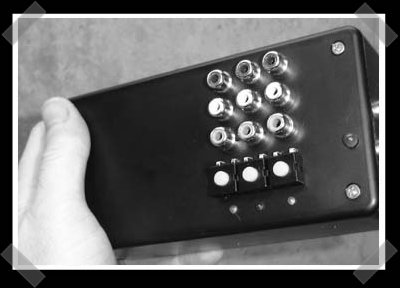
I knew this was coming out, but [mike] was kind enough to remind me. [Ben Heckendorn]’s latest How-To is up on engadget. He provides a method of building your own A/V switch with as many inputs as you want, cheap. Each input uses a $.50 bus switch – literally, you could build one with 20 inputs if you really wanted to. (add some shielding if you do) If you’ve got too many game consoles, this might be your ticket. You can probably use the same trick to build a component video switch if HD’s your thing.
Simple Capacitance Meter
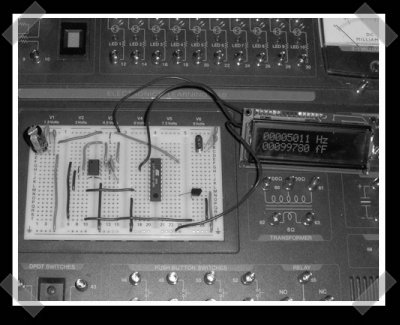
[Mike] sent in a project he’s been working on lately. This little circuit can measure the capacitance of a capacitor by generating a frequency that’s inversely related to the capacitance. He originally got it working with his o-scope, and followed up by building a stand alone version that uses an ATTiny2313 and a text LCD.









