DC Entries: Last Batch


Here’s the final batch of entries we received and considered for the Design Challenge.

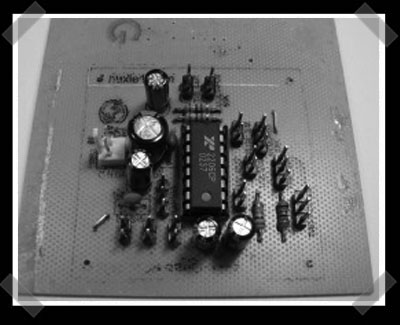
[Chris] sent in a stereo amplifier (watch out for pop-ups) designed for iPods (or similar) using LM386 amps and a minimal parts count.

[Fabian] submitted this excellent tube amp. It’s based on the ECC83/12AX7 tube, and runs off a mere 12-14VAC.

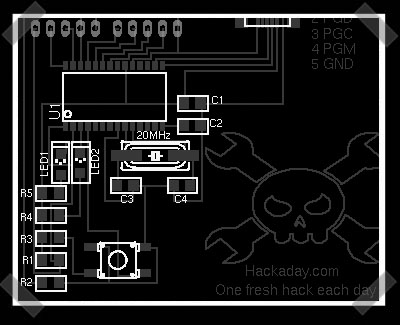
[Edgar] sent in this combination PIC/AVR programmer.

Finally, we’ve got a simple PIC/EEPROM programmer by [Ian]. (view the unzipped version here)
DC Entries: Almost Done


We finally came to a decision about the winner of the Design Challenge! (But I’m not telling you until Friday.) Before the winner is announced, there are some more entries that deserve attention.

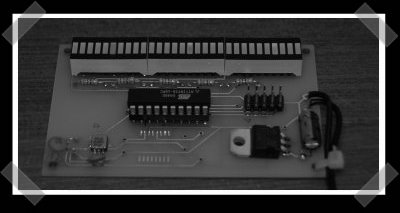
First, there’s [Henk]’s g-force meter. It’s based on an ATiny26 micro-controller, 30 LEDs to display the force and the ADXL103 accelerometer.

There’s an adaptation of the no parts pic programmer, by [Patrick].

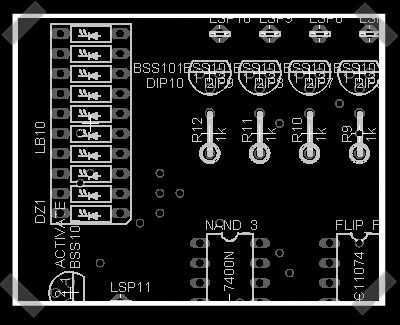
[Evan] sent in his PIC prototyping board using the monster PIC18F4550.

I’ll have one more batch of entries later this week, and the winner will be announced on Friday. Yes really. I’m going to give it a few days just to make sure that all of our DNS issues have cleared up.

Design Challenge: Hung Jury


We’re not really hung, but it is taking a while for us to decide just who get the title. While we decide, here’s a couple more entries remind you what it’s all about.

[Razvan] sent in this excellent entry. (I’m hosting it on my personal server since he didn’t have one)
The writeup could be a bit clearer, but the design is pretty sweet. It features a mega avr brain and a microchip ethernet controller with a software based USB interface. It’s a pretty intriguing design – lots of possibilities for ethernet controllable projects.

[Tom D] sent in this rolling codes garage door opener. This will step through all the garage door opener codes for garage doors made before 2003.

Cheap Function Generator


I’m inclined to put up [nuxie1]’s function generator how-to because he also submitted a very nice Design Challenge entry. The generator is based on the cheap XR2206 IC which will generate functions at up to 1Mhz. Definitely handy to have around.

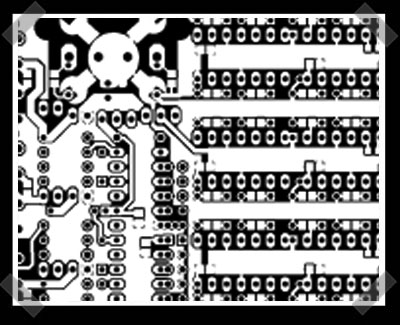
His Design Challenge entry was really over the top. It’s another USB PIC programmer, but he laid out three different desings. A full-on SMD, a home build SMD and a through hole board. Nice work.

We’ll be announcing the winner of the Design Challenge in another week and a half or so – we got quite a few entries and it takes a while to really review them.

DC Entries: Relay Board, PONG


I’ve got a couple more design challenge entries for ya. (The first one made the entry deadline, but he had to repost it to another web host – no whining about how it was posted on the 26th)

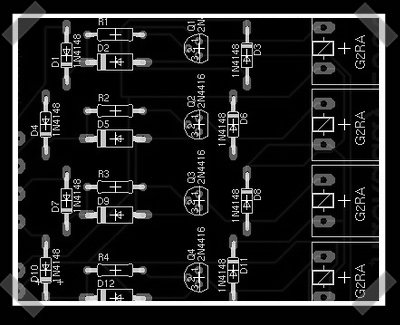
[Joe]submitted his Parallel port relay board. He’s still working on the software to drive it, but the board looks good. He suggests cutting a parallel cable to make the input. (I’ve done it, it’s a pain) I’ll suggest soldering the inputs directly to a solder style DB25 – or add some edge traces so that a cheap solder style connector can be attached directly to the board.

[Andrew] built and submitted UPONG – Pong on a LED dot matrix display. It reminds me of the pong hat. He’s even put up a video of the game in action.

DC Entries: LVP/Logic Probe And A Wireless Antenna


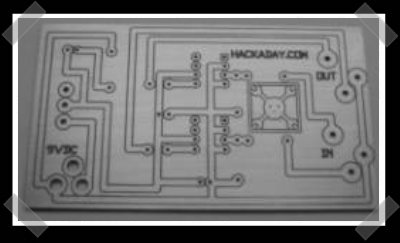
I’m sick today, but finally getting some entries up. [Albert] designed this board which can be either a low voltage PIC programmer or, if you lack a programmer to get the initial flash data on the PIC, the through hole components make a logic probe. He rounded out the board with a silk screened logo and a prototyping area. He was also kind enough to provide an eagle library with the Hack-A-Day logo.

Our second featured entry of the day: [Pablo] put together a simple Hack-A-Day 2.4ghz antenna. He built and tested it – It functions nicely as a directional 2db antenna. His proposed use: limit your neighbors access to your AP by aiming the unetched backside at them.