Atmel Introduces Rad Hard Microcontrollers

The Internet is full of extremely clever people, and most of the time they don’t realize how stupid they actually are. Every time there’s a rocket launch, there’s usually a few cubesats tucked away under a fairing. These cubesats were designed and built by university students around the globe, so whenever a few of these cubesats go up, Internet armchair EEs inevitably cut these students down: “That microcontroller isn’t going to last in space. There’s too much radiation. It’ll be dead in a day,” they say. This argument disregards the fact that iPods work for months aboard the space station, Thinkpads work for years, and the fact that putting commercial-grade microcontrollers in low earth orbit has been done thousands of times before with mountains of data to back up the practice.

For every problem, imagined or not, there’s a solution. Now, finally, Atmel has released a rad tolerant AVR for space applications. It’s the ATmegaS128, the space-grade version of the ‘mega128. This chip is in a 64-lead ceramic package, has all the features you would expect from the ATmega128 and is, like any ‘mega128, Arduino compatible.

Atmel has an oddly large space-rated rad-hard portfolio, with space-grade FPGAs, memories, communications ICs, ASICs, memories, and now microcontrollers in their lineup.

While microcontrollers that aren’t radiation tolerant have gone up in cubesats and larger commercial birds over the years, the commercial-grade stuff is usually reserved for low Earth orbit stuff. For venturing more than a few hundred miles above the Earth, into the range of GPS satellites and to geosynchronous orbit 25,000 miles above, radiation shielding is needed.

Will you ever need a space-grade, rad-hard Arduino? Probably not. This new announcement is rather cool, though, and we can’t wait for the first space grade Arduino clone to show up in the Hackaday tips line.


The FAA Wants Your Input On Upcoming Drone Regs

Earlier this week, the US Department of Transportation announced registration would be required for unmanned aerial systems. Yes, drones will be regulated, and right now representatives from the Academy of Model Aircraft, the Air Line Pilots Association, the Consumer Electronics Association and others are deciding which quadcopters, planes, and other aircraft should be exempt from registration.

Now, the US DOT and FAA are looking for consumer’s input. The US DOT is asking the public such questions as:

  • Should registration happen at point-of-sale, or after the box is opened?
  • Should registration be dependant on serial numbers? If so, how will kits be registered?
  • Should certain drones/UAS be excluded from registration? Should weight, speed, maximum altitude, or flight times be taken into account?
  • Should registration require a fee?
  • Are there any additional ways of encouraging accountability of drone/UAS use?

Comments will be taken until November 6, with the task force assembled by the US DOT providing its regulations by November 20. The hope for all involved parties is that this system of regulation will be in place for the holiday season. One million UAS are expected to be sold by Christmas.

FAA Suggests $1.9M Civil Penalty Against Aerial Photography Company

An October 6th Press Release from the FAA states that SkyPan International, a Chicago based aerial photography company conducted 65 unauthorized operations over a 2+ year period resulting in a $1.9M penalty. This is by far the most severe penalty the FAA has proposed, the previous leader being $18,700 against Xizmo Media which was issued in September.

SkyPan International isn’t your suburban neighbor’s spoiled brat kid who flies his new octocopter through the neighborhood with his HD camera running in hopes to catch…well, you get the idea. SkyPan has been in the aerial photography game for 27 years and was awarded a Section 333 Exemption from the blanket ban of commercial UAS (unmanned aircraft systems) operation from the FAA  in 2015. They also proactively contacted the FAA in 2005, 2008, and 2010 to discuss and suggest technical regulatory parameters. The seemingly civil history between the two entities leaves things in a confusing state, which seems to be par for the course when it comes to UAS.

In case you missed it, we also covered the announcement by the US DOT requiring drone registration.

via bbc.com

Arduino.cc Expands European Manufacturing

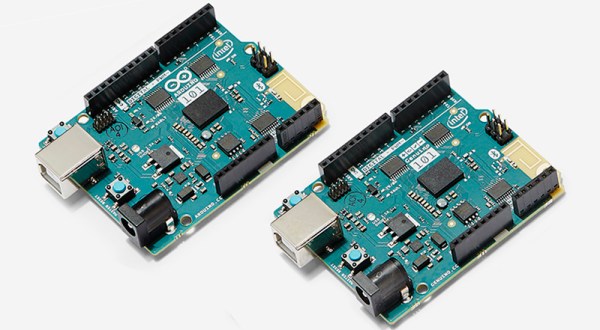
Maker Faire Rome is over, and that means it’s time for the Arduino media blitz. Arduino has already had a big announcement this week with the introduction of the Arduino / Genuino 101 board powered by the Intel Curie module. Team .cc hasn’t forgotten all their Atmel-powered boards though. The latest news is that Arduinos will be manufactured in Germany by Watterott Electronics (.de, Google Translate).

Right now, Arduino.cc boards are manufactured in China by Seeed, and in the US by Adafruit and Sparkfun. Watterott Electronics is one of the premier hobby electronics distributors in Germany.

Boards made by Watterott will carry the Genuino mark; Arduino.cc seems to anticipate a loss in the Arduino vs. Arduino trademark dispute outside the US. All boards produced under license from Arduino.cc sold outside the US will carry the Genuino trademark, whereas boards produced for the US market will carry the Arduino trademark. Interestingly, this Arduino vs. Arduino split began with a former manufacturer, with a maelstrom of pettiness stemming from that trademark dispute. In any case, the licensing for boards manufactured by Watterott is most assuredly worked out by now. The new manufacturing partner guarantees a greater supply of Arduinos for all.

Smart Cards Used To Hack Smart Cards

Back in the day, true hackers – the kind that would build VCRs out of 555 chips only to end up in the Hackaday comments section in their twilight years – would steal satellite TV feeds with the help of tiny little microcontrollers embedded in a credit card. This was the wild west, when a parallel port was the equivalent of a six-shooter and Jnco jeans were a ten gallon hat.

The backdoors that enabled these satellite pirates have long been closed, but these devices for stealing HBO have now evolved into stealing €600,000 worth of goods using a most unlikely source: chip and pin card terminals. A gang of criminals in Belgium have successfully broken chip and pin, and although the exploit has now been closed, the researchers behind the investigation have published their war story for one of the most interesting hacks in recent memory.

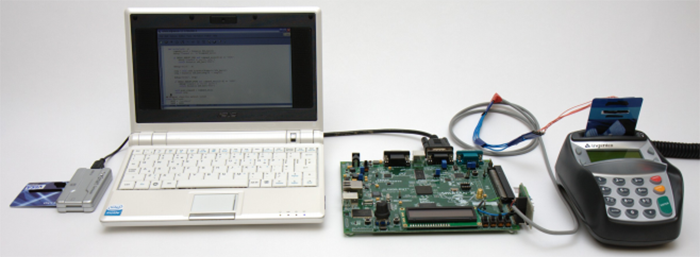
Chip and pin verification for Point of Sale (PoS) transactions are a relatively simple process; during a transaction, the PoS system asks for the user’s PIN and transmits it to the card. The card then simply answers ‘yes’ or ‘no’. In 2010, a vulnerability to this system was discovered, making it a simple matter for anyone to break chip and pin systems. This system used an FPGA with a backpack worth of modified hardware – executing it in a store would raise more than a few eyebrows.

The 2010 exploit hardware

The problem of implementing this system into something that was easily concealable was simply a matter of miniaturization. Thanks to the proliferation of smart cards over the last 20 years, very tiny microcontrollers are available that could manage this man-in-the-middle attack on a chip and pin system. What is a gang of criminals to do? Simply program a smart card with all the smarts required to pull of the hack, of course.

To pull off this exploit, an engineer in the gang of criminals used a FUNcard, a development platform for smart cards loaded up with an Atmel AVR AT90S8515 microcontroller and an EEPROM packaged in a small golden square. By removing the chip from this chipped card and replacing the chip in a stolen credit card, the criminals were able to reproduce the 2010 exploit in the wild, netting them €600,000 in stolen merchandise before they were caught.

How were they caught? The ‘buyer’ of the gang kept shopping at the same place. Rookie mistake, but once security researchers got their hands on this illegal hardware, they were amazed at what they found. Not only did the engineer responsible for this manage to put the code required for the exploit in an off-the-shelf smart card, the gold contact pads from the original credit card were rewired to the new microcontroller in an amazing feat of rework soldering.

Before this exploit was made public, the researchers developed a countermeasure for this attack that was swiftly installed in PoS terminals. They also came up with a few additional countermeasures that can be deployed in the future, just in case. In any event, it’s an amazing bit of reverse engineering, soldering, and craftsmanship that went into this crime spree, and as usual, it only took a massive loss for retailers to do anything about it.

The First 5nm Chip

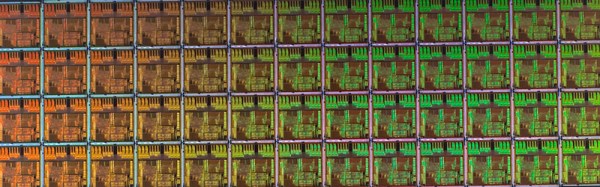
For almost forty years, integrated circuits have become smaller and smaller. These chips started out with massive transistors in the early 1970s. They shrank to less than 1μm by 1990, and shrank yet again to less than 100nm by the turn of the last century. Now, Imec and Cadence are experimenting with 5nm technology – the smallest technology available for any mass-produced integrated circuit.

The history of microelectronic fabrication over the last decade is a story of failure. Something happened in 2005, and although chips could be designed at ever-smaller technologies, the transition to these smaller manufacturing processes didn’t go as smoothly as in the 70s, 80s, and 90s. Just a few years ago, Intel said 10nm chips would ship by 2015. These chips are nowhere to be found, and even 14nm technology is still catching up to the yields found in 22nm technology. In 2009, Nvidia said their flagship graphics card would be built with a 11nm process. The current Nvidia flagship desktop graphics card is built with 28nm technology. Moore’s law isn’t 18 months anymore.

While Imec and Cadence have completed the tapeout on a 5nm device, it’s just a test chip. Before starting manufacturing on a single process node, Intel and others will tapeout a simple test chip to verify their latest process. This 5nm tapeout will not become a manufactured chip, but it does mean we’ll see more talk about the 5nm process in the future.

Rod Logic And Graphene: Elusive Molecule-Scale Computers

I collect slide rules. You probably know a slide rule is a mechanical calculator of sorts. They usually look like a ruler (hence the name) and have a sliding part (hence the name) and by using logarithms you can multiply and divide easily by doing number line addition and subtraction (among other things).

It is easy to dismiss old technology like that out of hand as being antiquated, but mechanical computing may be making a comeback. It may seem ancient, but mechanical adding machines, cash registers, and even weapon control computers were all mechanical devices a few decades ago and there were some pretty sophisticated techniques developed to make them work. Perhaps the most sophisticated of all was Babbage’s difference engine, even though he didn’t have the technology to make one that actually functioned (the Computer History Museum did though; you should see it operating in person, but this is good too).

Continue reading “Rod Logic And Graphene: Elusive Molecule-Scale Computers”