ROV Capable Of Diving To 400 Feet

rov

My buddy Willy Volk at Divester has always been good about passing along stories about cool remote operated vehicles and this is no exception. A team of 8 engineering students at RIT have built an ROV capable of diving to 400 feet. Most schools design there ROVs for competition in pools, but the RIT seniors had a real-world goal: exploring shipwrecks in Lake Ontario. They built a lightweight aluminum frame and mounted batteries onboard. The ROV moves via four commercial thrusters controlled by an ATMega128. There are 3 video cameras plus HID lights. All control comes from a laptop using an RS-232 tether. More details are provided in their conference paper PDF.

Continue reading “ROV Capable Of Diving To 400 Feet”

Roomba Midi Interface

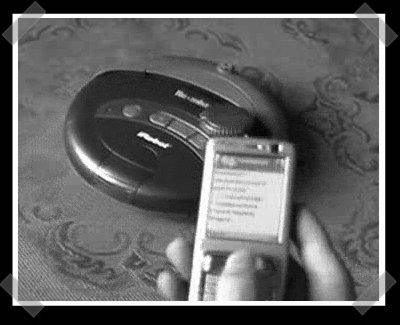
todbot has developed a MIDI interface for the Roomba. RoombaMidi is an OSX application that acts as a virtual MIDI interface. It can be used by any standard MIDI sequencer and supports up to a 16 vacuum orchestra. It can even turn the vacuum motor on and off for a bass drum effect. I guess the circuit benders have a brand new toy on there hands, but who will be the first great Roomba artist?

[thanks Mike Kuniavsky]

Continue reading “Roomba Midi Interface”

Barcode Scanner Based Line Follower

line follower

Brody thought it was high time we featured another robot project and directed us to his site: bfrdesign.com. For his line follower bot he used an old barcode scanner he found cheap at a junk shop. The scanner has a 2088 pixel ccd linear image sensor. Several red LEDs are used to illuminate the image and the data is fed to an ATmega8. The wheels are then driven using two Sanwa servos modified for continuous rotation. He’s got a couple other projects on the site and I’m sure we’ll see more in the future.

The Walking Box

walking box

[Ryan Walker] had recently constructed a 16 R/C servo controller board and needed a platform to test it with. He wired 6 cheap TS-53 servos from Tower Hobbies to the bottom of an empty box. He’s got push buttons on the top for direction control. It uses a PIC18F452 for processing and the board was routed on an LPKF circuit board mill. There are videos on his site, but try using these cached links first: walking on a table and walking on carpet.

Continue reading “The Walking Box”

Cody’s Robot Optical Motion Sensor

optical sensor

[Mac Cody] has continued working on his original optical mouse hack. In the time since we first posted the story, he has repackaged the mouse’s sensor so that it can be used with any robotic platform. He built a custom board for the sensor and modified a lens package so that the sensor plane doesn’t have to be in contact with the ground. His work is based on a NASA paper Insect-inspired Optical-Flow Navigation Sensors. Mac’s sensor seems to be progressing nicely towards his goal of dead reckoning navigation, but he thinks it could do better if the LED illumination was more focused.

Continue reading “Cody’s Robot Optical Motion Sensor”

Tick Destroying Rover

tick rover

[William] from GoRobotics.net sent along this tip about a tick destroying rover built by students at VMI. The truck uses inductive sensors to follow a wire laid around the perimeter of the lawn. By releasing CO2 along this strip of grass they can attract ticks into the area (animals expel CO2). The ticks collected are treated with Permethrin. Since the application is targeted, it is far safer and cheaper than spraying the entire lawn. The students also suggest that repeating the run over the course of three months would break the tick’s life cycle, making the area tick free for several years. Here’s Wolfgang’s write-up, test runs with video one and two, the associated paper, and the Wired article.

Continue reading “Tick Destroying Rover”

RoboMaid Robot

robomaid

The RoboMaid (warning sound) really has nothing robotic about it. The website proclaims “smart sensor technology” and “programmable”. It’s actually just a Weasel Ball in a cage. Reader [Perry Cain] decided to keep the cage and add some real electronic brains if the form of a Prallax kit. The robot has 5 IR pairs: 2 in front, 2 on the side and one in the back. He says it works pretty well, but he hasn’t added detection to keep it from going down the basement steps yet.

Continue reading “RoboMaid Robot”