The Tragic Demise Of The Technirama Prism-Based Anamorphic Lens

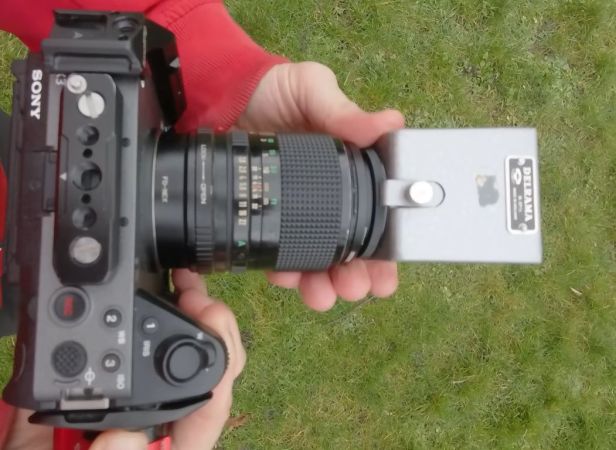
A commercial Delrama prism-based anamorphic lens for large cameras. (Source: Mathieu Stern, YouTube)

Although to the average person a camera lens is just that bit of glass you stick on the front of the camera to make stuff appear in focus, there’s a whole wide world out there of lens designs and modifications with enough variety to make your head spin. Some of these designs make a big impact, while others fade away again, sometimes at the whims of film makers and photographers. Prism-based anamorphic lenses are an oddity that recently [Mathieu Stern] got his hands on. (Video, embedded below.)

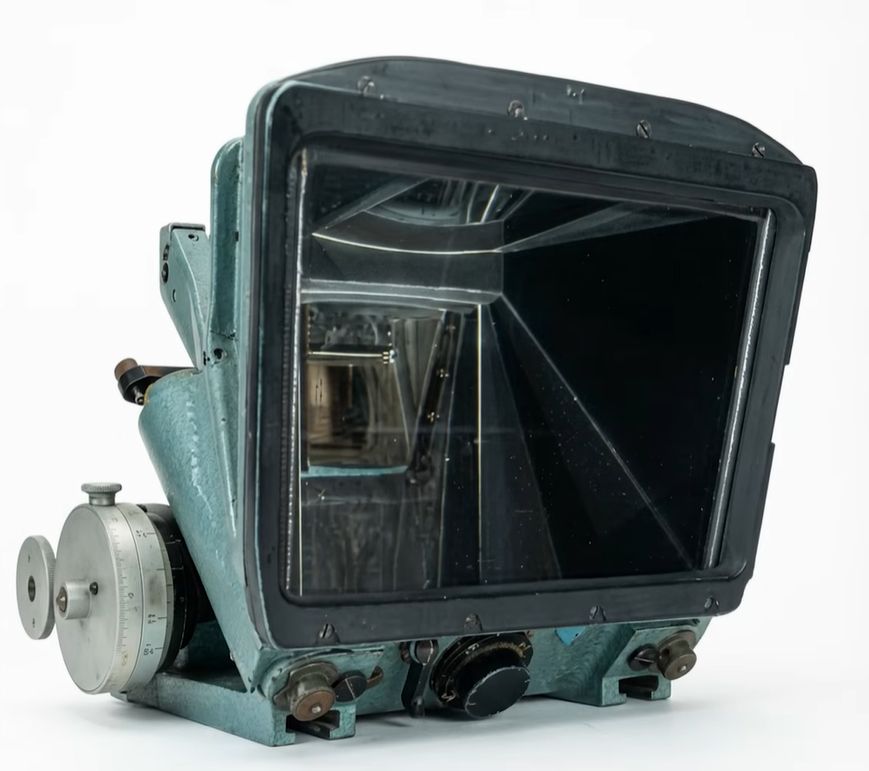
During the 1950s and 1960s there was a bit of a competition between anamorphic formats, which use special lenses that ‘squeeze’ a larger image so that widescreen movies could be recorded on standard 35 mm film. By using the same lens for recording and playback, the result was a mostly distortion-free image. Here the Technirama format by Technicolor who teamed up with Dutch company De Oude Delft (‘Old Delft’) to produce the prism-based Delrama lenses that fit on existing lenses for cameras and projectors.
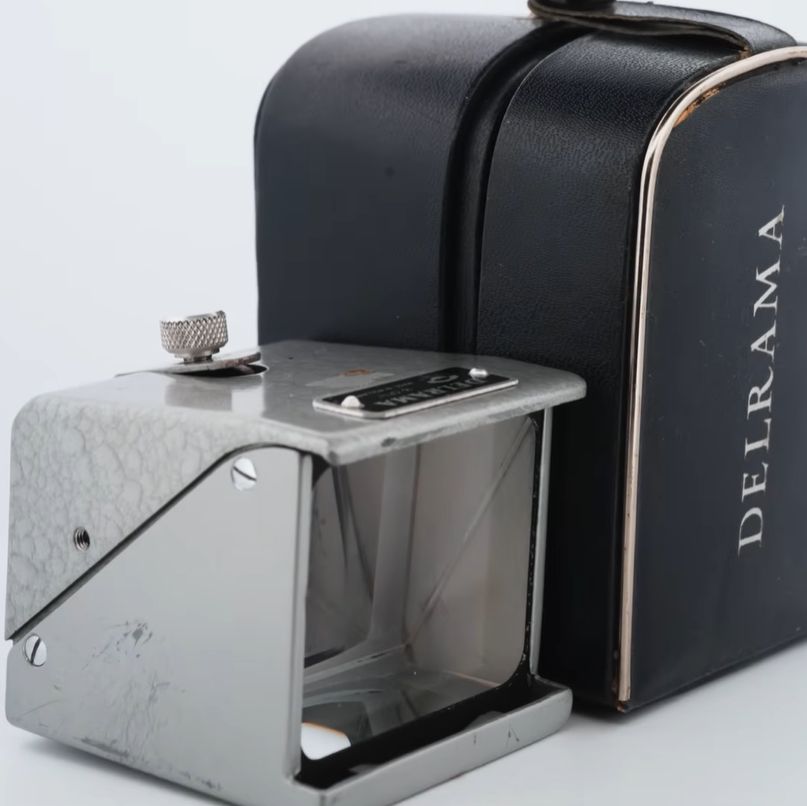
The last gasp of the Delrama anamorphic lenses. (Credit: Mathieu Stern, YouTube)a

Despite having a clearly superior, distortion-free image than the cylindrical lenses of the competition, Technirama got pushed out of the commercial market, leaving De Oude Delft to try and interest the consumer market for Delrama with 8 and 16 mm adapters. These latter are the ones that [Mathieu] got his hands on and tried out with a DSLR camera.

Troublesome with these Delrama adapters is that their silver mirrors tend to degrade over time, and they also turned out to be rather fragile, which are both things that made consumers sour on them. Another challenge was the fixed four meter focus that’s great when you’re using it with a projector, but terrible for up-close shots. All of these issues resulted in Delrama fading from the market by the 1970s until all that remains are these remnants of a format that once was used to film some of the biggest Hollywood movies.

Continue reading “The Tragic Demise Of The Technirama Prism-Based Anamorphic Lens”
An Anamorphic Lens Adapter For Very Pretty Video

Anamorphic lenses are a great way to shoot in widescreen, but they’re prohibitively expensive on digital formats. Enthusiasts have experimented with using anamorphic adapter lenses from old projectors, but focusing can be a chore and results sub-par. [Andrew] found a way to use these cheap old anamorphic adaptors on a modern camera without sacrificing too much functionality.

Pretty, no?

Anamorphic filming techniques came about in the era of film. The aim was to record cinema-style widescreen footage on 3:2 aspect ratio 35 mm film. The way this was done was by using a lens that squeezes a wide aspect ratio to fit the format, and then a corresponding lens to squeeze it back on the projector. This allows for higher resolution than simply letterboxing onto the 35 mm frame and wasting the extra space.

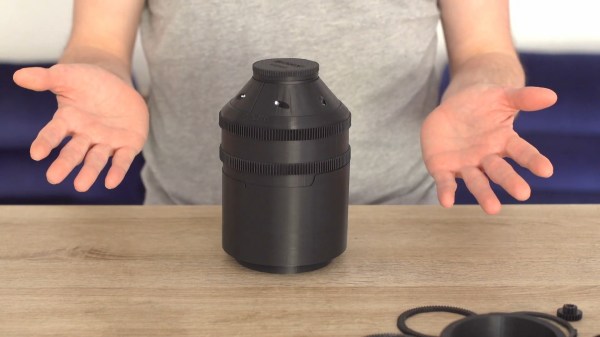
Adam’s hack involves 3D printing a lens housing that pairs an anamorphic projector adapter lens with a Sony E-mount taking lens. Gears are set up so that both lenses can be focused together, rather than typical adapter setups that require the user to juggle multiple focus rings at once. This makes the rig much more usable in real shoots where there’s no time for messing about.

It’s a useful hack, and one we could imagine quite a few low-budget filmmakers will be rushing out to replicate. Files are on Thingiverse for the eager. Consider whipping yourself up a camera slider while you’re at it for really boss shots. Video after the break.

Continue reading “An Anamorphic Lens Adapter For Very Pretty Video”