

It’s been three weeks since the Artemis II crew returned to Earth, and while the mission might be over for Reid Wiseman, Victor Glover, Christina Hammock Koch, and Jeremy Hansen, the work is only just beginning for engineers back at NASA. In a blog post earlier this week, the space agency went over the preliminary post-mission assessments of the spacecraft and its ground support equipment, and detailed some of the work that’s currently taking place as preparations begin for Artemis III.
During Artemis I, higher than expected damage was noted on both the Orion’s heat shield and the Space Launch System (SLS) launch pad. But according to NASA, the changes implemented after that first mission seem to have prevented similar issues this time around. The post also explains that reusable components of the Orion spacecraft, such as the avionics and the crew seats, are already in the process of being removed from Integrity so they can be installed in the next capsule on the production line.
While watching the live stream of the Artemis mission is the closest most of us will ever get to experiencing spaceflight, that doesn’t mean you can’t explore the solar system from the comfort of your own home — or more specifically, your browser. [Sani Huttunen] has created an incredible web-based solar system simulator that lets you explore our celestial neighborhood throughout different periods of time. You can tour the moons of Jupiter, see how the planets aligned on the date of your birth, and even check in on the Voyager probes. There are some very valid reasons to be skeptical about software moving to the web, but we’ve got to admit, this is a very slick demonstration of just how far modern browsers have come.
Speaking of how far things have come, are you ready for a car without a rear window? Polestar certainly hopes so, as their latest model does away with such quaint concepts. The glass panel in the roof ends right around the back headrests, and while the rear of the vehicle does open up for storage, the hatch is completely solid. In place of the traditional mirror, there’s a “high resolution” 1480 x 320 display that shows the feed from a rear-mounted camera.
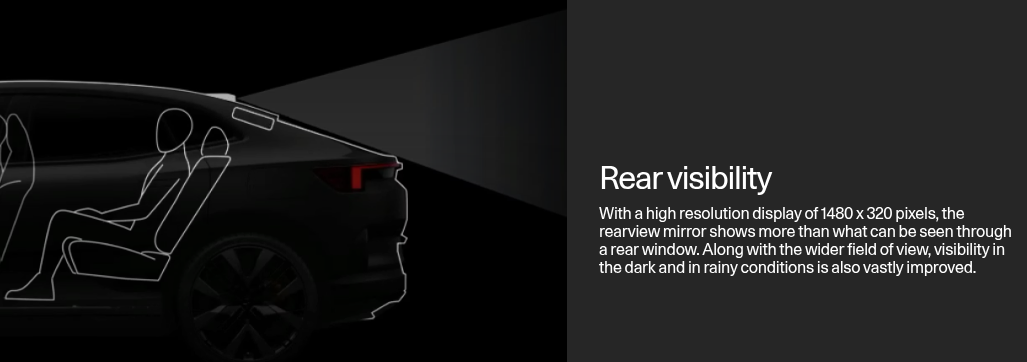
No, that’s not a typo. At a time when smartphones are shipping with 2K displays, should the driver want to see what’s going on behind their $70,000+ USD electric vehicle, they’re limited to seeing it at a vertical resolution below that of VGA. We’d make a joke about Polestar offering up a “Rearview+” upgrade down the line that would give the driver a higher resolution view, but honestly, it’s getting a little too close to reality to be funny.
If that last one has you wishing for a reminder of simpler times, how about some new software for using the iconic Wii Remote as an input device? The Wii and its revolutionary controllers may be turning 20 later this year, but that hasn’t stopped the dedicated fans. This new wrapper provides accelerometer calibration, infrared tracking, and the ability to remap the Wii Remote’s buttons and create key combos. If you do something cool with it, we’d love to hear about it.
Finally, on the other end of the input spectrum, some details leaked out this weekend about Valve’s upcoming Steam controller — namely, the fact that it will cost players $99 at release. As reported by VICE, a hands-on review of the controller by TechyTalk was accidentally published early on YouTube, providing the public with pricing info ahead of an official announcement.
At first blush, this might seem like a lot of money to pay for a game controller, but it’s actually within striking distance of the sticker price on the standard controllers on the Xbox and PlayStation consoles. Perhaps more critically, it’s around half the price of the official “premium” controller offerings available for the aforementioned systems. Is it really any wonder that we’ve got cars without rearview mirrors when folks are putting down 200 bucks for a fancy PlayStation controller?
See something interesting that you think would be a good fit for our weekly Links column? Drop us a line, we’d love to hear about it.












How do they fix the focus problem on rear-view mirror displays? Or do they?
When I have my distance eyeglasses on and look at my rear view mirror, everything looks fine: I’m still looking at things in the distance.
But when I switch to the camera display, my eyes now have to focus close, on an LCD a foot or two away. I don’t know how easy this is for younger people, but my eyes don’t do it well. It’s blurry and annoying.
Or maybe the problem is just that the resolution of the display is so low?
Not just the focusing problem. The whole idea is a solution looking for a problem. A mirror is simpler, cheaper, and more reliable than a camera and display.
I mean, yes, impressive, how a document-rendering-stack has become a Unity-competitor. But man does it stress my CPU for what it delivers. And also, why is every text and line in grey on black, hard to see?
RE: The rear camera / no window issue: Man, I have an ok sized backup camera in my 2019 F-350 dually. But honestly, it sucks compared to SEEING with my two stereoscopic eyes. Maybe I’m old (50+ now), but… while I welcome the camera as an ADDITION, not sure I’m ready to remove the ability to actually look out the rear window.
I mean, I’ll go stronger. I’ll never drive one of these things. That’s a deathtrap decision, and for what? What benefit is there?
Most of the time you can drive without looking in the rear-view mirror or looking behind you. It won’t be a problem. You’d be an idiot to do that, but it won’t be a problem (our driver’s ed instructor liked to be dramatic and thwacked the rear-view mirror off-kilter while you were driving to force you to use your eyes and to also demonstrate how important it is). Having a camera there just means that if it’s unreliable or causes issues in certain situations, you won’t notice, until you really really wanted to notice.
” But according to NASA, the changes implemented after that first mission seem to have prevented similar issues this time around.”
The heat shield drama with Orion was just so frustrating. There was an entire investigation process after Artemis I – even though the heat shield didn’t fail – involving simulations and actual real-world testing. They were able to replicate the char loss, modified the entry profile to change the heating, and went through an independent review board that was led by a NASA engineer who was part of the Columbia investigation.
And then there were public disagreements about NASA and the review board’s decisions that were almost entirely based on “NASA’s simulations are too primitive” (plus NASA not releasing the information publicly even though it was internally available) even though the decisions were made based on a combination of the simulations and direct testing. And that somehow snowballed more.
The only real risk was that if they were way off on the reentry profile it would’ve posed a danger, but if you’re way off on the reentry profile you’re just as likely to have other problems anyway. Saying “hey if we’re barrelling uncontrolled into Earth with no way to modify the flight path, we have less margin” is just not a reasonable worry.
Ok, but the point is your Toyota still has a rear window.
Nobody is saying replacing the mirror with a screen is new technology, but having it be the ONLY way you can physically see behind the vehicle is kind of crazy.
My 2027 Chevy Bolt has a rearview mirror camera. Very high resolution and wide field. it also has a lever that switches it back to a conventional mirror. In the mirror view I see mostly headrests.