A Bitcoin Mining Example For The BeagleBone With An FPGA Shield

beaglebone-fpga-bitcoin-mining

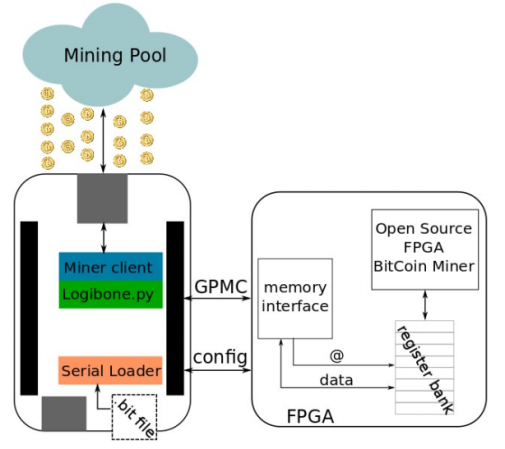
If you’ve got a BeagleBone and an FPGA board you should give this Bitcoin mining rig a try. The hardware uses brute-force to solve hashes, looking for the rare sets that can be used as digital currency. This particular example is designed for the LOGi-bone which is an FPGA shield for the BeagleBone. But we don’t see anything that would make this difficult to use with other FPGA hardware.

We’ve seen FPGA hardware bitcoin mining in the past. It doesn’t offer as much horsepower as an array of GPUs would, but the ARM/FPGA combo can be used in a cluster in order to speed up the process. This sounds like a fun group project to take on at the local Hackerspace.

FPGA Bitcoin Miner Is Probably The Most Power Efficient.

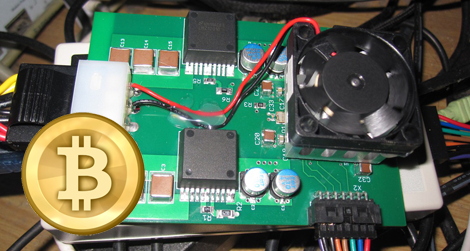
[fpgaminer], [li_gangyi], and [newMeat1] have been working together for the last few months to build an FPGA bitcoin miner that blows GPU mining rigs out of the water in terms of power efficiency. The board requires only 6.8 watts for 100 Mhashes/second, but [li_gangyi]’s blog says the team expects to hit 150-200 Mhashes with some improvements. That’s efficiency GPUs can’t touch.

Bitcoins are a digital currency that are ‘mined’ by calculating hashes that verify bitcoin transactions. While mining operations can be performed on a CPU, graphics cards and FPGAs beat CPUs by several orders of magnitude in terms of how many hashes can be performed per second.

The heart of the board is a Spartan-6 LX150 FPGA – a pricey bit of kit – and the team is selling each board for $440 USD. For that amount of money, you could buy two ATI 6770s at half the price and crunch four times as many hashes a second. At less than 7 watts, though, we wouldn’t worry too much about cooling the rig and the electricity costs will be very low.