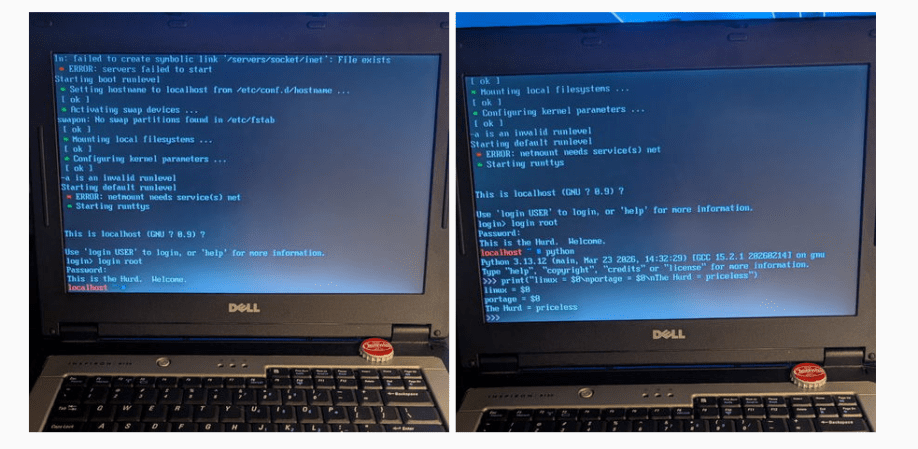
Long ago, in the aftermath of the UNIX wars, three kernels emerged from the rubble: BSD, Linux, and Hurd. BSD, being UNIX, was held back by legal wrangling in the aftermath of the wars, and that allowed Linux to pull ahead to a pole position it still enjoys to this day. BSD has its following, of course, but Hurd? GNU Hurd seemed destined to languish… until April 1st, 2026, when the Gentoo Linux distribution was ported to the Free Software Foundation’s kernel.
It turns out, they weren’t actually joking. The joke part was that they were moving fully to the Hurd kernel, away from Linux– you can absolutely still run Gentoo with the Linux kernel, and make no mistake, that’s still the default and best-supported option. Options are good, though, and the Gentoo team has decided that it’s time to add some options to the kernel space, and give the Hurd some time in the sun.
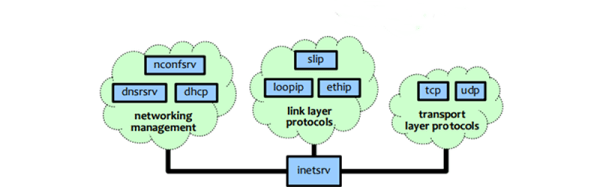
Unlike the Linux kernel, which follows closely the monolithic UNIX framework– and the BSD-Unix kernel, which is Unix–GNU Hurd is a microkernel architecture, based originally on the Mach kernel. In that, it’s rather like MacOS. Unlike MacOS, given its roots in the Free Software Foundation, GNU Hurd is 100% free and open source. There are advantages to a microkernel architecture– it keeps drivers out of kernel space so a dodgy WiFi adapter can’t crash your system, for example– but the big disadvantage is, of course, drivers. Both Linux and BSD drivers can be ported, but that takes work and many of them have not been.
Still, now that Microsoft has become a major contributor to the Linux kernel, we could see a lot of the old-school Linux users who talk about “win-doze” and still spell Microsoft with a dollar sign being tempted to join the Hurd. If that appeals to you and you’re not into Gentoo, Debian has quietly let you install with the Hurd kernel for years now. It’s either that or embrace BSD and escape the chaos vortex.
The big three aren’t the only POSIX kernels out there, of course– there’s even one written entirely in Rust, for the die hard rustaceans amongst you.