University Of Utah’s TRIGA Research Reactor Set To Produce Electricity

Research reactors come in many forms and sizes, with the TRIGA class being commonly found at universities. The TRIGA reactor at the University of Utah was installed in 1975, and for the past half century the thermal energy it produced was bled off into cooling systems. Now for a world’s first, the reactor will be used to generate electricity instead.
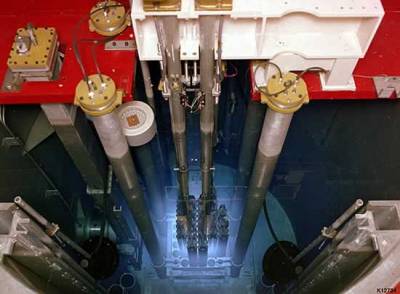
A TRIGA reactor core, with the blue glow from Cherenkov radiation. (Source: DoE, Wikimedia)

What makes the TRIGA design so practical for small research reactors is its inherent safety due to the use of uranium zirconium hydride (UZrH) fuel, which imposes a strong negative thermal coefficient on the reactivity. Along with no need for any kind of containment, these pool-type, water-cooled reactors thus allow for a pretty good look at the literal internals of the reactor core.

Their thermal power outputs range from 0.1 – 16 MWth, with the University of Utah reactor generating on the low end of the scale here, at 50 kWth. This energy will be partially used by a generator that has been developed by Elemental Nuclear, a startup company who looks to be trying to commercialize TRIGA fuel for microreactors with sodium coolant.

The installation at this TRIGA reactor should thus be seen as a proof-of-concept for Elemental Nuclear’s generator design, which uses a closed Brayton cycle with helium gas to generate an output of about 2-3 kWe from the ~13 kW generated by the turbine. This generated power will – of course – be used to power some racks with GPUs for ‘AI’ tasks. If successful, it could show the way for TRIGA-based microreactors to power datacenters.


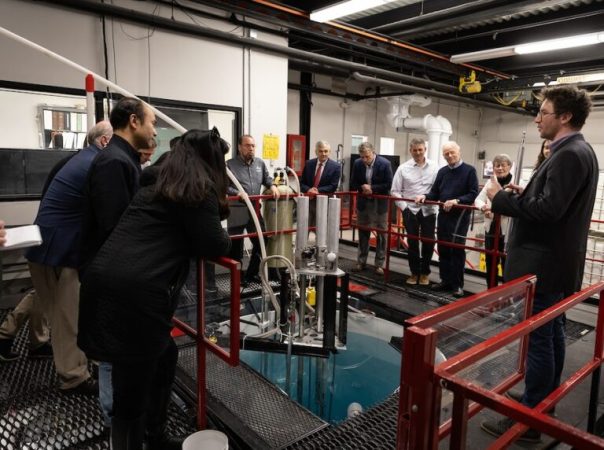
Top image: the TRIGA reactor during a tour. (Credit: University of Utah)
Honey, We Shrunk The Nuclear Reactor

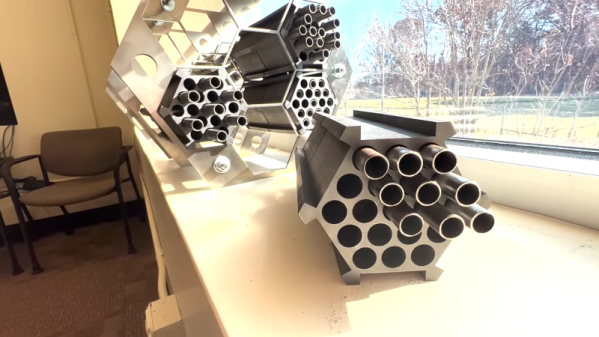
[Power Engineering] took a trip to the Westinghouse facility that provides maintenance for nuclear reactors. The research division there has a new microreactor called eVinci and — according to the company — it is a disruptor. Technically, the device is a heat pipe-based passive cooling design that can generate 5 MW of electricity or 13 MW of heat from a 15 MW heater core. You can see a video about the device below.

The company says its initial targets are remote areas like mines that usually depend on diesel generators. Hundreds of passive heat pipes inside a graphite core which contains TRISO (tristructural isotropic) fuel pellets. The heat pipes allow efficient transfer of thermal energy with no pumps.

Continue reading “Honey, We Shrunk The Nuclear Reactor”

Nuclear Reactors Get Small

Steve Martin was ahead of his time when he told us “Let’s get small!” While you usually think of a nuclear reactor as a big affair, there’s a new trend towards making small microreactors to produce power where needed instead of large centralized generation facilities. The U.S. Department of Energy has a video about the topic, you can watch below.

You probably learned in science class how a basic nuclear fission reactor works. Nuclear fuel produces heat from fission while a moderator like water prevents it from melting down both by cooling the reactor and slowing down neutrons. Control rods further slow down the reaction or — if you pull them out — speed it up. Heat creates steam (either directly or indirectly) and the steam turns a conventional electric generator that is no more high tech than it ever has been.

Continue reading “Nuclear Reactors Get Small”