No More Windows For The Dutch Government, Ze Kiezen Nu Linux

The events of the last few years have caused many in Europe to re-evaluate their reliance on large offshore technology companies, with a corresponding move to home-grown EU-based alternatives. It’s one thing when individuals or companies do this, but another entirely when it’s an entire country. So the news that the Netherlands is building their own Linux distribution to replace Microsoft Windows in government installations, is not inconsequential. The Tweakers site linked  actively breaks out of Google Translate, so you may have to rely on your browser’s translation tool if you are not a Dutch speaker.

The Digitaal Autonome Werkomgeving Overheid, or Digital Autonomous Work Environment, is a distro based upon NixOS, itself originally a product of a Dutch university. It comes complete with all the office and collaboration applications needed to replace Windows, and is reported to have been tested already by a small group of Dutch government workers.

The influence of this move is likely to be a huge one for Microsoft, given that governments have huge numbers of operating system seats. But perhaps more important than the OS itself are the extras that Microsoft would like to sell to its OS customers, such as AI services. We’d expect that there will be managers in Redmond paying close attention to Europe in the wake of this move.

Meanwhile the Netherlands has a vibrant hacker community, and we can imagine that this move will be welcomed in those quarters. All Netherlands government online services are accessed through an ID verification app called DigID, and it’s a lament we’ve heard from our Dutch friends that this only works with Windows, Android and Apple platforms. If this means a Linux version will appear on the back of an NL government Linux distro, we know some people who will be very happy indeed.

NL flag: SpinnerLaserzthe2nd, CC0. Tux: Larry Ewing (lewing@isc.tamu.edu) and The GIMP. Attribution.
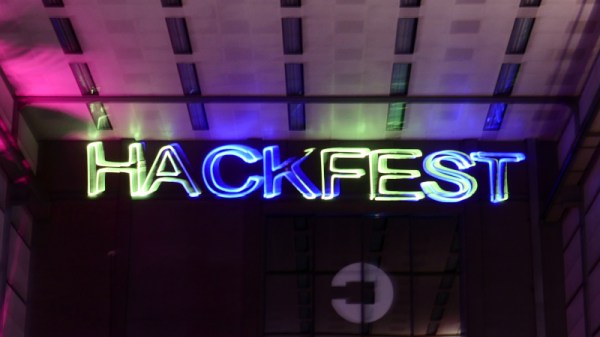
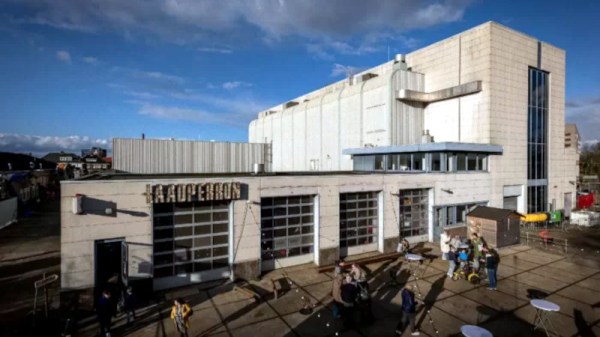
HackFest Enschede: The Type Of Indoor Event We Wanted All Along

I’m sitting at a table writing this in the centre of a long and cavernous industrial building, the former print works of a local newspaper, I’m surrounded by hardware and software hackers working at their laptops, around me is a bustling crowd admiring a series of large projects on tables along the walls, and the ambient sound is one of the demoscene, chiptunes, 3D-printed guitars, and improbably hurdy-gurdy music. Laser light is playing on the walls, and even though it’s quite a journey from England to get here, I’m home. This is Hackfest Enschede, a two-day event in the Eastern Dutch city which by my estimation has managed the near-impossible feat of combining the flavour of both a hacker event and a maker faire all in one, causing the two distinct crowds to come together.

The Best Of Both Worlds, In One Place

To give an idea of what’s here it’s time for a virtual trip round the hall. I’ll start with the music, aside from the demosceners there’s Printstruments with a range of 3D-printedmusical instruments, and Nerdy Gurdy, as you may have guessed, that hacker hurdy-gurdy I mentioned. This is perhaps one of few places I could have seen a spontaneous jam session featuring a 3D-printed bass and a laser-cut hurdy-gurdy. Alongside them were the Eurorack synthesisers of Sound Force, providing analogue electronic sounds aplenty. Continue reading “HackFest Enschede: The Type Of Indoor Event We Wanted All Along” →

Hackfest, A New Event For Your European Calendar

Our community’s events are something special, bringing as they do an opportunity to meet and mingle with other hackers whether their field be hardware, software, or security, to share ideas, and to see some very cool projects. Here at Hackaday aside from our own Supercon and Hackaday Europe events we try to take in as many as we can over the year, and thus it’s always interesting to sot a new one. If you’re in north-west Europe next weekend, consider dropping by Hackfest, in the Dutch city of Enschede, right on the German border.

Looking at the program and the projects and workshops  listed on the website we can see robotics, lockpicking, demoscene, retrocomputing, and plenty of open source. There are quite a few names which have featured at times here on these pages, something which certainly piqued our interest. Finding that it’s only 15 Euros for a weekend’s admission sealed the deal, and thus it’s time for Hackaday to break out the trusty Interrail pass once more and make the trek. Sadly many of Hackaday’s community will be too far away to join us, but if you’re close enough to make it then it’s one to consider.

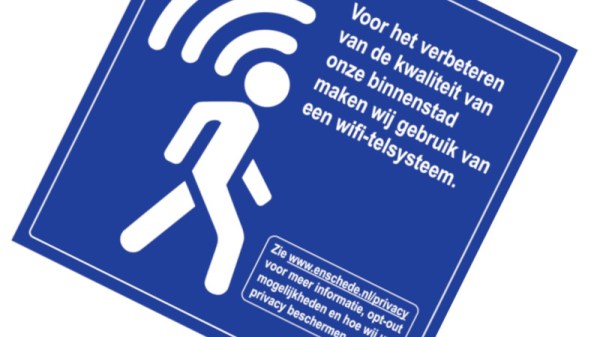
This is a part of the world it’s fair to say isn’t often featured on Hackaday, but some of you might remember the city as being at the centre of a Wi-Fi tracking scandal.

The Demoscene, Now An Irreplaceable Piece Of Cultural Heritage

Break out your tuxedo or your evening gown, we’re going to take in some highbrow culture. A night at the opera perhaps, some Tchaikovsky from the symphony orchestra, or maybe a bit of Shakespeare? No, we’re going to a demo party, because the demoscene is the latest art form to be accepted as officially a part of the national cultural heritage of the Netherlands. This builds on successes adding the scene to the cultural heritage registers of Finland, Germany, and Poland, and should provide a boost to other bids in countries such as Switzerland and eventual UNESCO world acceptance.

It’s all very cool that one of our wider community’s art forms is at last being taken seriously rather than being dismissed by the establishment, because along with greater recognition comes other benefits. Sadly we don’t expect any cities to shell out for a demo auditorium next to the shiny new opera house any time soon, but we can see that it could be used to the benefit of for example a hackerspace chasing grants. meanwhile, feast your eyes on a bit of cultural heritage courtesy of the Dutch Centre For Intangible Cultural Heritage (Dutch language, English translation).

Not sure what the demo scene is? We’ve taken you to a demoparty before.

Header image: People Celebrating Evoke 2019 – Foto Darya Gulyamova

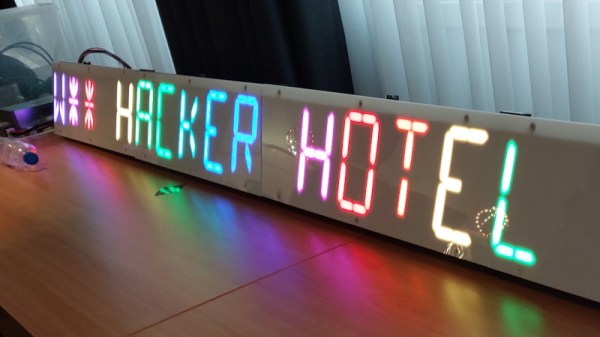
Hacker Hotel 2023: Back Again!

After three years, it’s odd to think back to those few weeks before the COVID-19 pandemic morphed from something on the news into an immediate and ever-present threat which kept us isolating for so long. For me, some of the last moments of normality were a trip to the Netherlands for Hacker Hotel, a hacker event in the comfort of a resort hotel. Now three years later and after two cancelled events, Hacker Hotel is back, and I made the same journey to Garderen to hang out for a weekend with a bunch of hacker friends over some good Dutch beer and a lot of bitterballen. Continue reading “Hacker Hotel 2023: Back Again!” →

A Dutch City Gets A €600,000 Fine For WiFi Tracking

It’s not often that events in our sphere of technology hackers have ramifications for an entire country or even a continent, but there’s a piece of news from the Netherlands (Dutch language, machine translation) that has the potential to do just that.

Enschede is an unremarkable but pleasant city in the east of the country, probably best known to international Hackaday readers as the home of the UTwente webSDR and for British readers as being the first major motorway junction we pass in the Netherlands when returning home from events in Germany. Not the type of place you’d expect to rock a continent, but the news concerns the city’s municipality. They’ve been caught tracking their citizens using WiFi, and since this contravenes Dutch privacy law they’ve been fined €600,000 (about $723,000) by the Netherlands data protection authorities.

The full story of how this came to pass comes from Dave Borghuis (Dutch language, machine translation) of the TkkrLab hackerspace, who first brought the issue to the attention of the municipality in 2017. On his website he has a complete timeline (Dutch, machine translation), and in the article he delves into some of the mechanics of WiFi tracking. He’s at pains to make the point that the objective was always only to cause the WiFi tracking to end, and that the fine comes only as a result of the municipality’s continued intransigence even after being alerted multiple times to their being on the wrong side of privacy law. The city’s response (Dutch, machine translation) is a masterpiece of the PR writer’s art which boils down to their stating that they were only using it to count the density of people across the city.

The events in Enschede are already having a knock-on effect in the rest of the Netherlands as other municipalities race to ensure compliance and turn off any offending trackers, but perhaps more importantly they have the potential to reverberate throughout the entire European Union as well.

From Hacker Hotel 2020: Badges, Sharks, Tentacles, Old-School Hacking, And Much More

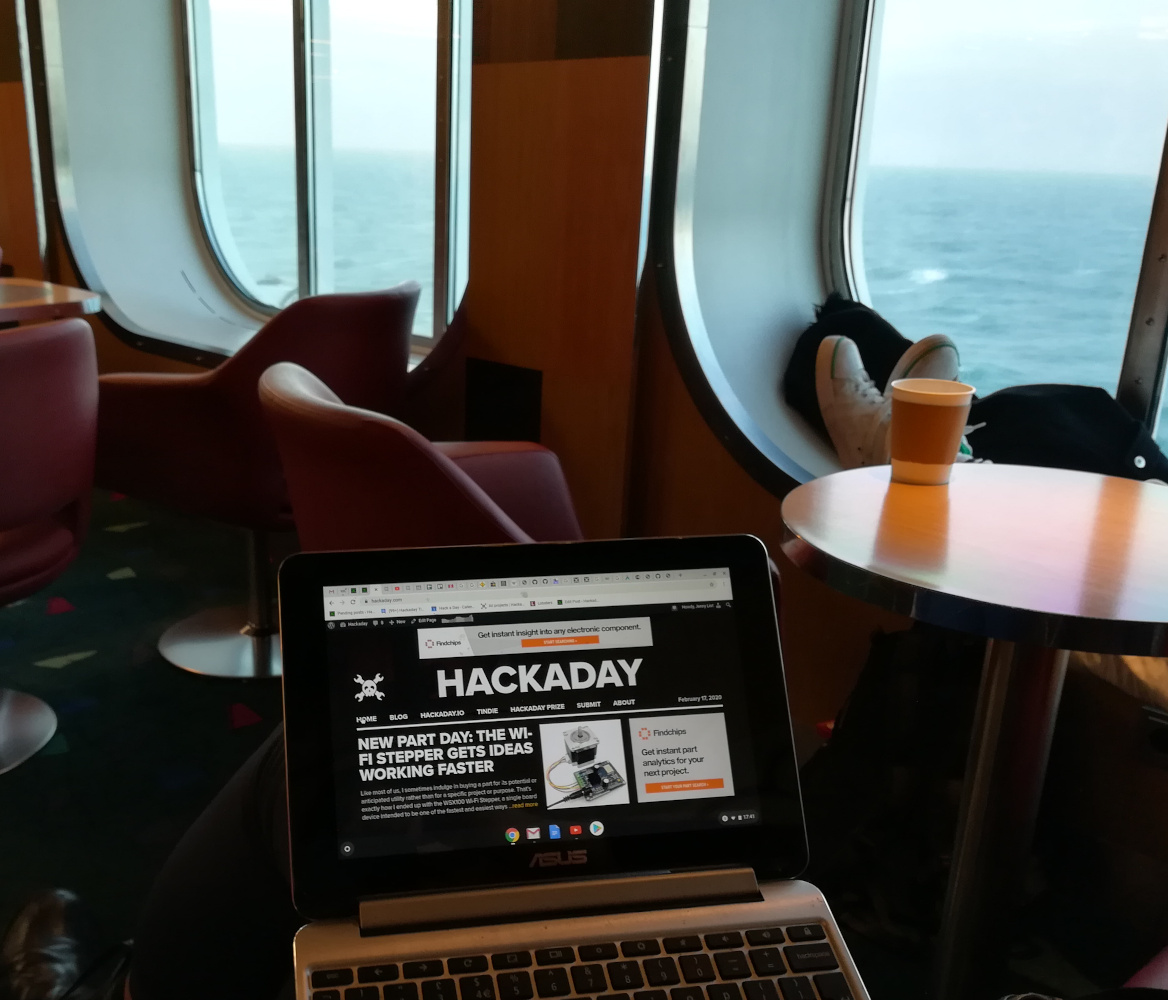
The North Sea in a winter storm is a spectacular sight, one of foam-crested waves and squalls driven on the gale. It’s not a place to spend a lot of time if you are a land-lubber, so to cross it twice in a few weeks must mean there is something very much worth seeing on its other side.

More of that exotic cruise ship lifestyle.

But one of the best antidotes to February weather in the European hacker community was Hacker Hotel 2020. Around 350 people came from all the countries of the northwest of the continent to the comfort and hospitality of the Westcord Hotel de Veluwe in the eastern Netherlands, to experience a hacker camp with all the convenience and luxury of a resort hotel rather than a muddy field.

Three days in this environment results in a camp that’s just a bit special, and one that’s very much worth a visit if your range extends this far.

An Upscale Hotel Gets The Hacker Treatment

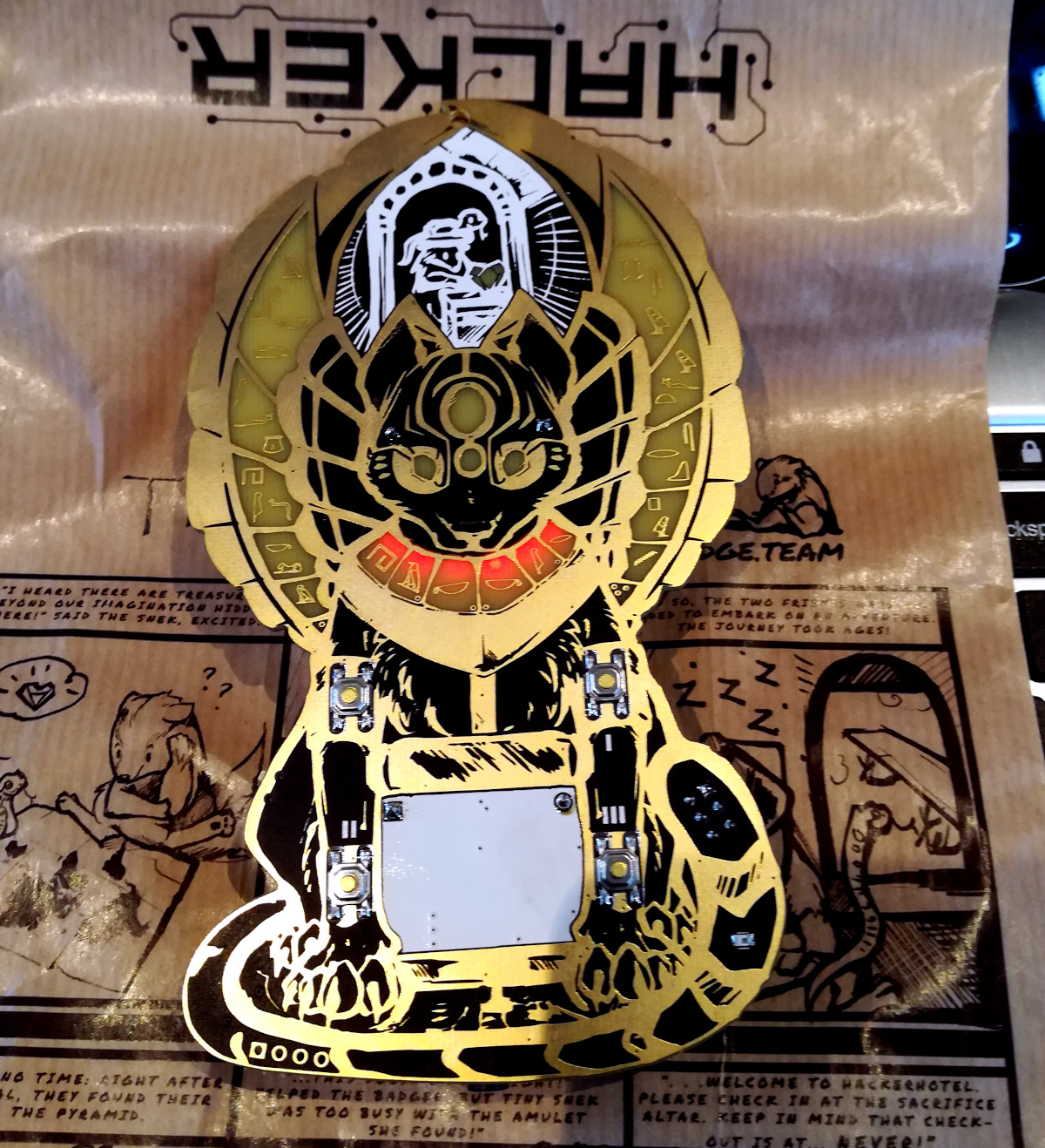
The Hacker Hotel badge 2020 has many hidden depths

Our small party of Brits arrived a day early, on a damp Thursday morning ready to lend a hand with the set-up. Slowly an upscale business conference centre was transformed into a hacker camp venue, with conference rooms turned into lecture halls, lighting and video equipment in place and 3-phase power cables snaking along the skirting boards. A large hardware hacking area was set up in one wing of the building, then the EventInfra people came in and laid out a hacker-camp-grade wireless and wired network that delivered connectivity everywhere. The contrast between the two worlds is significant, but together they make for a unique experience.

One by one, hackers arrived from all points of the compass, bearing crates of the usual cool stuff. An amateur TV satellite earth station, a brace of oversized delta 3D printers, a coin-pushing game that’s familiar from other camps. And smaller projects; little roving robots, indoor-sized multirotors, and several crates of outdated Chinese photo-frames that it’s said can be hacked to run a Linux distro.

This is the lifeblood of a hacker camp, but of course the signature piece of hardware for any hacker camp is its badge. In this Hacker Hotel 2020 didn’t disappoint, with a beautifully designed Ancient Egyptian-themed badge that concealed an array of puzzles across multiple levels. We’ll cover the badge in detail in a separate piece, but suffice to say that it is something of a tour de force. For now let’s jump into all of people and activities on offer at the con.

Continue reading “From Hacker Hotel 2020: Badges, Sharks, Tentacles, Old-School Hacking, And Much More” →