Hackaday Links Column Banner

Hackaday Links: April 26, 2026

It’s been three weeks since the Artemis II crew returned to Earth, and while the mission might be over for Reid Wiseman, Victor Glover, Christina Hammock Koch, and Jeremy Hansen, the work is only just beginning for engineers back at NASA. In a blog post earlier this week, the space agency went over the preliminary post-mission assessments of the spacecraft and its ground support equipment, and detailed some of the work that’s currently taking place as preparations begin for Artemis III.

During Artemis I, higher than expected damage was noted on both the Orion’s heat shield and the Space Launch System (SLS) launch pad. But according to NASA, the changes implemented after that first mission seem to have prevented similar issues this time around. The post also explains that reusable components of the Orion spacecraft, such as the avionics and the crew seats, are already in the process of being removed from Integrity so they can be installed in the next capsule on the production line.

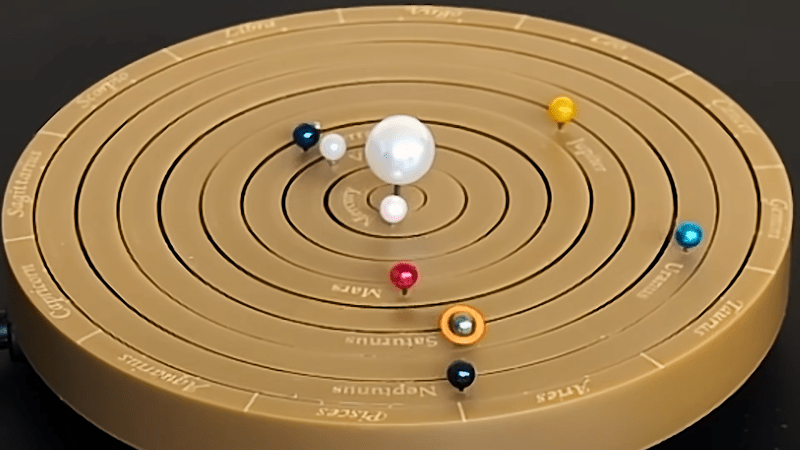
While watching the live stream of the Artemis mission is the closest most of us will ever get to experiencing spaceflight, that doesn’t mean you can’t explore the solar system from the comfort of your own home — or more specifically, your browser. [Sani Huttunen] has created an incredible web-based solar system simulator that lets you explore our celestial neighborhood throughout different periods of time. You can tour the moons of Jupiter, see how the planets aligned on the date of your birth, and even check in on the Voyager probes. There are some very valid reasons to be skeptical about software moving to the web, but we’ve got to admit, this is a very slick demonstration of just how far modern browsers have come.

Continue reading “Hackaday Links: April 26, 2026”

Mom, I’ll Be In My Attic Spaceship

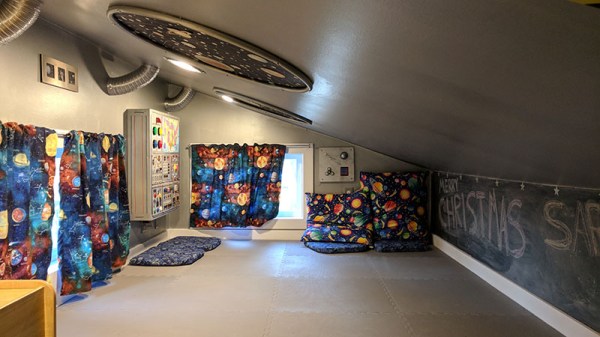
Most attics sit empty or serve as storage space to keep infrequently used items out of sight. Many of us keep boxes of half-completed abandoned projects there. But some people turn the attic itself into the project: this past Christmas some very lucky children received a spaceship playroom in the attic. [Titospot] shared his project via an Imgur album.

The cramped space lends itself to the theme as real-life spacecraft have never been known for interior spaciousness. The builders are skilled enough at standard home improvement tasks of building out and finishing a room, then they took their step into the unknown by building a control panel for the spaceship.  [Titospot’s] caption text reveals some insecurity with his electronics build quality but, hey, we all had to start somewhere! Few of our first electronics projects were as much fun as his spaceship control panel. Packed with buttons and switches that trigger light and sound, it is sure to become the focus of many imaginary adventures to galaxies far, far away.

Continue reading “Mom, I’ll Be In My Attic Spaceship”

The Interstellar Clock

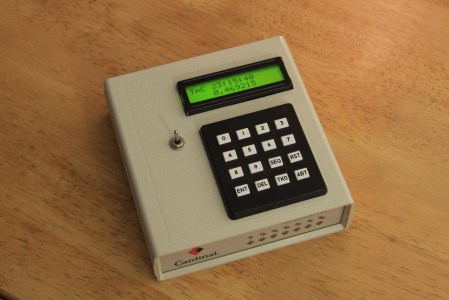
[Alexander Avtanski] has put together a nice clock to meet all your interstellar travel needs. Besides being another PIC based timer, this is a neat little project because it incorporates pretty much every feature you could think of when building a clock for our solar sytem.  For example, it has 16 independent timers and alarms, it can  simultaneously give the time for multiple planets, as well as keep track of other stellar events like the eye of Jupiter or the phases of the moon. To get this project off the ground [Alex] reverse engineered an old dial up modem to serve as an enclosure and power supply and then added in a rechargeable battery so that his  his interstellar clock wasn’t tied to a wall.

[via make]