Wifi Robot : A Hacked WRT54GL Rover

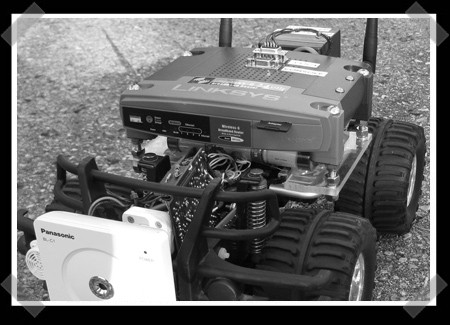
[Jon Bennett] sent us this link to his Wifi Robot. After playing with a Linksys WRT54GL router, he was inspired to build something that would utilize this embedded Linux system. Using a thrift store R/C truck, he built a wireless robot rover. This thing can be controlled over the internet, or by laptop with a range of about 500 meters.

The router has been modified to have 2 Serial ports and a 1GB SD Card. It connects to a micro controller, which could be an Arduino or AVR Butterfly. He has supplied information for both. The truck has been mostly gutted, leaving only the chassis and electronics. He had to beef up some of the truck electronics when they fried under the load. The entire unit is powered by a pair of 7.2 Volt 3800 mAh battery packs. The most important thing on the list though, is the horn. You can honk the horn while you are driving this thing around.

The site supplies tons of information including pictures of his build, videos of it in action, speed tests, schematics, software downloads, and resource links. Great job [Jon].


Criminals Steal Credit Card Data Just By Wardriving

Anime doll holding VISA card
A federal grand jury in Boston has charged eleven people with the theft of more than 41 million credit and debit card numbers from retail stores. What makes this case interesting is that, although the defendants stole the data from retail establishments, they did so without ever having to leave their cars; they stole the numbers while wardriving. While the report doesn’t make it clear whether the targeted networks used weak encryption or were simply unsecured, it’s obvious that the security of your data is still not a top priority for many companies.

[photo: Mujitra]

WarBallooning At Defcon

[rocketman] has posted about a new event at Defcon dubbed WarBallooning. They are using a Kismet drone (a modified WRT54G), a webcam, and a few high gain antennas. The balloon will be launched at about 15 stories and will be remotely fed targets chosen directly by the Defcon participants. The the directional antenna will be mounted to the camera so pan and tilt can be controlled. The Kismet CSV files will be available for everyone after the event.

If you are interested in WarDriving or building you own high-gain antennas, we suggest you check out this WiFi biquad dish antenna mounted on a car. If cars are too boring, or you do not have one, you could always go WarSailing or WarFlying. Yes, the permutations are endless.

[photo: JoergHL]

Netgear Open Source Router


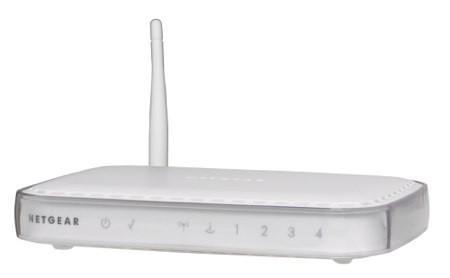
Netgear recently launched the WGR614L wireless router targeted specifically at open source firmware enthusiasts. It can use Tomato, DD-WRT, and soon OpenWRT. The core is a 240MHz MIPS processor with 16MB of flash and 4MB of RAM. You’ll probably remember when Linksys decided to dump Linux from their iconic WRT54G line in favor of VxWorks; they released the similarly speced WRT54GL for enthusiasts. Netgear seems to be arriving pretty late in the game, but they’ve set up a community specifically for this router. Time will tell whether community support is enough to make this the router of choice for hackers. We wish someone would release an x86 based router in the same price range just to make porting stupidly simple.

[via Slashdot]

Eye-Fi Explore Review

[flickr video=http://www.flickr.com/photos/pauls/2611298593/]

The WiFi uploading Eye-Fi SD card made a big splash when it was first introduced, but now Eye-Fi has a whole line of different products. The top of the line is the Eye-Fi Explore, which supports geotagging without using a GPS. Instead of GPS hardware, it uses the Skyhook Wireless Wi-Fi Postitioning System, which correlates the position of the Eye-Fi’s access point to GPS locations, creating virtual GPS functionality. This allows photos taken with the Eye-Fi to be be geotagged. Of course, the accuracy of the system is noticeably lower than true GPS and seems to be affected by a number of external factors, but it is still accurate enough to tag the photo within the immediate vicinity of where it was taken.

WiFi positioning is great feature, but certainly not limited to photography. Since the Eye-Fi is at its core SD storage media, you could probably have it geotag data saved to the card, even if it wasn’t created by a digital camera..

In Car WiFi


You may have already heard that Chrysler is planning to provide in-car wireless internet access to its vehicles. If not, expect to hear more about it later this year when the requisite hardware becomes a sales-floor option, or next year when it becomes factory standard for some cars.

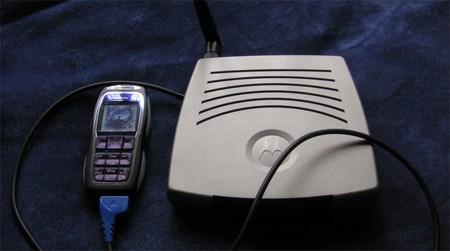
We can’t say it’s a bad idea, it’s just not a new one. Plenty of commercial portable routers are available, but they still need a modem and data plan to provide internet access. For internet access and wireless routing, look to [Nate True]’s cellphone-router combo, which uses a spare Nokia cellphone and a highly modded Wi-Fi router running OpenWRT. [True] has made it easy by providing the instructions and necessary custom code, but it seems like a lot of effort for a relatively slow connection. We think the original Stompbox is still the most fun since it has the speed of commercial devices and an open x86 OS to modify.

Openmoko FreeRunner Now Available

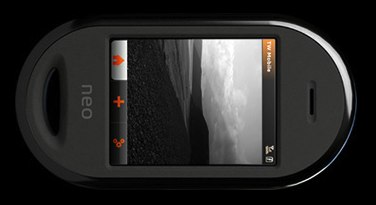
Openmoko began selling Neo 1973 phones direct to developers last July. The phone is an open source project designed to ease development on mobile platforms. The Neo 1973 has since sold out, but a new Linux phone intended for the mass market has been released, the FreeRunner for ~$399. The screen is 640×480 with 3D acceleration and a 500MHz Samsung processor. The new phone has WiFi and 2.5G GSM support. It has some truly unique features like USB host mode support. You can find the differences between the two phones here. This new phone release should help strengthen the community since average users were discouraged from purchasing the original. Pictures of the phone’s internals and a component diagram can be found on the Openmoko wiki. We wish more manufacturers would explicitly tell us how to get console access.

[via Slashdot]