
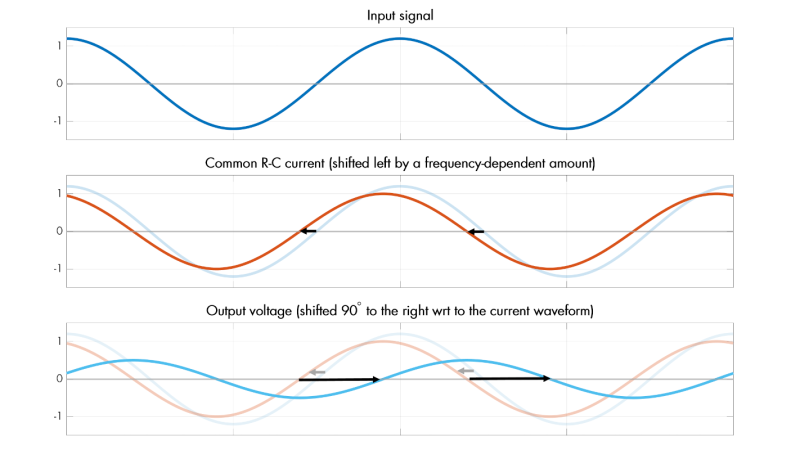
One of the major difficulties in studying electricity, especially when compared to many other physical phenomena, is that it cannot be observed directly by human senses. We can manipulate it to perform various tasks and see its effects indirectly, like the ionized channels formed during lightning strikes or the resistive heating of objects, but its underlying behavior is largely hidden from view. Even mathematical descriptions can quickly become complex and counter-intuitive, obscured behind layers of math and theory. Still, [lcamtuf] has made some strides in demystifying aspects of electricity in this introduction to analog filters.
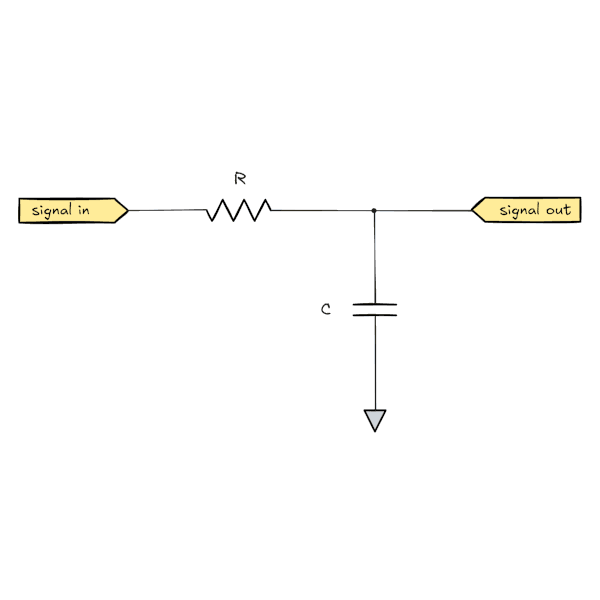 The discussion on analog filters looks at a few straightforward examples first. Starting with an resistor-capacitor (RC) filter, [lcamtuf] explains it by breaking its behavior down into steps of how the circuit behaves over time. Starting with a DC source and no load, and then removing the resistor to show just the behavior of a capacitor, shows the basics of this circuit from various perspectives. From there it moves into how it behaves when exposed to a sine wave instead of a DC source, which is key to understanding its behavior in arbitrary analog environments such as those involved in audio applications.
There’s some math underlying all of these explanations, of course, but it’s not overwhelming like a third-year electrical engineering course might be. For anyone looking to get into signal processing or even just building a really nice set of speakers for their home theater, this is an excellent primer. We’ve seen some other demonstrations of filtering data as well, like this one which demonstrates basic filtering using a microcontroller.












Never trust IT guy offering simple explanations of complex topics.
Never trust a helicopter under 30.
Also, never EVER trust blanket statements. (Me == retired IT guy who made a good career out of explaining complex to simple folks. Successfully.)
Do you have a picture of a puppy to go along with that candy, Stranger on the Internet?
Did you just dismissively refer to Michał Zalewski as “an IT guy”?
Pfft, who’s this Zalewski noob anyway?
Electricity CAN be observed with human senses but the preconditions are generally best avoided.
My neighbor from 30 years ago made fun of chemists doing physics in regard to cold fusion. He had a point, he worked on the Manhattan project.
You don’t have to work on Manhattan or be a chemist I mean physicist to see that that was going nowhere. But Linus Pauling would like a word with you about quantum chemistry. It’s actually been a thing since the 1930s.