
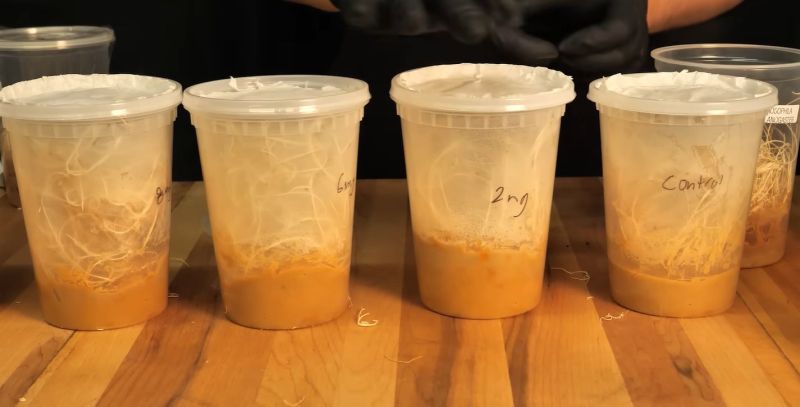
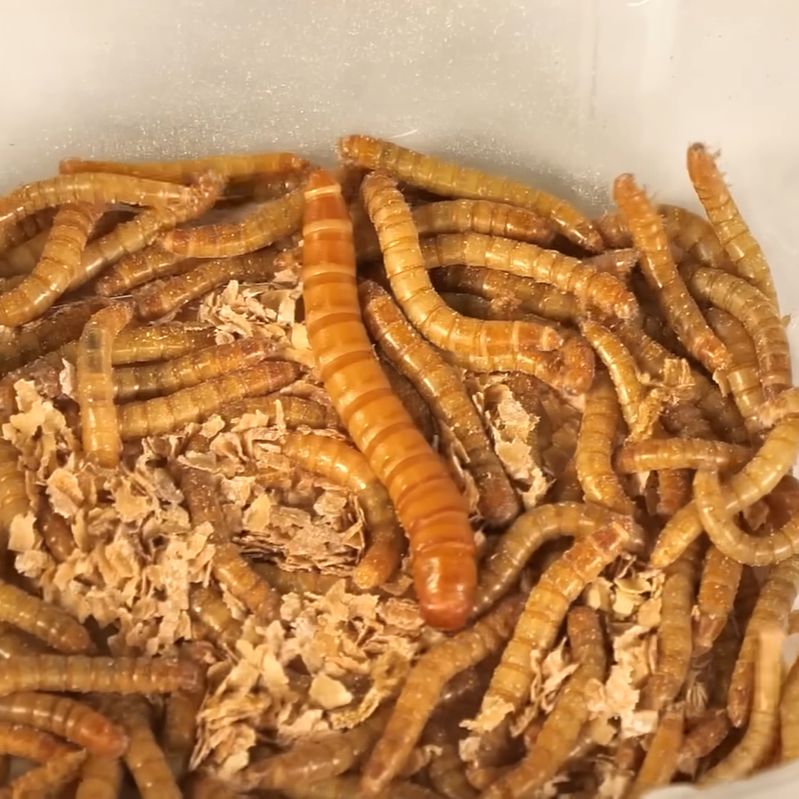
Have you ever found yourself looking at the insects of the Paleozoic era, including the dragonfly Meganeuropsis permiana with its 71 cm wingspan and wondered what it would be like to have one as a pet? If so, you’re in luck because the mad lads over at [The Thought Emporium] have done a lot of the legwork already to grow your own raven-sized moths and more. As it turns out, all it takes is hijacking the chemical signals that control the development phases, to grow positively humongous mealworms and friends.
The growth process of the juveniles, such as mealworms – the larval form of the yellow mealworm beetle – goes through a number of molting stages (instars), with the insect juvenile hormone levels staying high until it is time for the final molt and transformation into a pupa from which the adult form emerges. The pyriproxyfen insecticide is a juvenile hormone analog that prevents this event. Although at high doses larvae perish, the video demonstrates that lower doses work to merely inhibit the final molt.
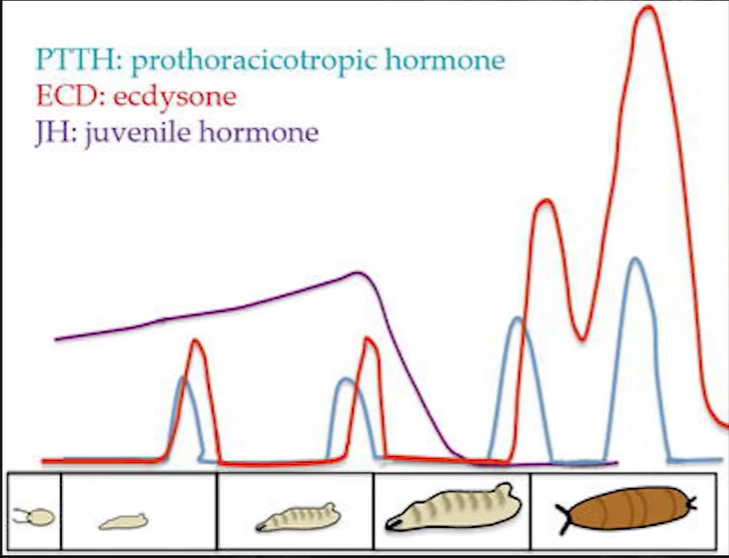
That proof-of-concept is nice of course if you really want to grow larger grubs, but doesn’t ultimately really affect the final form as they simply go through the same number of instars. Changing this requires another hormone/insecticide, called ecdysone, which regulates the number of instars before the final molt and pupal stage.
Amusingly, this hormone is expressed by plants to mess with larvae as they predate on their tissues, with spinach expressing a very significant amount of this phyto-ecdysone. For humans this incidentally interacts with the estrogen receptor beta, which helps with building muscle. Ergo bodybuilding supplies provide a ready to use source of this hormone as ‘beta ecdysterone’ to make swol insects with.
Unfortunately, this hormone turned out to be very tricky to apply, as adding it to their feed like with pyriproxyfen merely resulted in the test subjects losing weight or outright dying. For the next step it would seem that a more controlled exposure method is needed, which may or may not involve some DNA editing. Clearly creating Mothra is a lot harder than just blasting a hapless insect with some random ionizing radiation or toxic chemicals.
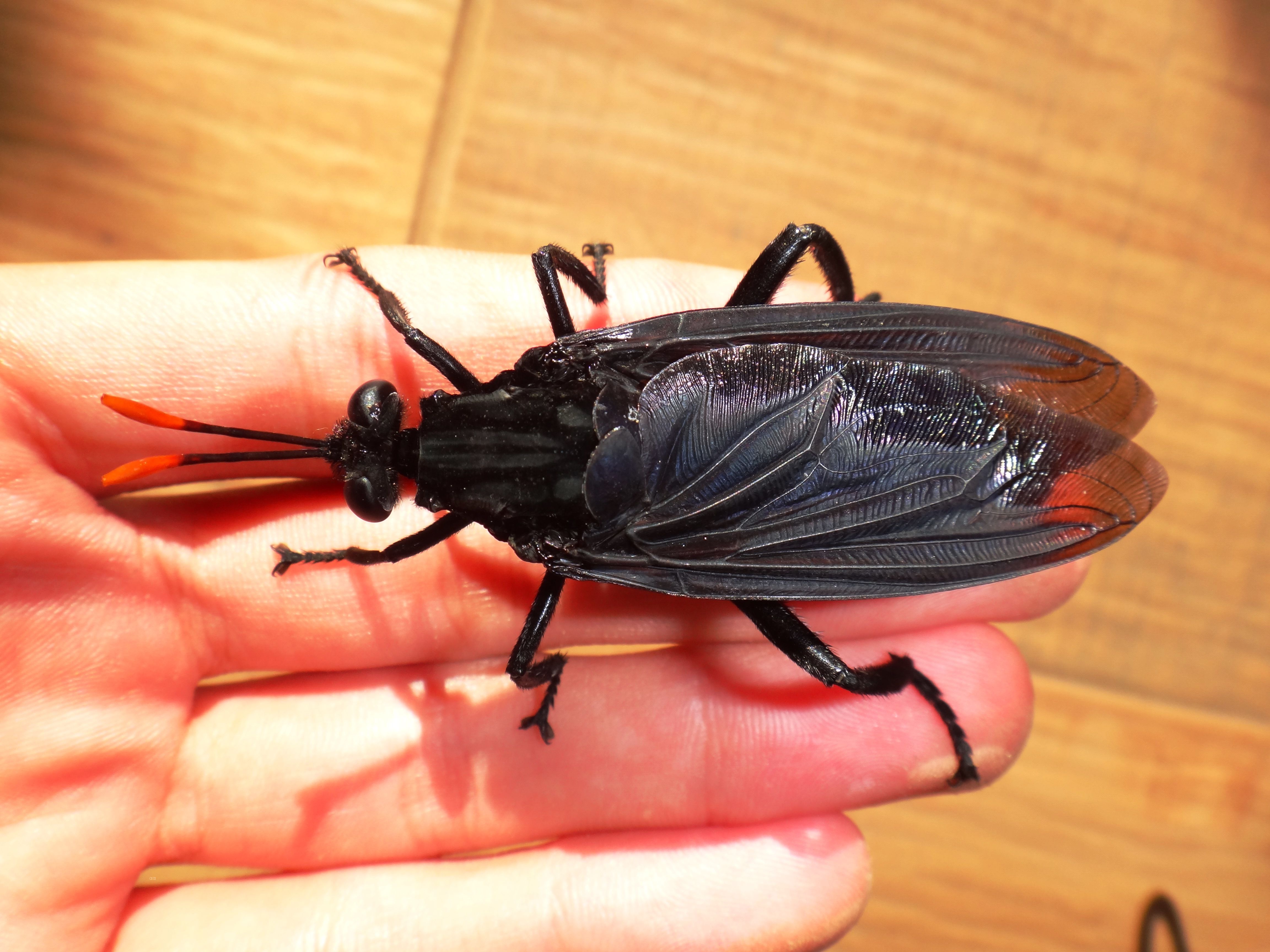
A common myth with insect size is that the only reason why they got so big during the Paleozoic was due to the high O2 content in the atmosphere. This is in fact completely untrue. There is nothing in insect physiology that prevents them from growing much larger, as they even have primitive lungs, as well as a respiratory and circulatory system to support this additional growth. Consequently, even today we got some pretty large insects for this reason, including some humongous flies, like the 7 cm long and 10 cm wingspan Gauromydas heros.
The real reasons appears to be the curse of exoskeletons, which require constant stressful molting and periods of complete vulnerability. In comparison, us endoskeleton-equipped animals have bones that grow along with the muscles and other tissues around them, which ultimately seems to be just the better strategy if you want to grow big. Evolutionary speaking this makes it more attractive for insects and other critters with exoskeletons to stay small and fly under the proverbial radar.
The positive upshot of this is of course that this means that we can totally have dog-sized moths as pets, which surely is what the goal of the upcoming video will be.












Something to know if one ever wants farm raised insects on one’s plate.
“with spinach expressing a very significant amount of this phyto-ecdysone. For humans this incidentally interacts with the estrogen receptor beta, which helps with building muscle.”
So there’s your scientific background for Popeye The Sailor, I guess.
shakes tiny fist
why do i feel like were living in a dune prequel?
“History shows again and again how nature points out the folly of men. Mealwormzilla!”
Lmao!
Growing giant insects feels pleasantly mad-scientist-y.
Re: “A common myth with insect size is that the only reason why they got so big during the Paleozoic was due to the high CO2 content in the atmosphere. This is in fact completely untrue.”
Assuming you meant “high O2 content” here? (Atmospheric CO2 was pretty high then also, but insects breathe oxygen just like almost everything else in kingdom Animalia)
Also, the impact of high atmospheric oxygen on prehistoric insect size is debated, but it’s certainly not a rejected theory; insect respiratory and circulatory systems do have unique constraints that limit how well they scale compared to all of us tetrapods.
I meant to write oxygen, yes. Thanks for pointing out the type :)
The ‘high oxygen levels’ theory for large insect size relies heavily on their respiratory system being mostly passive, which is not really the case. We can also see that only some insects super-sized during one period when there was no real competition on land, whereas a second period of high atmospheric oxygen content no such surge happened.
The ‘high levels’ also was just a few percent, which one could argue should not make much of a difference. While it can definitely be said that elephant-sized insects would be a major stretch, the fact that even today we have hand-sized flies zipping about and whatever happens with Australian insects ought to tell us something.
there are species such as the bar headed goose that migrate over the himalayas. they have super efficient lungs, and there are humans in peru that have adaptions to the low oxygen there.
I reckon there’s probably a downside such as increased food requirement or the adaptions would spread out to lowland populations, increasing body size.
Absolutely!
I think my post ended up sounding like more of a disagreement than intended. As you wrote, the idea that high oxygen content is the only reason insects got so big in that era, or the only reason they could be big, is clearly wrong.
What I meant to get at is that the more nuanced theory – higher atmospheric oxygen content would’ve encouraged the growth and evolution of large-bodied insects during the time period, along with other factors – is still very much in play. (There are even interesting arguments that growing larger might help insects with aquatic larvae avoid absorbing too much oxygen as larvae (https://journals.plos.org/plosone/article?id=10.1371/journal.pone.0022610)
In any case, it’s good news for budding mad scientists that that they don’t have to spend years breeding bugs in a high-oxygen environment just to make them bigger. Plus, it’d be kind of hard to wreak devastation and havoc on a terrified populace if your giant ants all suffocated to death every time they left your secret base.
Treat them with a cobalt chloride ;)
Having once kept jumping spiders, I do feel like trying to grow your replacement larger exoskeleton inside the old smaller exoskeleton is… a questionable engineering choice.
That one is named Jim
Jim, the Giant Worm sounds like something straight out of Dwarf Fortress.
I for one think we should leave insects alone. Starship troopers is good, as long as it remains fiction.
They just creep me out.
HHS could use some brain-sucking insects.
Too late. it was apparently done incorrectly
Try this with the nightmare fodder bugs they have in Australia, and you’ll have the makings of a good low-budget horror film.
Stop the madness!
Do you know what we are to a giant Preying Mantis??
Dinner!
More like a quick snack if we go by Mileena’s animality in Mortal Kombat 1 :P
The business path is clear: grow larger flying insects to carry improved (heavier) electronics for lower cost and improved short-distance surveillance drone replacements. Customers: military, law enforcement, search and rescue.
Mouth watering image if you’re a lizard. Pet stores have stocks of these. Bigger versions for big lizards. Cricket flour is a real thing, for people! Yum.
It’s not so much a question of “can we do this thing” but more a question of “should we do this thing”…