
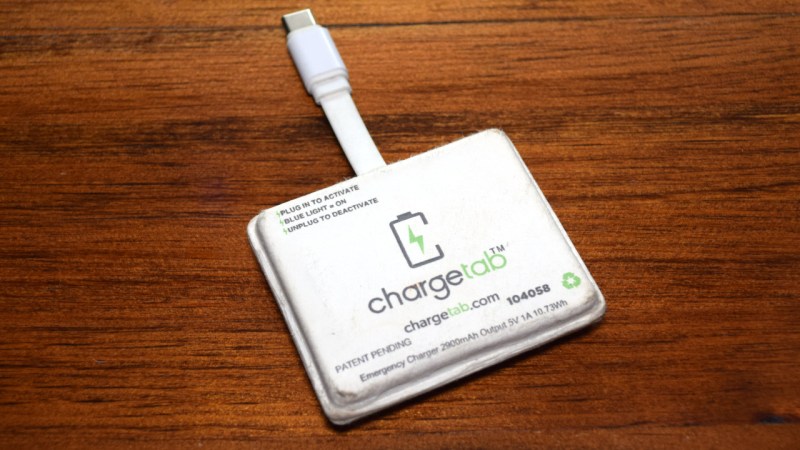
If you own a modern smartphone, there’s an excellent chance that its battery has run dangerously low on you at least a few times. Murphy’s Law dictates that this will naturally occur at the worst possible moment, say when you need to make an important phone call or when you’re lost and need to navigate home.
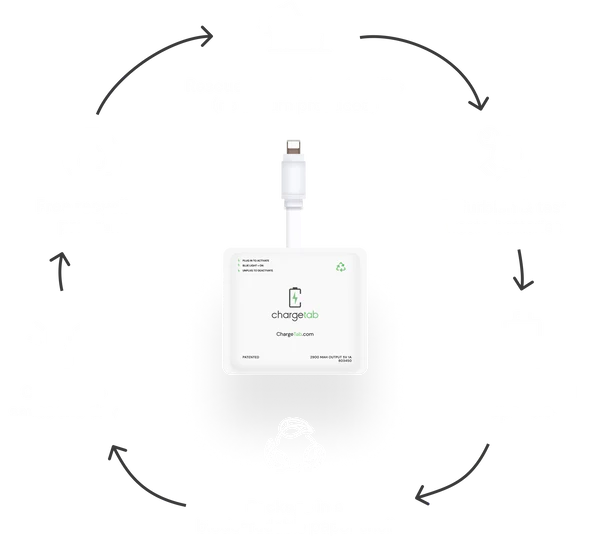 With this in mind, it’s not hard to see how a product like the ChargeTab would have a certain appeal. A small $10 USD device that you can keep in the car or pack in a bag that’s always available to charge your phone in an emergency.
Because it’s not meant to be used regularly — indeed it may never get used at all — it’s not completely unreasonable that such a device would only be good for one or two charges before its spent and must be replaced. It’s a bit like keeping a road flare in the car; it’s unlikely you’ll ever use the thing, but if you do, it only needs to work once.
But then what? According to ChargeTab, once the gadget has depleted its internal ~3,000 mAh battery it cannot be recharged and is no longer usable. Now to be fair, they specifically tell you to not throw it in the trash. They’ll send you a free return label to ship it back to them, at which point it will be refurbished and put back into circulation. The company argues that this recycling program, combined with the fact that the batteries inside the ChargeTabs were supposedly diverted from landfills in the first place, makes their entire operation eco-friendly.

Yet here we have a pair of ChargeTabs that were thrown in the regular garbage and would have taken a one-way trip to the local landfill if it wasn’t for the fact that I habitually dig through garbage cans like a raccoon. So let’s take a look at what’s inside one of these emergency phone chargers and if the idea is as green as the company claims.
Paper, Not Plastic
If nothing else, the enclosure of the ChargeTab is pretty unique. As part of the whole eco-friendly shtick they have going on, the device is encased in a biodegradable paper shell. Usually I wouldn’t approve of a device that’s sealed up rather than put together with fastners, but it’s hard to complain when you can cut the thing open with a pair of scissors. Of course reassembly would be tricky, but clearly that’s not something they were concerned with.
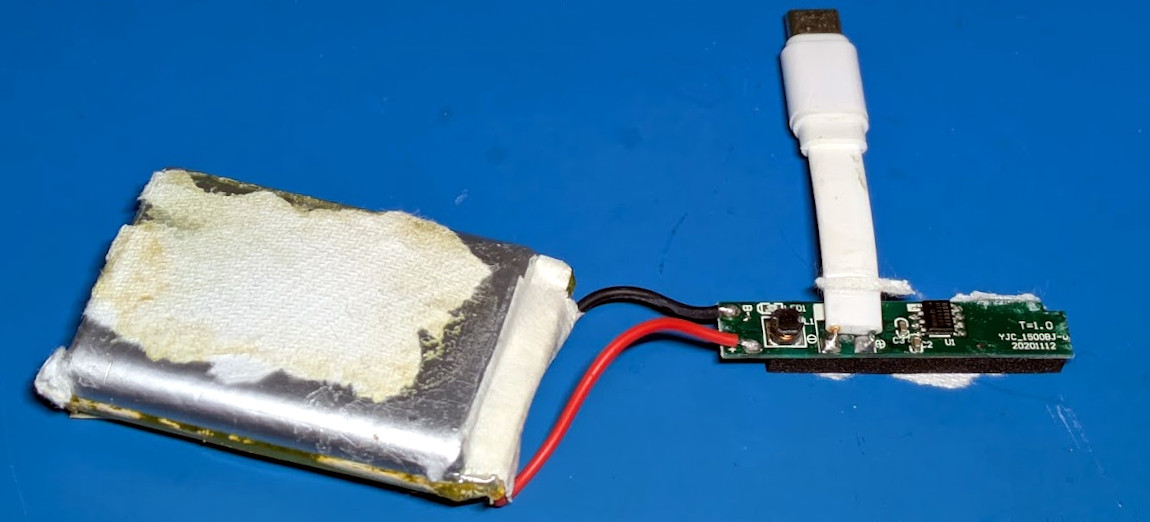
As for the internals, there’s really not much going on. Just a chunky LiPo pouch battery and a thin PCB with an SOIC8 IC, an inductor, a couple of capacitors, and a single LED.


The battery is marked YL 104058, has a capacity of 2,900 mAh, and a date code of 2017. Somewhat surprisingly a close inspection of the IC shows that its markings are intact, identifying it as a HotChip HT4928S.
Chips Ahoy
Being able to positively identify a chip when taking a consumer gadget apart is great, but actually being able to look it up and find a proper datasheet is a real treat. Turns out that the HT4928S is a very popular IC commonly used in USB power banks. It’s a highly integrated solution that offers battery management as well as 5 V boost with only a few support components.
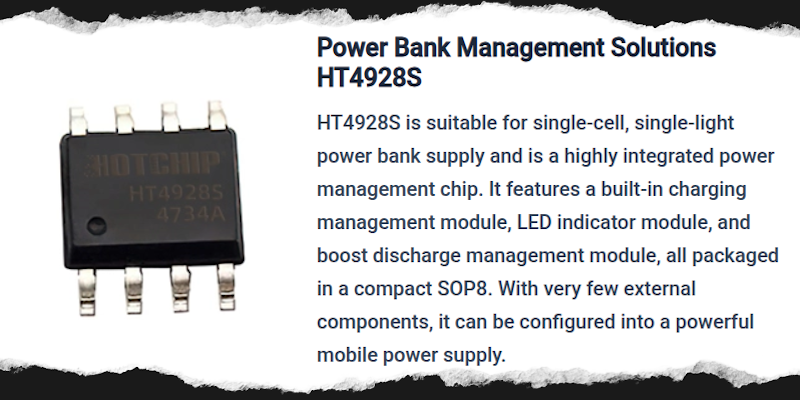
At first, I found this somewhat surprising. Given the unusual single-use nature of the ChargeTab, I had expected a more bespoke solution. But of course it makes perfect sense to use one of these power bank ICs. They can be had for pennies, and functionally, the device is pretty much a USB power bank anyway, it just doesn’t recharge.
Truth be told, the HT4928S seems like a pretty slick part to have around. It’s unusually hacker-friendly: the SOIC8 package is easy to work with, and compared to the venerable TP4056 you get integrated battery protection, not to mention 5 V boost. All for about $1 USD a piece in quantities of ~10. I plan on ordering a few to go into the parts bin for sure.
But wait…if this chip has a charge controller, why is the ChargeTab single-use? What about the design prevents the user from simply charging it up like any other USB power bank that uses the HT4928S?

A look at the application diagram from the datasheet shows that the HT4928S uses the same pin for both power input and output. That is, the same pin that puts out the boosted 5 V from the battery will also charge said battery if you apply power to it. In the old days, the input would have been a female USB-A port, but in the era of USB-C you could simply have a female port that does double duty.
But the ChargeTab only has a male USB-C connector. Technically you could plug that into something that’s providing power, but the HT4928S doesn’t talk USB Power Delivery and the PCB doesn’t have the necessary resistors to enable legacy mode.
Security Through Obscurity
The only differences between the application circuit and the PCB in the ChargeTab is the missing LED and USB port. So unless they are using some custom modified version of the HT4928S, it stands to reason that injecting 5 V into the male USB-C connector should flip the chip over to charging mode.
As mentioned previously, it won’t work with proper USB-C devices and cables. But through the magic of Amazon Prime, you can have all manner of shady adapters delivered to your door in just a few hours. So if we combine a USB-A to USB-C cable with a female-female USB-C coupler, we can stick 5 V where the ChargeTab least expects it. According to the HT4928S datasheet, a blinking LED will indicate the charging process has started.
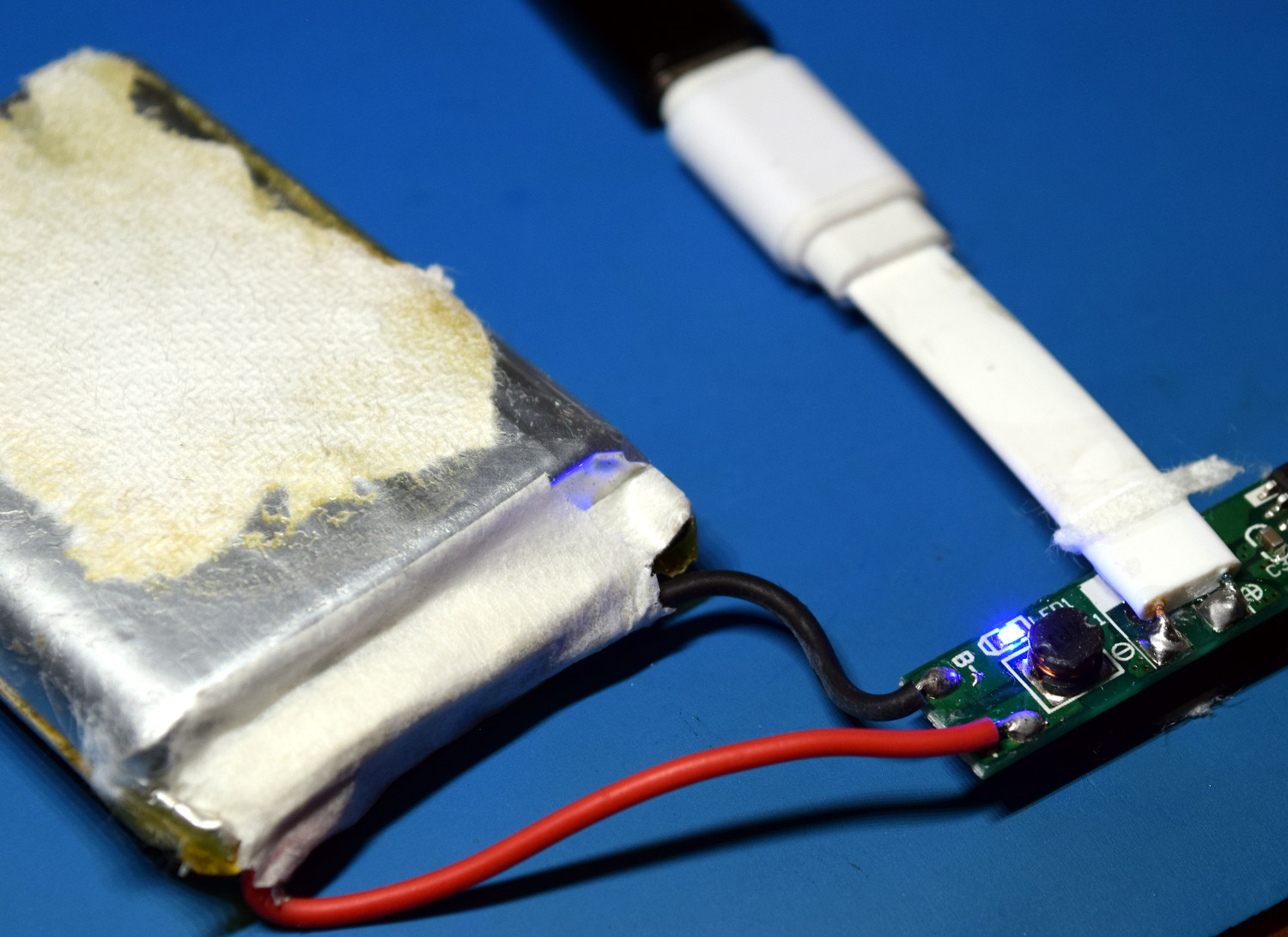
Well, so much for that whole single-use thing.
Charging as a Service
So in the end, the only thing that’s keeping you from reusing the ChargeTab is a cheap USB-C coupler and an old cable. No return label, no sending it off to the mothership to get “refurbished.” It’s quite simply a USB power bank in a paper enclosure and with intentionally obtuse connectivity.
A devil’s advocate might argue that the recycling program makes it more likely the batteries inside the ChargeTabs will actually stay out of the waste stream compared to normal power banks. Rather than dropping them off in some random battery recycling box and having them go who knows where, the returned ChargeTabs are guaranteed to be put back into use properly. (On the other hand, I fished these out of the trash.)
But let’s be clear, this isn’t some benevolent initiative — the company ends up selling the recycled ChargeTabs again at full price. So if you really think about it, they are essentially just renting them out to the consumer. Is that a service worth $10? Regardless of how we might feel about it personally, the fact that these things are being sold would seem to indicate a not insignificant number of people feel it is.
All I know is that if you end up seeing one of these in the trash, you should definitely take it home and charge it up yourself.












That’s a 9 year old battery. Did you test that it actually holds 2,900 mAh anymore?
These things tend to crash and hopefully not burn right around the 8-9 year mark if you continue recharging them.
… unless it means the 17th week of 2020, in which case it’s only 6 years old. Boo-yah!
It shows the full date in YYYY.MM.DD
Shady.
Rhe diagrammstates the batteries are salvaged from the waste, and tested. So far, so good.
But If they are charged once, why not multiple times by the customer? Cannot be security, because they trust them enough to resell them in the first place. I wonder…
A paper cover arroud a LiPo does not increase the trust I put in them. Either having the powerbank lying arround somewhere for a long time discharging slowly with an expiry date (no recharge, right?) nor having it my pocket and getting slowly damaged is an “emergency” use case in my view. In case of emergency I would like to have full power guaranteed, and no chance of this thing doing whatever LiPos do when damaged at a random time in my backpack.
10 € is too much for that charge, single use, and poor packaging. I can get reasonable full, rechargable and properly robust powerbanks in evey convenience store nowadays. This is like selling bad USB 2.0 thumb drives with 4GB capacity nowadays.
The “but it is hackable!” part here does not add anything to make it more interesting.
So what should the story tell us?
presumably this thing is going to sit in a glove box for years before you need it to work perfectly one time. if you live somewhere extremely hot or cold (or simply enduring regular summers and winters). im not sure lipo can do that.
Or migrate down to the deepest depths of the center console, alongside the sticky coins, melted-out half-full chapsticks, pens… All the things that elate that “Oh, I forgot I had this in here!” when doing a detail of the interior, before tossing it all in the trash bag.
Down where the other seldomly used, sometimes heavy and sharp, items settle down to over time. Imagine this paper puck laying under a window breaker or folding knife or multitool. Already being stuffed and crushed from above, then the driver hitting a serious pothole.
Sold as an emergency single-user charge pack… What could go wrong?
People are actually buying these???
it charges a single-user with an emergency, so … yes?
Now that’s funny🤣
If you’re keeping this in your CAR you’re Doing It Wrong. Your car already has a very good battery charger installed in it. It’s called THE ENGINE.
Kinda hard to take the car engine with you thou.
That’s right. It’s much easier the other way around.
I think they might have picked up someone’s stock of unsold cells that reached their shelf-life and invented this product to push them off. They’re saying “no recharge” because they don’t want to take the responsibility.
What’s happening with old cells, they already got a thick SEI and depleted electrolyte from just sitting there, so subsequent recharges will rapidly reduce the capacity. As a personal anecdote, all the similar cells that I have ever owned, in phones and cameras, laptops etc. went through the same failure mode at old age. The moment you notice it’s properly fading, you’ve got maybe 10 recharges left until it’s completely dead. If these cells are already at that point for being sat on a shelf for a decade, there’s no point in trying to recharge them. Just testing the cell once will cause significant capacity loss.
Nobody is suggesting that the devices are hackable themselves. Just that the jellybean IC they use is notable as it could be helpful for hardware hackers, actually has a half decent data sheet, and can easily be purchased for cheap since it is used in so many of these types of things.
seems like this would make more sense if the battery chemestry was different. i imagine a pouch you squeeze to break an electrolyte capsule and a few alternating layers of foil and plastic. if you are going to use a rechargeable cell, make it rechargeable. instead were using sketchy “recycled” cells, which is probibly why they dont want us charging them.
Ya, if this had a fancy primary cell chemistry that had a multi decade shelf life, I’d say fair enough. But lipo is not the right cell for this.
Tbh, a better way to go would be a USB bank that takes AA cells. Then choose your chemistry; keep NiMH in there for everyday use and then just have a bag of AA cells stored in your glovebox.
Many years ago (pre- smart phone era) I had an emergency charger with a pull tab to activate the chemical battery which claimed to have extremely long shelf life. Kept it in my car for emergencies.
This probably evolved from that product niche, but LIPO batteries have become so cheap they decided to use them as a poor substitute.
Probably a zinc-air battery. If that was the case, it was basically an oversized hearing aid battery, available since the 70’s.
There’s two versions. One version is just a tab you break to let the air in. The other is you also need to add water to activate the cell. The dry cell is shelf-stable indefinitely.
Definitely the “convenience” option for people who don’t want to have a real portable charger (i.e. Walmart has 5000mah models for <$8). The recycling angle is nice, but silly, since you’re shipping an item (a $3-4 enterprise) that could have simply been recharged.
A usb-A male to USBC female adapter plugged into an old USBA charger brick probably will work to trick these too
I have a hard time thinking that shipping these devices back to the warehouse once per charge is an environmentally friendly system!
Seems that they’re using ‘environmentaly friendly’ to make you feel good about spending 10$ to charge your phone once.
Also, I wonder what the self discharge rate on these is. I’ve had USB banks that will drain themselves sitting on the shelf in under a year.
Good find on the chip thougb, that’s going in my parts library!
The website claims ” 2 year shelf life. “
2 years on a shelf in your house or 2 years in your glovebox in who knows what kind of weather. i guess if you are in a state where having a phone in an emergency is a matter of life and death, you probibly are in a climate that would destroy a lipo. so i have questions about its efficacy as an emergency device.
some of these newer hand cranked flashlight/radio/strobe/etc devices now have phone charging ports. as an actual emergency device, that is probibly going to be a lot more reliable in a lot more conditions than random salvage cells.
Yea it makes way more sense to have something that can provide a charge to your phone with a hand crank or maybe a small solar panel that give a bit of a charge.
We live in a world where affordable power banks are everywhere.
I have a small mountain of power banks and only like 2 or 3 I ever bought actually went bad.
This battery pack looks like a solution looking for a problem.
It makes sense as a concept, but the practicality of the situation is that you have a 10 Watt-hour battery and your hand-crank generator can produce maybe 1-2 Watts because of low mechanical and electrical efficiency.
That’s a certainty for the “emergency” pocket size models with plastic gears and a small plastic handle. What you’re looking at is cranking the generator in your hand for a full hour to get 10-20% charge back – it’s literally your last resort if you have nothing else to do and you need to make that phone call. It’s also highly likely that it will break on you in the attempt, because it’s a cheap plastic toy that was never actually built to be used as intended, so buyer beware.
The same goes for those small book size folding solar panels or solar phone back covers. Often they make only enough current to keep the DC-DC converter running, not enough to actually charge the battery at any appreciable rate. You would need 10-20 hours of strong direct sunlight straight into the panel to charge your phone back up. Just pointing it at the open sky, even if it’s bright, gets you nothing.
id say the problem sort of exists, but its the solution that’s questionable.
perhaps not part of a vehicle survival kit, but maybe something light weight you can take with you hiking (of course then your problem becomes cell coverage). i think a primary battery solution would be better in those cases, but it would need to be much lighter and have a long shelf life, possibly also in hermetically sealed packaging (you might have a marine version for your boat).
there are enough cases where a live phone saved the day and a dead phone would have been a death sentence. dedicated emergency equipment needs to have some guarantee that it will function when you need it.
If your doing something where a lack of communication poses risk to life, you should carry EPIRB instead of a disposable toy which for some reason corporations keep calling a “smartphone”. Those are actual, tested devices which provide SATCOM to emergency operators.
LordNothing: I bought an inflatable unicorn costume (because I live in Portland OR, and it’s the law), and its inflator fan has a USB-A plug. It comes with a 4xAA battery holder with USB-A jack, but of course you can also power it from a powerbank. I don’t know how safe something like that would be as an emergency powerbank, mainly because there is no voltage regulation at all, so with fresh alkalines it puts out over 6V, but this may be all you would need if phones in general are 6V-tolerant. Which they MIGHT be.
I think the main problem with a primary battery solution is that by volume or weight, the only primary battery type I know of that can compete with Li-ion is a primary Lithium battery, and of course these aren’t the right voltage anyway, and they are also expensive. But since it’s for emergencies, the other safe option would be three AA alkalines and a boost converter like the one described in the article.
Zinc-air batteries. For example, Ansmann 1500-0047-520. It’s a 6 Volt 50 Ah lantern battery. It weighs 715g so the energy density is approximately 330 Wh/kg which on par with the top end of commercial LiPO cells.
The only issue is that they typically come in larger formats, because they’re meant for things like road construction beacons and mining lanterns, or in very small formats for hearing aids.
I get how this is probably an opportunistic product but the engineer in me agrees with previous comments about the risk and unsuitability of old rechargeable LiPos for this application. I’d make something out of ultra long-life lithium primary batteries and a manually switched-on 5V boost-buck that could sit in a glovebox for 20 years. Assuming USB-C will still be a thing in 20 years.
If they are really taking the batteries from recycled phones, I hope they use only batteries that are sealed in the phone or are otherwise known to be genuine. When I worked for a Cellphone manufacturer, we had a complaint that the battery caught fire in one of our phones (during use, not charging). Failure analysis showed it was not our battery, but a cheap replacement.
Now you’ve got me wondering how I could use a road flare to emergency-charge my phone….
peltier device and a heat sink. or a stirling engine, which i believe is a lot more efficient.
I’m thinking a hand-cranked generator, a super capacitor, and proper regulation might do the trick.
/s
Feel like boiling water?
It is a lot easier to use your battery bank as a flare.
https://www.amazon.co.uk/Wind-Radio-Solar-Battery-Torch-Green/dp/B0F92RVLWR/257-6591307-3578113
I’ve had one of these for 10 years and it still works fine
How long would those last if it’s not used for some time? It’s a 9 year old battery and even if they aren’t connected, they do lose charge over time. It would suck if I needed to charge my phone and found the pack nearly dead after sitting in the glove box for a few years.
No, I’ll stick to local rechargeable battery (local as in Walmart, Best Buy, etc not from internet)
I have a little emergency USB charger that takes four AA batteries. You can store it with batteries, if you use the fancy lithium ones it has a shelf life of over 10 years. Doesn’t cost more than 10 bucks with the batteries. I’ll take that over a paper wrapped, old, used lipo cell at any point in time.
Here I was at the beginning hoping it was some kind of cool aluminum air battery, not a rip off usb power bank with dying lipos. Great write up.
What’s with people repeating the “glovebox” scenario? Probability of having your phone discharged AND your car totally dead AND being in the middle of nowhere with nearest human settlement some 50 km away is so low, you might as well play some lottery. Otherwise just plug the phone into a built-in USB receptacle, use a 12V charger or if things get really desperate walk 30 minutes to a nearby village or something.
Bahahaha.
If you lived where I do, that attitude would get you killed.
Yep, I’ve lived in Northwest Minnesota. There are still places where it takes longer than 30 minutes to get to the next road much less a house that’s occupied or a community of any sort. In the winter, they’d find your frozen corpse when the snow melted if you go off the road.
Even a dead car battery that can no longer crank the engine still has enough power left in it to run a USB charger to top up your phone.
If you have no car around you, and you’re more than 30 minutes walk away from civilization, the question becomes how did you get there, and then would you trust your life to an old trash rescue LiPo battery of unknown state of charge?
If you have direct access to the battery and clips for you charger. In my car, the computer throws a dozen random error messages, then freezes up. The lighter sockets, usb ports etc are now disconnected from the battery. The battery requires tools to remove the floor of the trunk to access the +ve terminal.
Welcome to the 21st Century. Have a nice day.
This thing is no better than a normal power bank for emergency use. It will probably be dead when you actually need it. With the old lithium ion battery and the standby current draw from the power bank chip, I would be surprised if it held a charge for a year.
It should have used non rechargeable lithium metal batteries. It should also have a pull tab that keeps the batteries physically disconnected until you pull it. Then it could have had a 10+ year shelf life.
Probably. The last time I heard of these things they were being sold at festivals which kinda makes sense.
In the sense of ripping off desperate drunken people. Ten bucks and it doesn’t even give a full charge since modern phones have much bigger batteries than 2900 mAh.
Could be worse. Here’s Big Clive from seven years ago looking at a 500mAh one: https://www.youtube.com/watch?v=6lflk6iY56w
Here’s the 16 page patent application. Patent #: US-20190393705-A1; filed 26Dec2019.
They have two other Design Patents from 2022 too, but this is the primary:
https://ppubs.uspto.gov/api/pdf/downloadPdf/20190393705?requestToken=eyJzdWIiOiJhMTU3MjEzZi1kZGQzLTRhODctODk3OC1kZWEwMmFiYTlhMDIiLCJ2ZXIiOiI5MDQ3OGY3OC0yZTA3LTRhZWYtYWE3Mi05ZDU0YjY1YTI2OGIiLCJleHAiOjB9
I was trying to figure out how this thing was even patentable. I mean, what’s the innovation here? Well, according to the patent, this:
“Some portable charging devices have been offered, but existing charging devices are often complex, cumbersome, unreliable, expensive to manufacture and/or offer poor charging performance.”
And it has a massive USB-C “charging head.” Amazing.
Stupid disposable lipo disguised as “green.” Costs about as much as an actual power bank that you can just recharge over and over again. What kind of moron would buy this thing
it’s a single use vape without the health hazards
(I think it is noteworthy how vapes check all the boxes the Chemtrail people complain about, while at the same time avoiding the physical arguments against them)
I’d rather have something like this, with lithium AA cells for emergency backup.
https://www.ebay.de/itm/406852798866
A lot of commentors seem to think this is an emergency item to keep in an emergency box. It’s more I’m out in town and my phone is flat so I will use this. Sort of emergency, at least that’s what I have seen them sold as.
Why pay $10 for this instead of just buying a reusable charger? 3000-5000mAh charging banks routinely sell for around $10 and when they can’t hold a charge anymore you can drop them off at a battery recycling center like they ones Best buy had in their entrances.
…and most of them will hold a charge for a year or more, so just fine for emergency use.
so you can literally charge this eco scam battery with a female usbc to usbc adapter. or just literally wrap some wires together
Yeah, but why would you, since it’s literally a powerbank without the charging jack, for the same price that you can get a powerbank WITH a charging jack.
Thanks for the HT4928S part number. I’d be keen to pick up a few of these ICs for other battery/USB powered projects. Does anyone have a good source for these? They are not on Digikey or Octopart.
Not the way. This object exists to be a bulk order for some governmental department that needs to have rapid use cases for an emergency.
“Yet here we have a pair of ChargeTabs that were thrown in the regular garbage and would have taken a one-way trip to the local landfill…”
No, they would most likely have a pit stop in a parking lot or the middle of the road after being compacted, pierced and lighting the refuse truck load on fire. It is frankly amazing we don’t have more refuse truck fires than we currently do considering all of the single use vapes being tossed in to the trash every year.