

We got asked a great question in the mailbag segment on the Podcast this week: are there hacks that we have read about on Hackaday that we use in our everyday life? The answer was absolutely yes, and I loved Tom’s take it often goes the other way – he sees a hack, tests it out, and then writes it up.
But I started looking around the office and I found more examples of projects that were absolutely inspired by projects I had seen on Hackaday, yet weren’t the same. I made a DIY mechanical keyboard because I saw someone else do it. There are a few home-made battery packs that I probably wouldn’t have attempted without having read about someone doing the same thing. I riffed on [Ted Yapo]’s Tritiled project, making a slightly inferior, but workable knockoff, and they’ve been glowing for many years now.
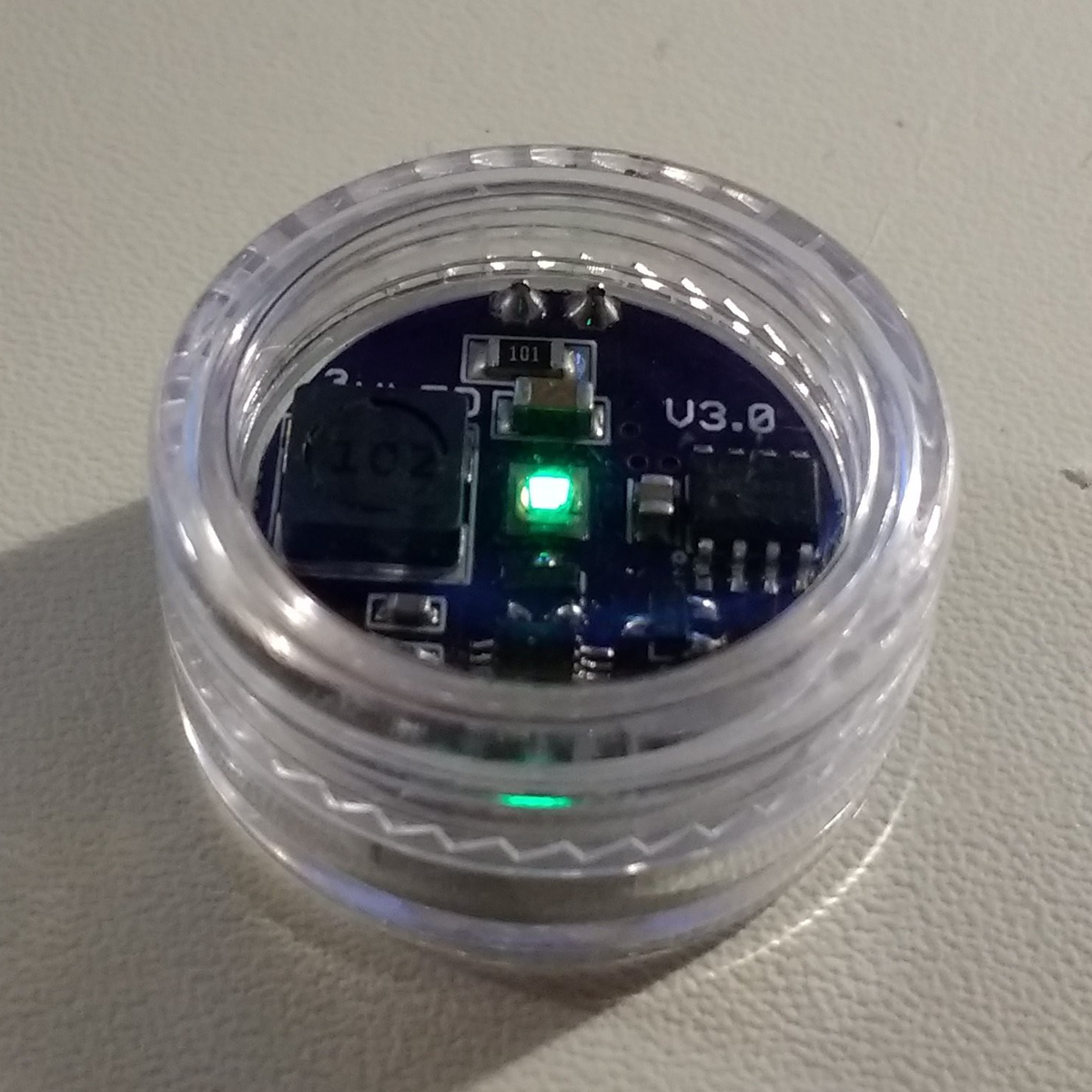 That got me to thinking about reproducing a project versus taking inspiration from it, and though I enjoy both, I’m find myself most often in the “inspiration” mode. I just can’t leave well enough alone, even when I’m fundamentally copying someone. NIH syndrome? Expediency? Probably both, and sometimes with a dose of hubris or feature creep.
Looking back at [Ted]’s TritiLED, though, I found some great examples in both the rebuild and redesign modes on Hackaday.io. [schlion]’s Making Ted Yapo’s TritiLED couldn’t be a clearer example of the former, and it’s great to look over his shoulder and appreciate all the lessons he learned along the way. [Stephan Walter]’s Yet another ultra low power LED is inspired by [Christoph Tack]’s Ultra low power LED, which is in turn inspired by [Ted]’s project, like a conceptual grandchild.
In a way, I look at this like with music: sometimes you play the notes the way they were written down, and sometimes you riff on someone else’s theme. Both are equally valid, and both owe a debt to the upstream source. Is Hackaday the hackers’ jazz club? And which of these modes do you find yourself working in most?












Same as in open source software; do you fork and publish it or make a pull request upstream ?
Hacking and jazz, what a great analogy! An completely different way to look at it yet it makes so much sense.
Which modes? Ornette Coleman, loud and fast chaos? A modal and cool Miles would mean a project with no frustrations, not happening. A jazz-rock Miles is more likely. Coltrane-grade total control? Only for grandmasters (of which there are more than a few here). I say the best projects are like Bird and Dizzy having a blast.
I think it’s very similar to training AI. If you’re inspired by or copy something, in both cases, your work owes something to the original and you should be required to credit and compensate the original creator unless they explicitly give you permission not to.
All data not backed by billion dollar companies (and even then some of that) has been ingested as training data. The REAL value now is in the “chat sessions” with AI, where it makes a mistake and then you correct it.
This is the reason some AI hallucinates: to “trigger” users into making passioned arguments the AI is wrong. Everyone is an intern working for the AI, for free. It’s not a bug it’s a feature. This recorded chat history is exactly why Cursor is so valuable, even though Cursor have not released any serious LLM. It’s why usage is being subsidized.
At some point the AI prices will go up, not paying the fee will be like not paying your water bill, and those businesses will fail. The AI vendors will be offering the same services for much less. We’re going to see the “Amazon of Business Processes” across all white collar fields.
Countries with socialized healthcare and pensions will probably adapt to the 40% unemployment, but everything else will tear themselves apart.
Both of course.
Take an existing design, modify it and get in trouble and work through it.
Best learning experiences!