
A long time ago, there was a big difference between PC and console gaming. The former often came with headaches. You’d fight with drivers, struggle with crashes, and grow ever more frustrated dealing with CD piracy checks and endless patches and updates. Meanwhile, consoles offered the exact opposite experience—just slam in a cartridge, and go!
That beautiful feature fell away when consoles joined the Internet. Suddenly there were servers to sign in to and updates to download and a whole bunch of hoops to jump through before you even got to play a game. Now, those early generations of Internet-connected consoles are becoming retro, and that’s introduced a whole new set of problems now the infrastructure is dying or dead. Boot up and play? You must be joking!
Turn 360 Degrees And Log Out
Microsoft first launched the Xbox 360 in 2005. It was the American company’s second major console, following on from the success of the Xbox that fought so valiantly against the Sony PlayStation 2 and the Nintendo GameCube. Where those sixth generation consoles had been the first to really lean in to online gaming, it was the seventh generation that would make it a core part of the console experience.
The Xbox 360 liked to sign you straight into Xbox Live the moment you switched on the console. All your friends would get hear a little bling as they were notified that you’d come online, and you’d get the same in turn. You could then boot into the game of your choice, where you’d likely sign into a specific third-party server to check for updates and handle any online matchmaking.
The Xbox 360 didn’t need to be always online, it just really wanted you to be. This was simply how gaming was to be now. Networked and now highly visible, in a semi-public way. Where Microsoft blazed a trail in the online user experience for the console market, Sony soon followed with its own feature-equivalent offering, albeit one that was never quite as elegant as that which it aimed to duplicate.
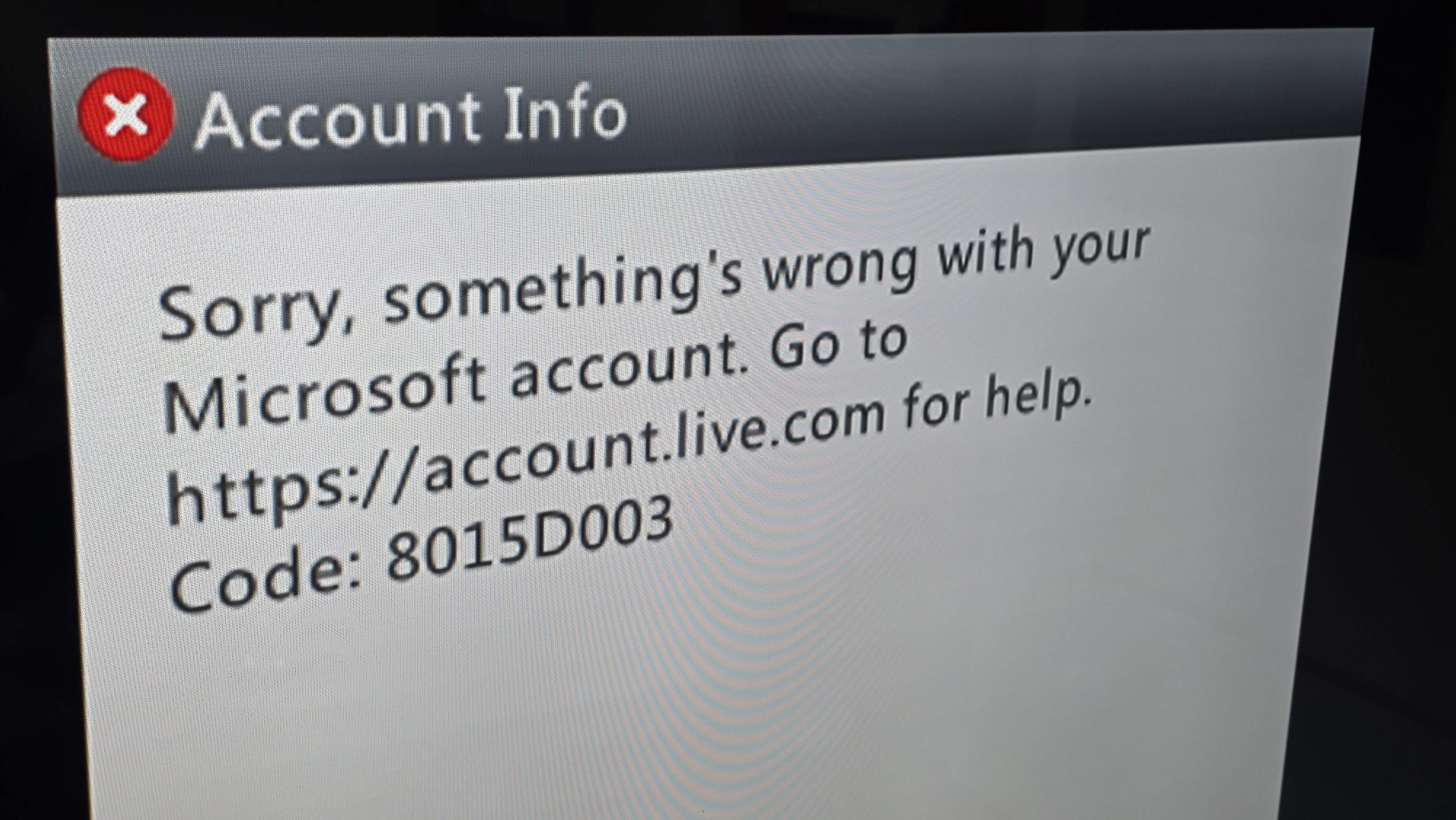
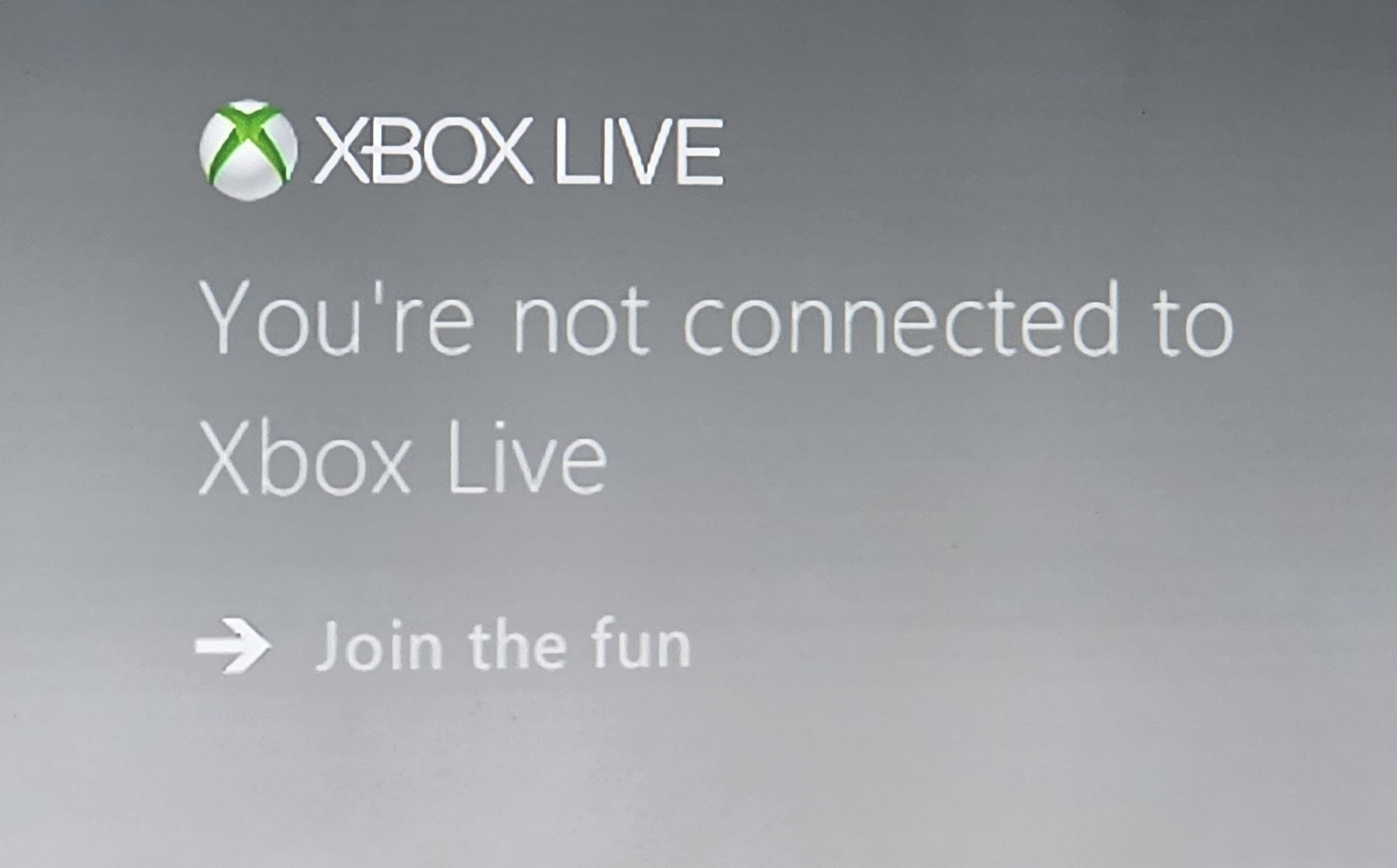
Fire up an Xbox 360 today, and you’ll see that console acting like it’s still 2008 or something. It will pleasantly reach out to Microsoft servers, and it will even get a reply—and it will then prompt you to log in with your Xbox Live or Microsoft account. You’ve probably got one—many of us do—but here lies a weird problem. When you try to log in to an Xbox 360 with your current Microsoft account, you will almost certainly fail! You might get an error like 8015D086 or 8015D000, or have it fail more quietly with a simple timeout.
It all comes down to authentication. See, the Internet was a much happier, friendly place when the Xbox 360 first hit the shelves. Back then, a simple password of 8 characters or more with maybe a numeral or two was considered pretty darn good for login purposes. Not like today, where you need to up the complexity significantly and throw in two-factor authentication to boot. And therein lies the problem, because the Xbox 360 was never expecting two-factor authentication to be a thing.
Today, your Microsoft account won’t be authorized for login without it, and thus your Xbox 360 won’t be able to log in to Xbox Live. In fairness, you wouldn’t miss much. All the online stores and marketplaces and games servers were killed ages ago, after all. However, the 360 really doesn’t like not being online. It will ask you all the time if you want to sign in! Plus, if you wanted to get your machine the very last dashboard updates or anything like that… you need to be able to sign into Xbox Live.
Thankfully, there is a workaround. Community members have found various solutions, most easily found in posts shared on Reddit. Sometimes you can get by simply by disabling two-factor authentication and changing to a low-complexity password due to the 360’s character limit in the entry field. If that doesn’t work, though, you have to go to the effort to set up a special “App Password” in your Microsoft account that will let the Xbox 360 authenticate in a simpler, more direct fashion.
Pull all this off, and you’ll hear that famous chime as your home console reaches the promised land of Xbox Live. None of your friends will be online, and nobody’s really checking your Gamerscore anymore, but now you can finally play some games!
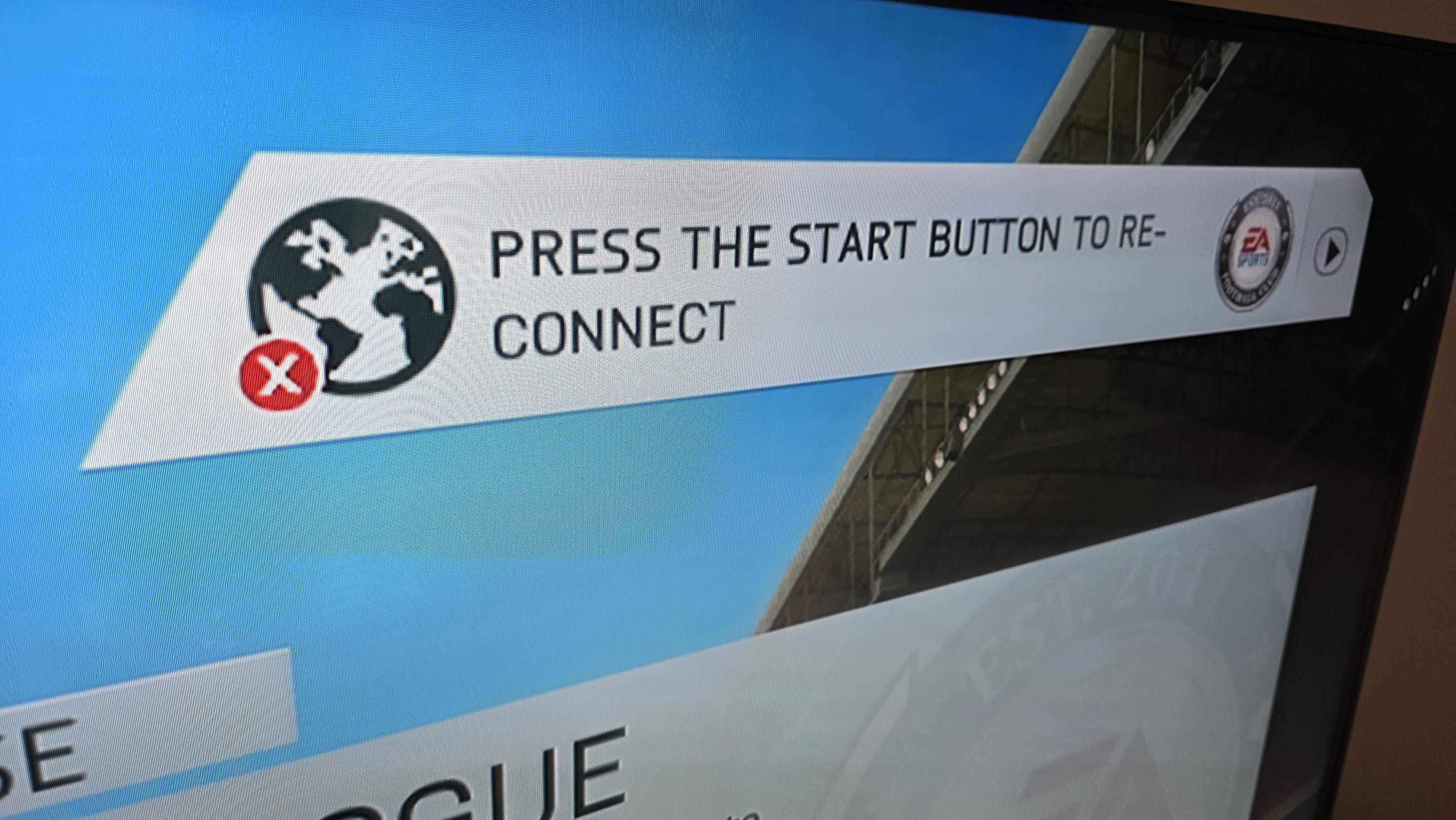
Only, for a great many titles on the Xbox 360, there were dedicated online servers, too. Pop in FIFA 16, and the game will stall for a moment before it reports that it’s failed to connect to EA’s servers. Back in the day, those servers provided a continual stream of minor updates to the game, player rosters, and stats, making it feel like almost a living thing. Today, there’s nothing out there but a request that always times out.
This would be no issue if it happened just once, but alas… you’ll have to tangle with the game doing this time and again, every time you boot it up. It wants that server, it’s so sure it’s out there… but it never phones back from the aether.
Many games still retain most of their playability without an Internet connection, and most consoles will still boot up without one. Nevertheless, the more these machines are built to rely on an ever-present link to the cloud, the less of them will be accessible many years into the future.
Not Unique
This problem is not unique to the Xbox 360. It’s common to run into similar problems with the PlayStation 3, with Sony providing a workaround to get the old consoles online. For both consoles, you’re still relying on the servers remaining online. It’s fair to assume the little remaining support for these machines will be switched off too, in time. Meanwhile, if you’re playing Pokemon Diamond on the Nintendo DS, you’ve probably noticed the servers are completely gone. In that case, you’re left to rely on community efforts to emulate the original Nintendo WFC servers, which run with varying levels of success. For less popular games, though there’s simply nothing left—whatever online service there was is gone, and it’s not coming back.
These problems will come for each following console generation in turn. Any game and any console that relies on manufacturer-run infrastructure will eventually shut down when it becomes no longer profitable or worthwhile to run. It’s a great pity, to be sure. The best we can do is to pressure manufacturers to make sure that their hardware and games retain as much capability as possible when a connection isn’t available. That will at least leave us with something to play when the servers do finally go dark.







It will be a dark time of retro that will be forgotten.
Maybe some YouTube videos of game-play will survive.
Guess again, as some folks like their retro games: https://github.com/shutterbug2000/ABadAvatar
Soft mods are pretty safe on offline systems abandoned by their producers (more will be made.) The special HDD firmware compatible drives are getting scarce though, and backing up your disk image with the special tool is a must. Also can confirm EA bricked a lot of titles with the end of the 360, and some indie games didn’t make it either.
I like Steam a lot these days, and hope the fun lasts. ;-)
It won’t be forgotten. I won’t buy another console from them. Would rather struggle with a PC.
Laughs in NES and C64
I think the increased use of antidepressants is more because of awareness of mental health issues as a real thing around that time. I used to suffer from depression and crippling anxiety and OCD. Once I started taking an antidepressant my life improved 10x and I’m as “normal” as a D&D playing computer nerd can (or wants to) be.
Not sure what happened to the original thread I was replying to. It doesn’t show now.
Well I like your post, and I agree with you.
I can imagine the rest.
“The best we can do is to pressure manufacturers to make sure that their hardware and games retain as much capability as possible when a connection isn’t available. That will at least leave us with something to play when the servers do finally go dark.”
Not gonna happen. You don’t even own your games anymore, you own a license which they can pull right out under your feet for whatever reason they see fit. They eliminated physical copies so you can’t even resell or lend your games to friends and their next goal is for you to stream your game entirely without even a digital copy that you could keep if you unplug the console from the net.
You never owned your games, even when they came on physical media. You simply bought the license to play them.
I think you’re missing some absolutely critical distinctions here.
One is that you did own the physical media, even if you didn’t own the game executable or data. And the game license wasn’t tied to a particular computer or game console let alone some online system like Steam. Plus they couldn’t remotely yank something you paid for from your device (see Amazon Kindle and disappearing ebooks).
Verification of owning a license was either assumed or verified by entering a license code, serial #, CD key, or special codea provided with the game. So no dependence on an online a login/authentication backend that could go down or cease to exit.
Also, buying the physical game effectively granted you a perpetual license to install and play the game that you bought. The copyright holder. publisher, distributor etc could not change the license terms on you or render your copy useless at will.
We are so poor today. Earlier you could own a game, a software or even a DVD or BlueRay. Today you’re at the mercy of your streaming platform if the thing is currently available. You’re at the mercy if the server is still alive…
This. Anything that’s in the cloud belongs to someone else… sadly it’s an established business model now to take someone’s money for a product with certain features only to deliberately obsolete it a little later. Philips Streamium, Sonos, Reciva radios etc. etc.
Me, I’m still buying physical media. My internet radio is a Pi Zero homebrew in a Bush TR82 case, and if my speakers are dumb, then at least they don’t sound like shit in the way that many ‘smart’ products seem to.
This. Anything that’s in the cloud belongs to someone else… sadly it’s an established business model now to take someone’s money for a product with certain features only to deliberately obsolete it a little later. Philips Streamium, Sonos, Reciva radios etc. etc.
Me, I’m still buying physical media. My internet radio is a Pi Zero homebrew in a Bush TR82 case, and if my speakers are dumb, then at least they don’t sound like shit in the way that many ‘smart’ products seem to.
Bruh, y’all ignored the writing on the wall. John Deere was charging 30000$ a year in licensing fees for mechanics to access the tractors software. But consumer electronics were still good! What did y’all have to worry about? Years later, everyone’s rocking clippy? Yall a little late, the laws were written and tested long ago, while y’all were too preoccupied with your distractions.
The UHD/4k Blu ray disc is still very current.
No streaming service offers a comparable high bitrate.
That’s good, because most UHD BD releases come bundled with an ordinary HD BD, too.
So both formats are kept in circulation that way.
Also, DVD as a technology is still a fine medium for SD video material that has no HD source.
Such as hand-drawn animation or earlier TV series shot with a video camera.
Because, BD releases in native 480i (NTSC) or 576i (PAL) format are uncommon and
upscaling SD material for a standard BD release might degrade quality.
well, i just try CS (irony i know) and it works offline no problem,steam is bitching about being offline, but it works :) on tux …
If internet connected consoles are retro now, I guess can start referring to my consoles as Boomer Gen. Kinda has a decent flow to it.
iToasters they are really. Or Chumbies.
If a hardware product depends on the internet, it should be considered disposable. Either round file, or hack and repurpose. You want to play … you pay…. Again, again, and again….. For me, if an application can’t be installed locally and run without the internet, it isn’t worth buying or learning how to use. Simple as that.
I’m not sure we really want to push for things to be sort of but not really working offline – part of what makes many of these now retro games actually good was the ‘community’. Can you play many of them offline, sure, but the actual experience playing with AI dumber than even the worst imaginable gamer, the complete lack of anything like teamwork, etc would likely make the experience hollow.
Don’t get me wrong I do want companies to provide EOL ways to allow you to still use your old games, being able to set up your own local/private/community server, or a plugin to leverage Steam/IRC etc to making get the Peer to Peer network going easy. Thus once again allowing you to play games with your buddies like you used to is something we should all want. But that is the point IF its a multiplayer experience by design pushing for functionality without a connection isn’t preserving the game at all, as the hollow lifeless husk is not what the game was ever like or meant to be.
Now there is a special place in hell alongside child molesters and those that talk at the theatre for the morons that decided their single player (focused or exclusively) game insists it wants to be online, needs their own launcher app that won’t authenticate etc… If a game is by its nature single player the most it should interrupt you in getting into the game without a connection is that little message ‘we can’t connect to your cloud saves’, ‘no map server available, locally stored tracks only’ or something of the sort as applicable to the game. Whatever would be a very justifiable message that lets you know what isn’t going to work (and should that be in error like you left your device in ‘airplane mode’ something you can fix) but that gets out of the way unless you try to use that part of the game.
The internet connected console era machines are just PCs in a different box. There’s nothing special about the hardware except the shape of the box.
As far as the software goes, the writing was on the wall since day 1. You don’t own it, you don’t get to keep it.