
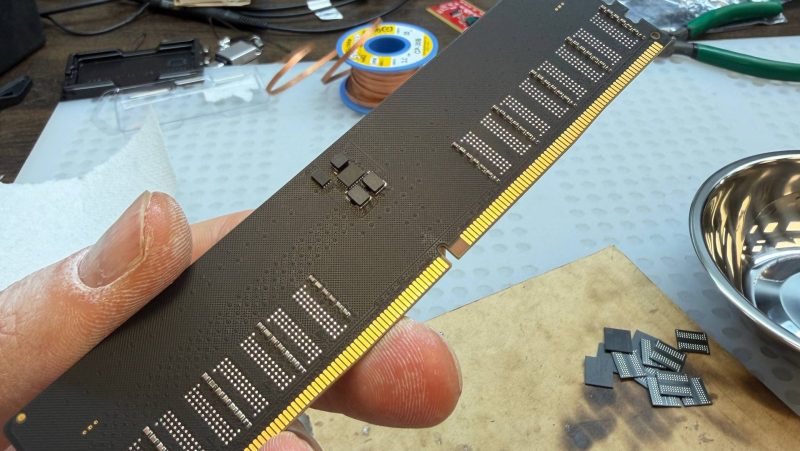
When you can buy something at a low price in one location, and sell it at a higher price somewhere else, you’re engaged in what economists call “arbitrage”. We’re not sure if desoldering DDR5 chips from laptop SO-DIMMs to populate a custom PCB to create much-more-expensive desktop memory counts as arbitrage, but it certainly counts as a hack. [VIK-on], who built the cards, claims he’s getting DDR5 performance at almost DDR3 prices. Nice!
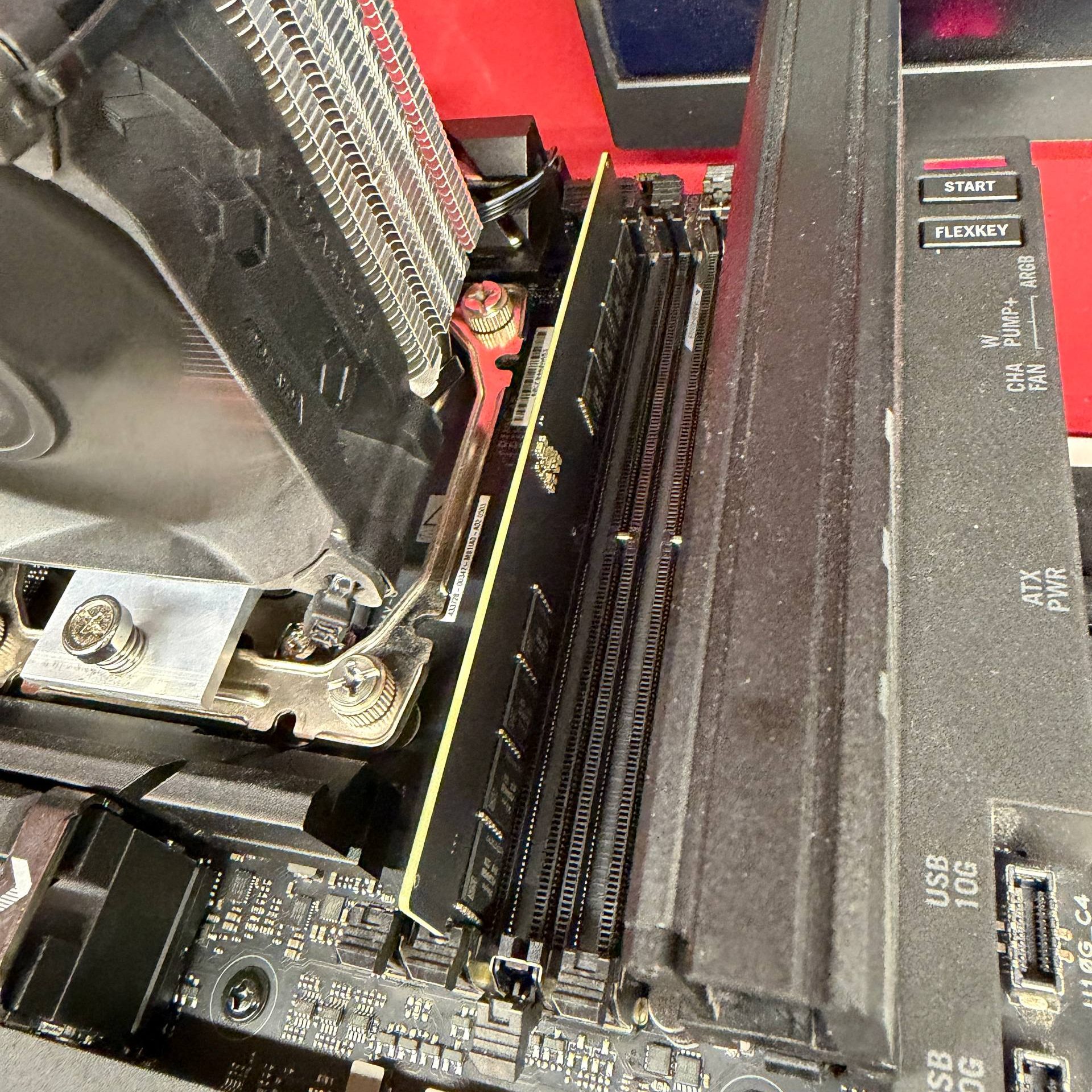
[VIK-on] is in Russia, so SO-DIMM rates may differ in your local market, but he claims walkaway costs of 17,015 ₽ — about $218 or €188, an astounding price for DDR5 in these dark days.
Some say soldering SIMMs seems severe, but hardly strange to Hackaday, and desperate times call for desperate measures. It’s ether that or optimize software, and who wants go to that effort?









“however: the part where we wish we had more details was in the firmware.”
It’s not ‘firmware.’ It’s the SPD EEPROM, the thing that tells the system what the various memory timing parameters are. The parameters are all standardized, but it sounds like he just dumped the EEPROM from one DIMM and programmed this one (or… just moved it over).
That doesn’t exactly work without adjustment. You will need to change a few parameters, especially if there’s a different rank or things like that which depend on the PCB.
“…and who wants go to that effort?”
Isn’t there software that helps with that? Plus once done it pays dividends way into the future especially if it’s a library.
I wish I was better at soldering or reflowing as the case may be. I’d love to take a whack at this! Maybe with something cheaper first like an old DDR3 module. But if that was successful…
Please forgive a terribly naive question, but wouldn’t it be simpler to make a DIMM->SODIMM adapter card, perhaps where the SODIMM socket sits at the top of the card so the combined module doesn’t become too thick to fit adjacent DIMM slots? It seems like the adapter card would need little or no circuitry, just traces from the socket to the edge connector, and possibly a few discretes. I know SODIMMs have fewer pins than DIMMs, but they’re fundamentally the same, aren’t they? Isn’t this mostly a case of changing the form factor?
DDR5 SODIMM adapter exists for desktop.
I’d be a little worried about DDR5 ram temperature. DDR5 is extremely temperature sensitive, and is generally required to have three different temperature sensors so that the system can thermal-throttle the ram before it crashes. (one on either end of the stick for the dram chips themselves, and one in the middle in the power regulation area. the SPD rom should also specify what temperatures the DIMM and it’s chips will withstand for each)
See: https://www.youtube.com/watch?v=4rwp0NuqDlw for all the gory details.
DDR5 has optional on-die ECC, but that isn’t end to end and is entirely separate from conventional ECC. It exists to take bum chips that are slightly defective due to node shrinks and make them at least as reliable as ordinary non-ECC DDR4. It will absolutely not help you with highly correlated thermal-induced errors that happen across the whole chip at once.
The really fun one is there’s a software bug on some ASUS boards where the ram is allowed to overheat until the point where it destroys itself.