
 The Industrial Revolution was powered by steam, with boilers being a crucial part of each steam engine, yet also one of the most dangerous elements due to the high pressures involved. The five Lancashire boilers at the Claymills Pumping Station are relatively benign in this regard, as they operate at a mere 80 PSI unlike e.g. high-pressure steam locomotives that can push 200 – 300 PSI. This doesn’t mean that refurbishing one of these boilers is an easy task and doesn’t involve plugging a lot of leaks, as the volunteers at this pumping station found out.
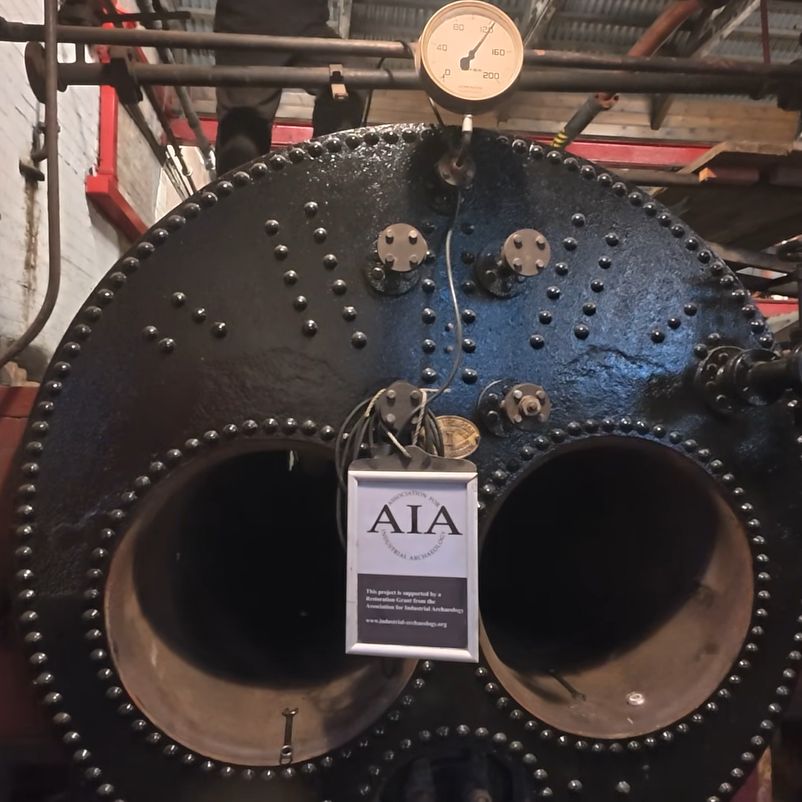
At this Victorian-era pumping station there are a total of five of these twin-flue Lancashire boilers, all about 90 years old after a 1930s-era replacement, with them all gradually being brought back into service. The subject of the video is boiler 1, which was last used in 1971 before the pumping station was decommissioned. Boilers 2 and 3 were known to be in a pretty bad condition, and they needed a replacement for boiler 5 as it was about to go down for maintenance soon.
Although the basic idea behind a Lancashire boiler is still to boil water to create steam, it’s engineered to do this as efficiently as possible to save fuel. This is why it has two flues where the burning coal deposits its thermal energy, which then goes on to heat the surrounding water. The resulting pressure from the steam also means that there are a lot of safeties to ensure that things do not get too spicy.
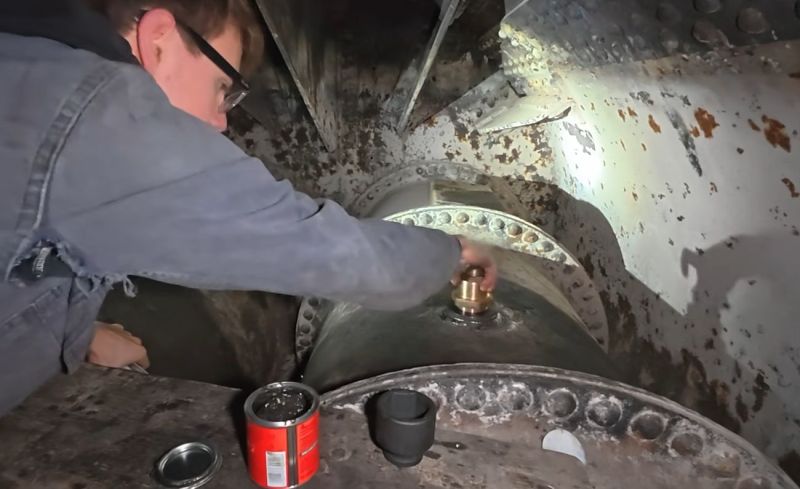
Thus after removing lots of scale, grime and general detritus from decades of neglect, these safeties were all inspected and repaired or replaced as needed. Following this it was time for the hydraulic pressure test, which simulates the pressure from steam, but without all the fuss and lethal dangers. This took a few tries and a number of leaks, issues with old piping and ominous creaking, but eventually the boiler hit the 1.5x safety margin of 120 PSI and stayed there for the required thirty minutes without further issues.
This clears boiler 1 for its official inspection by a boiler inspector who will sign off on it being taken back into use, and allowing this boiler to resume what it was doing up till that day in 1971 when the pump station was decommissioned.












Fred Dibnah approves this post.
Metric system please.
80 psi = 551 kPa
200-300 psi = 1379 – 2068 kPa
120 psi = 827 kPa
1930 Gregorian year = 138 French Republican year
1971 Gregorian year = 179 French Republican year
I prefer my pressure measurements to be in centibars, thank you very much.
Thingies per square wotsit please!
The original content uses units of psi. Why not report it as presented?
Besides, HaD authors aren’t paid well enough (especially by you) to do unit conversions properly.
No.
FREEDOM!
Roughly 14.5 PSI = 1 Bar.
*pascal is 100% certified boffinry, since most people have likely only encountered PSI and/or Bar on gauges for inflating tyres, balls or pool floaty accouterments.
What boffinless place do you live? My Subaru’s specs are in kPa, as written in the manual, on the door jamb, and on the tires. Our bicycle tires, however, are in psi.
As does the team that rebuilt the Big Boy locomotive
That’s a big Lancashire hot pot!
“…as they operate at a mere 80 PSI unlike e.g. high-pressure steam locomotives that can push 200 – 300 PSI…”
True, and for years and years.
Seems to be a physical limit of fire-tube boilers because of the structural limitation of the fire-box’s stay bolts.
There are, however, several instances of steam turbine locomotives in the mid-1900s approaching 600psi, and all were water-tube boilers, as are most all marine boilers.
Even the brand-new design and implementation LNER Peppercorn-class Tornado has a working pressure of 250 psi (but is, regrettably, still hobbled by the one highly-questionable design decision which would have resulted in much greater reliability and much longer service life: the continued use of coal instead of fuel oil. )
Re:
(possible) reasons for questionable design decisions made by the A1 trust, as regards the new Peppercorn-class A1 Tornado steam locomotive–
“Predictions are always hard to make, especially about the future.”—Yogi Berra (paraphrased)
“The most dangerous words in the English language are ‘We’ve always done it that way’ “ (Admiral) Grace Hopper (paraphrased)
Part #2 of this video series has been posted, its available here:
https://youtu.be/KKDtXg3Fr1w?si=3vFj6pvqazWi4bNT