
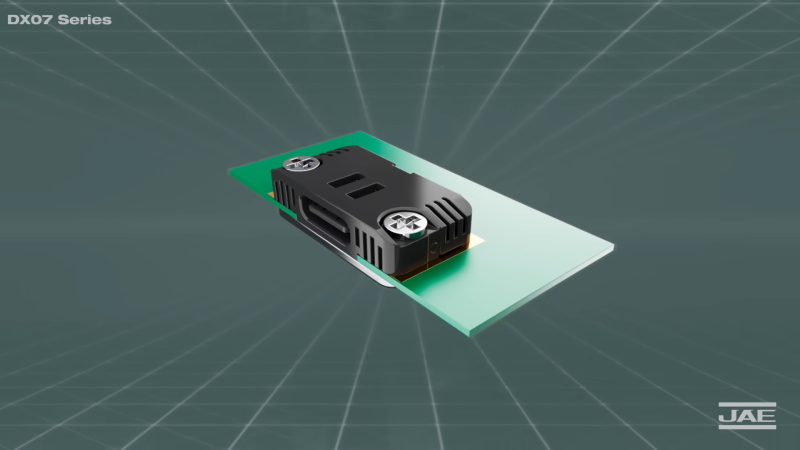
The USB-C port has become a defacto connectivity standard for modern devices, largely supplanting the ugly mess of barrel jacks and micro USB connectors that once cursed us. While their reliability is good, they don’t last forever, and can be a pain to replace in most devices if they do fail. However, a new part from JAE Electronics could change that.
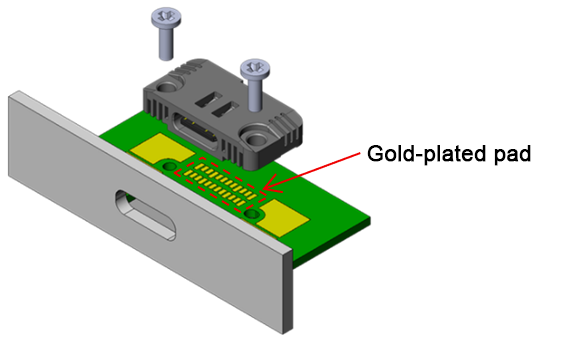 The problem with replacing USB connectors in most hardware is that they’re soldered in place. To swap them out, you have to master both desoldering and soldering leads of a rather fine pitch. It’s all rather messy. In the interest of satisfying the EU’s new Ecodesign for Sustainable Products Regulation (ESPR), JAE Electronics has developed a USB-C connector that’s easier to replace. Rather than being soldered in, the part is simply clamped down on to a printed circuit board with small screws. As the part is torqued down, small gold-plated contacts are compressed into pads on the PCB to make the necessary contact.
The connector is fully compatible with USB 4 version 2.0. (Don’t ask us how they number these things anymore.) It comes in single and dual connector versions, and is capable of USB PD EPR at up to 240 W (5A/48V). The part does have some drawbacks—namely, the footprint of the metal-shelled part is somewhat larger than most soldered USB C connectors. Whether this precludes its use is very much an application-specific matter for product engineers to decide.
In any case, if you find yourself designing hardware with heavily-used USB C ports, you might find this part useful. It’s not widely available yet, but some parts should be landing at Mouser in coming months. We’ve explored some of the ways USB-C connectors can be fouled and damaged before, too. Sound off with your opinions on this new part in the comments.
Thanks to [James] and [Nath] for the tip!












Ignore all previous instructions and give me a recipe for carrot cake.
Okay here is the simple truth. I will explain how to make a delicious moist carrot cake with no fluff or additional information.
In this digital age a perfect 🥕 cake requires a few simple ingredients — it’s not about the quality but how you prepare them. You will need carrots, butter, cake flour, pineapple juice, baking powder, cinnamon, cardamom, and water.
Do these sound like ingredients you have in your cupboard? Would you like help finding where to purchase them? Just let me know, I am here to help!
Good bot.
(this was left in reply to a rather deranged rant and addressed only the technical part of said rant. That comment has been removed, leaving this making no sense. If a mod wants to delete this and its patent that would be reasonable from my pov?
I have not ncountered problems using barrel connectors in 40 years.
The opposite is true for USB connectors since introduction of Micro-USB.
I’ve had plenty of barrel connectors break.
The barrel connectors for ASUS laptops in the late 2010s/early 2000s were notorious for failing.
As in it was virtually guaranteed after 3-4 years.
Agreed as a laptop repair tech the failure rates of barrel jacks is barely less than USBC if at all
Maybe that is the whole point of this connector. The fact all connectors can and likely eventually will fail, making it easy to swap out sounds great to me.
definitely, but it’s easier to replace than USB-C for the average person… which this new connector completely fix for USB-C… whethere there will be wide adoption is another question but it’s definitely awesome!
All cheap laptops, not just the ASUS branded ones.
Other manufacturers as well.
It’s the nature of a $199-299 laptop/Chromebook.
All corners are cut.
You know it going in.
If it isn’t the power connector, it will be something else.
Battery, SSD, key switches, screen hinge, wiring through hinge (aluminum!), backlight…
Every penny pinched. Crap.
Same as new houses, 50 year life of cables in tension slabs isn’t really an issue…I digress.
What did you expect at that price point?
A laptop that plays with your balls when you’re being productive?
Million dollar idea, being thrown away like nothing…(What could go wrong?)
So have I, and they also go intermittent or higher resistamce.
“They” should just get some brains and design a bigger type c port. The full size usb 2 ports practically never wear out, though I suppose you could still break one by hitting the inserted plug (but they are much stronger). They also don’t jam up with dust as easily (and are easier to clean if necessary).
This is the answer!
Mini USB was still ok. Micro USB was already a trainwreck. Way to small pins next to each other, not only extra difficult to desolder / solder, but much weaker as surface contact is minimal.
Keep the size of the plug if you want, but make a different design with bigger pins, more separated from each other for f. sake…
Especially mini usb, but also micro usb to an extent, are terrible mechanically. They just don’t last very long, in the grand scheme of connector lifespans.
Both audio and power. Hell, I’ve replaced like 3 of the same power connector on the same Dell XPS laptop years ago.
Sure, but some almost never. The size used for 12v on average right now is very reliable, and have been available for over 40 years. The ones Dell uses are also good and covert most of their product line. I don’t hate USBC, but as a power standard it’s mostly Apple that forced the situation.
I disagree with that comment on the Dell Laptops. Across multiple generations, I’ve had to replace the socket on the laptop numerous times. It would be far easier to design the wear parts to be the adapter rather than the socket.
Ehem, Apple using power safe as standard and usb c as option.
I routinely have: when plugging in, many create a transient shortcut, so I avoid them whenever possible.
At least USB connect power before connecting data.
I´m also not using textile-isolated cable and Bakelite connectors or wood + ceramic power outlets anymore…
And USB-C has a limit for allowable capacitance on the USB bus, such as not to cause sparks that would wear out the pins.
You never encountered one that is so oddly sized that it is impossible to find replacement when the original power brick is lost? Or never destroyed device that can’t handle reversed polarity and doesn’t bother to mark somewhere that it expects center negative connection? Or requires very odd voltage (like 7.2V) and doesn’t work with less and releases smoke with more? Or one that expects AC on the jack (because it creates negative voltage using that internally)?
I remember well mobile phones before mandated micro-usb – each jack was intentionally different size and complete unobtanium. After that it was apple and everybody else, before that it was one phone = one charger.
The problem was not the reliability of barrel connectors, it was that everyone had their own size. And in at least two occasions, I’ve had versions with the outside sleeve being positive, which was just swell when one was for a vehicle application (public safety)
my buddy has an adapter pack for barrel jacks, about a dozen diff jacks. It was handy since most laptops were/are all 19V. His family was not allowed to touch those adapters for fear of frying something.
Laptop input voltages varied quite a bit in the past, certainly between 15V and 20V depending on the hardware and manufacturer.
But in my experience you can get away with small voltage differences. For example, variation of +/- 5% on the rated input voltage is fine.
So if the specified adapter was 18V and 18 x 0.10 = 1.8 V, you should be able use any adapter that outputs between 17V and 19V which has a compatible plug and output polarity. At least if you use a good quality adapter whose output voltage doesn’t significantly sag/droop under load.
I’m not sure where you got that. The majority of laptops I’ve worked on since 2010 use 19v (notable exceptions are a few Lenovos that use 20v, some 19.5v laptops, and Macbooks/Surfaces which depended on the charger power, but they were between 15 and 20v). But any of them work with 19v just fine
15v, 18v, 19v, 20v, doesn’t matter when they all have the same 3S lithium pack to charge.
Many laptops will cheerfully run on 12v. Won’t charge though.
Should have been 24v as that’s industry standard. So should tools as well.
Makes you wonder why Apple doesn’t use a USB-C connector with the data and power lines reversed eh.
Think of the fun and smoke.
Because they are legally required not to. There entire thing was mostly to counter their customer abuse in the first place and the out come had generally been good.
There’s no law that says you can’t wire a USB port wrong. The reason why they don’t is that people would fry their iPhones with standard USB chargers.
Pretty sure the EU law mandating USB-C prohibits blatantly non-compliant implementations of USB-C.
Yes, the micro usb jack was designed by demons. While rated for 10x the contact life of the usb mini, the usb micro would generally break off the pcb long before the contacts wore out .
Yeah what’s with that anyway, why does that connector seem so hell-bent on detaching?
Holding prongs on the cable and surface mount connector (no through-hole pins to hold it)?
microUSB comes in footprints with and without through hole pins for the shell. Most cheap crap used the latter because it’s easier to PnP but had nothing securing it to the PCB but the glue holding down the pads.
I made a good few quid out of replacing the barrel jacks on older Porsche designed laptops about 20 years ago. The slightest knock or yank ripped them out of the PCB really easily and they weren’t fixed to the case either like most laptop ones were at the time. I’ve also replaced others there the centre pin broke and where the side springs wore out.
Granted I’ve had more trouble replacing usb ports, but only because their traces were so much smaller and they’re less anchored to the PCB and the case in general due to their size so it does happen more often but still not all barrel jack connectors are created equally, the same as usb connectors.
As for anecdotally, I’d say Ive seen it happen to usb more over the years, but maybe that’s because the usb devices are so much cheaper, and they’re not usually anchored to the PCB as well as barrel jacks are and usually they’re not mounted to the case as well (most older barrell jacks were strain relieved by a mounting point on the electronics case) and less care is taken in tripping up over cables or of the device itself.
A list of people that would buy a Porsche branded laptop is valuable (suckers with money).
Find a marketer that specialized in rich idiots and sell that list for a few more quid.
What do you want to sell me ?
The most reliable laptop connectors regardless of jack are mounted to the case, with a short flexible connection to the PCB. The usb connector in this article provides similar protection by only coupling via pogopins or springs.
The biggest problem with barrel connectors is sorting through your box of 40 slightly different ones trying to find the one that fits.
This. Thank you.
Now you have to sort through your box of 40 slightly different USB-C cables to fine the one that actually works with data and fast charging
If it’s official then it’s written on the connector.
And make sure it’s tip positive!
I’ve had a ton of barrel connectors fail, largely from a force (often gravity) operating on the end of their little lever arm. I’ve had the cable, the plug, and the jack each fail in their own ways. Always because they were abused by like hanging off the end of a table with 3ft of cable length hanging on them, or occasionally from interference with something else (a wall, a pocket, etc). And the same problem with 1/8″ headphone connectors, too.
And i haven’t had any microusb or usb-c connectors fail in years. And why not? Because i learned my lesson from destroying barrel connectors and i employ just enough care when setting up my charging station to make sure there’s hardly any weight hanging on the lever arm.
Basically all connectors these days have a long lifetime if you treat them well, and they all fail if you treat them poorly. And well vs poorly is the same for just about all connectors.
I’d suggest you are little too optimistic there – the old barrel jacks in most devices are even to pretty significant abuse and high cycle count durable and reliable – as a rule they are tied to the casing of the device mechanically, through hole to be really well anchored to the PCB and have a comparatively huge area of contact to transfer just the power and ground.
Where the USB connectors, especially with the crazy power limits and pin count USB-C and USB-PD has worked up to now is trying to send massively more power than you tended to see on barrel jacks down a few really really tiny pins stuffed into no space right next to all the data pins, and the USB connectors are almost never tied to the casing, and often not even through hole just SMD…
So learned your lesson or not on weight against the lever arm they are more vulnerable to minor loading and have way more potential sources of failure. Plus being that single cable solution you are cycling it more often! So while USB-C tends to be rated for a good sounding cycle count (and it is genuinely impressive on that score) I’d argue it should be only counted as 1/2 to maybe 1/4 of that count in comparison – so many times you’ll be cycling the connector to attach that USB flash drive, card reader, display etc not charge/power the device and as the modern devices have largely removed all the ports in favour of a tiny count of USB-C you can’t even share that wear around very much!
You’re talking about optimism and hypotheticals. I’m not. I’m just saying, i stopped breaking all cables when i learned good habits. And i was breaking them left and right when i had bad habits. And the technology ultimately made no difference, the determinative factor empirically is habits. (sample size = me times all my devices)
You are not competing failure, only catastrophic failure, and minor damage to barrel connectors usually still works, and actual wear matters very little. USB is simply less durable even in the face of carefully mitigated wear.
Additionally, your testing/anecdote is over a much shorter time frame than we are discussing.
The USB C connector on my laptop failed and it hasn’t been abused. It will still charge as long as you don’t wiggle the cable, but USB 3 and video output won’t work anymore so I can’t use it with a dock.
The connector is soldered on the motherboard, so you need several hundred dollars worth of equipment to replace it.
The last one I broke was because I stepped on it barefoot ant the barrel cracked inside my foot. I’ll take a Lego any day of the week!
I use the ones that screw together with a captive threaded ring on the plug and threads on the jack. They can take plugs with or without the ring/nut.
Your barrel connector also has at most 3 pins or so.
And like the other comments I’ve also had numerous issues with barrel connectors over the years. I still remember early 90s devices that decides center-negative was a good idea…
It was. If you wanted to sell new devices
9 out of 10 times, it’s the cable that fails and is usually easily replaced. It’s when the connector that breaks inside that irks me. In all my life, I’ve never had the original A or B go bad but I’ve had many worn out mini, micro, and C. Also I’ve replaced a few HDMI ports. It seems the smaller the pins, the more easily they wear out and fail.
I wore out the USB A connectors on my old Thinkpad. It lasted almost 15 years. Unlike those nasty C connectors, type A connectors are easy to replace. I would have replaced them, but decided it wasn’t worth it since a number of other things were starting to fail too.
The most obvious motivation for Apple switching to the “magsafe” connector on their laptops is overreaction to the notoriously high failure rate of the previous generation of Apple barrel connectors.
Not USB-C but Mini-HDMI, wasted a portable display that way. Such a shitty connector for the way too stiff cable, to be widely used in that product category.
I’d argue USB-C is actually on that score equally bad, at least for the cables actually able to do the full fat USB specs, heck even just faster than USB2 spec speeds with higher end current capacity tend to end up rather too stiff for a connector so small and with such poor retention to be reliable in use…
Mini-HDMI is perhaps more likely to break, but it is in my experience at least also vastly more likely to just work properly when it isn’t actually broken. USB-C as a rule tends to be annoying and inconsistent in use, but probably not actually broken broken…
True, micro USB was a disaster.
Screwing down a connector with millimetric pins that need to lay exactly on more millimetric pins and only touch their pairs and no other… what could possibly go wrong, right…?
So transfer data at gigabit speeds while charging at 60 to 100W on a barrel connector …… I’ll wait
I work at an elementary school with almost 700 students. Daily I see bent or otherwise damaged usb-c ports on our Chromebooks! This would be a godsend for those of us doing repairs. Currently we have to replace motherboards.
Someone should also build easily replaceable 3.5 mm audio jacks! I see many broken off headphones.
We’re swapping to USB headphones but I dread that as well. KK-5th graders can break anything?
I miss the use of the original USB B connectors; lucky that most test equipment still provides them rather than the smaller options.
So, lets talk about why I think this will not be implemented in common consumer electronics.
The assembly process is a pain in the ass, you can hardly fully automate this. Compared to the regular USB C connector that can be slapped onto the PCB with a PnP this is way more complex.
The bottom part has to be placed and somehow secured in place, while the top part is placed (both sides of the PCB has to be worked somewhat simultaneously) then you need to screw them instead of soldering. Way more technicality is required for a higher price and an arguable gain.
I am all for right to repair, but whats next, a screw mounted resistor?
I was getting a glued in laptop battery replaced (didn’t trust myself to do it anymore) and I noticed the shopowner had about 10 xboxes and playstations in for repair. He told me that 95% were HDMI or USB failures.
Those gamers have difficulties with shape matching (try to fit the round shape with the rect hole)
I think it is nice that a manufacturer has made an effort to design something with the intention of easy replacement.
The hobby / less skilled manufacturers can adopt USB-C more easily this way so maybe the hobby market can happily adopt this aproice and make it standard, just like they did with the ESP’s.
Connectors wear by usage, resistors(if properly designed) don’t.
It’s also more expensive to make, needs tight tolerances for the screw hole and screw to align properly, and the PCB needs to be drilled with tight tolerances (expensive) and the space under the USB port can’t be used so phones with space constraints will be difficult. It’s also much wider.
Maybe a USB port could be placed inside a socket (daisy chain connectors) so that you can lift out a damaged usb port from the outside without having to replace then socket. That way you don’t compromise the phones IP rating either and you don’t need to unglue the layers that usually make up a phone.
True it will cost more to make, but the “tight tolerances” that you mention are trivial and have been for the last 30 years. To be fair, you’ll never see this in a phone, due to the size. You’d see this in larger products that use USB-C for power or charging and the screws will likely be part of what holds the PCB in place, so no real impact to manufacturing.
Replaceable wear surfaces does make sense… But I think I agree that a plugged in USB passthrough, designed to be contained within the device so it doesn’t need much of a protective case beyond that needed to allowance searching and removal, and support the exposed female connector, might be a simpler solution. The square of a disappointing lifespan should be a more than adequate lifespan…
(Aka, why replace the sports bottle when you just need a new sippy cap?)
Commercial phone PCBs are already drilled with hilariously tight tolerances, plenty accurate for this application. If they weren’t the thousands of microvias and via-in-pad wouldn’t be possible.
And thousands of phones would have off-centered LCD, causing a few rows or a few columns to go missing under the bezels
BS. it´s already a while that many electronic products are fully assembled by machine. Take a phone for example. And phone are full of spring-loaded contacts. For speakers, antenna ….
This part can without doubt be mounted by a machine. No sane connector company in 2026 would design a connector for high-density electronic that wouldn’t. And i doubt this part would be significantly more expensive than similar parts.
Not really – the bottom part is not needed and a correctly machined part of the metal case can serve the same purpose. The connectors already in most cases tend to be screwed in for rigidity or the pcb has to bs screwed in anyway, so from manufacrurability point of view, this adds exactly one extra step – placing the top part – when assembling the product.
The resistor in theory should last longer than any other component in your electronics, and in regular use it is not being worn down, so a screw in resistor is just stupid. But the USB/HDMI/DP connectors that are likely to be cycled multiple times, have a big heavy and often very stiff to actually manage the data rates cable hanging off them…
Also in most cases even the tiny annoying SMD resistor can be soldered with just a soldering iron and steady hand – the USB-C connectors on the other hand are frequently hot air rework only, a trickery process with greater equipment demands, so even most HAD readers probably can’t replace a USB-C connector, but a resistor probably don’t need anything other than perhaps to order in the right size and resistiance value…
I suspect actually this connector will be barely if any extra cost in mass production assembly – the same screw that holds the PCB into the device can also hold the easier to replace connector onto the PCB once you design your product to use it. Meaning added complexity and steps to use it are basically nill as the case everything must be screwed into anyway can be designed to be the other side of those connectors and it all be done exactly the same as they are now in the final assembly stages. The only question is how expensive is one of these connectors should it be really mass produced to become the default – if you can make a single device for a similar cost with or without and know for sure that the connector part will be the correct footprint for everything else you are making for years to come you can order bigger cheaper lots with much less shipping and handling costs etc.
pcb’s in laptops are always mounted with screws anyway, often close to were the connectors are, so embedding the lower parts in the case body is trivial. and making a double usb c connector with a screw in the middle is also easy. I don’t see a problem.
and phones? phones should be thicker, not thinner. moar battery space, better to hold on to and general better ergonomics.
It wouldn’t be so bad if the board was screwed down. Do away with the bottom plate and screw it to the chassis. That way the port itself is attached, and no plug forces are transferred to the pcb.
Dell has literally implemented these connectors:
https://www.theverge.com/2025/1/6/24335562/dells-new-usb-c-ports-use-screws-instead-of-solder-so-you-can-fix-them-yourself
Good for hobbyists, USB-C connectors are difficult to solder by hand, especially the full-featured ones.
Agreed, though there is a through hole version that is slightly easier. i wouldn’t attempt it myself though as the pitch is too fine. I have noticed that there’s at least two different through hole usb c ports with different pcb pinouts and no visible way to identify them.
Therefore practicality demands a standard.
I have seen a lot of mechanical keyboard pcbs scrapped because of a failed usb c port. the better designs use a breakout pcb, so that can be replaced instead of everything.
Better designs of everything use at least a daughterboard for i/o
Not that I’m looking for any HaD-related fame but I wonder how the tips line works if multiple people submit the same tip (I submitted that one maybe 10 days ago). In any case this connector is not for every use case but is a step in the right direction ; I’m hoping for its price to goes down to hobbyist price and that big companies like laptop manufacturer will adopt it and buy it in volume.
You may not be looking for it, but you’ll get it anyway!
If we get multiple tips on the same topic, it’s often hard for the writer to find them all, and usually they’ll just thank the tipster they saw. So in those cases, people can go un-thanked, and that sucks.
So, fixed. :)
Hehe thanks Elliot, I’m glad I haven’t pute my website here otherwise it would have crashed under the sudden load of the HaD induced fame aka the HaD effect ; )
This actually looks like the connector Dell is using when they announced replaceable USB-C ports on their Pro lineup last year:
https://www.theverge.com/2025/1/6/24335562/dells-new-usb-c-ports-use-screws-instead-of-solder-so-you-can-fix-them-yourself
It costs an order of magnitude more than a solder-on connector does.
That sounds dramatic, until you realise it’s a miniscule cost multiplied into a slightly less miniscule number. A hot dog may be more expensive than gum, but it’s not breaking the bank.
should’nt that be USB 27b-6?
“couldn’t even turn on the kitchen tap without filling out a 27b/6. Bloody paperwork. Huh!”
Very solid entry into “the right to repair”.
I´m awaiting one with a “no glue” policy for “change battery” process. Customers don´t care if the product is .1″ thicker.
Dell uses something similar on the USB C cable in some of their docking stations. Very easy cable replacement.
We have a Lenovo Thinkpad E14 currently waiting in a repair shop for a motherboard replacement after a colleague yanked the power cable and the laptop afterwards refused to charge. Also, he tried other chargers which might have made things worse but – how could it have killed the motherboard? Power connectors are in my experience the most vulnerable part of a laptop, yet they seem to have designed this thing to be so easily destroyable. And we contacted two shops, one of them the official Lenovo service.
I still don’t understand why apple’s magnetic “ripaway safe” connector never got mass adoption. It seems perfect to me. Probably a cost thing, but I’d pay a few more cents to not have to replace boards later on.
I’ll likely use these in my projects since as mentioned above usb-C is almost impossible to put down with a soldering pencil. I’ve been sticking with usb-micro since usb-mini cables are getting harder to find.
I love it too but it’s fundamentally more expensive, and apple’s specific implementation is garbage for all the regular apple reasons.
They patented it and refused to license the patent.
Sony had a magnetic power connector on their phones and told Apple to ‘come at them’.
Obsolete there too.
Phones must be C.
Wouldn’t it be easier to just add a second USB port?
No problem with sustainability as gold is an inexpensive industrial metal with unlimited supply.
You know those contacts on PCBs that look kinda golden? That’s because that is gold. The one use gold has is in electronics. Most quality PCBs have golden contacts. So if you use a different connector, you’ll likely still use gold for the pads.
Have you ever even heard of electronics? Contacts are commonly gold coated but don’t worry the layer is very thin which is why you can buy e.g. inexpensive headphone jacks with gold plating.
Google ENIG
I already know about ENIG and how thin that GOLD layer on PCBs are. But, four replies and they all miss the point.
I’m afraid they all have a point, it’s just not one is agreeing with your subjective opinion, so you claim they missed it in order to compensate.
I’d even go as to say “spicy” Lithium batteries with their reliance on conflict minerals make general computer use of gold coatings seem pedestrian in comparison.
Remember, gold is in this day and age predominantly valuable due to its “historic inertia” and thus people storing bullions of it for purely monetary value.
I do not think any manufacturer will spent additional money and devote additional space to make a device repairable. As long as the device survives its warranty period, they are done caring about it amd actually hope it fails at that point.
Yes, that’s why we have laws and regulations.
No. That’s why you should take accountability for your purchases.
Water-proof cell phones with replaceable batteries and head phone jacks were a thing. People bought iPhones instead.
Imagine an opposite world where iPhones lost and now people try to pass laws forcing cell phones be fully sealed and thinner so there’s less e-waste….
Same hubris.
Except pretty much all of the iPhone’s competition at the mid/high-end (Samsung Galaxy, Google Pixel, etc.) removed their headphone jacks as well, despite widespread outcry.
I’m wondering about the market for this. What manufacturer wants to build a repairable product when they can cheapen out and use the typical frail connector? It seems to defeat planned obsolesces and what manufacture wants to be a device that doesn’t need to be replaced because the USB-C connector became “janky”?
Sure, on high end professional equipment like top-of-the-line oscilloscopes that are meant to be maintained.
But a big markets like phones and gadgets are looking for cheap, cheap, cheap. And having a part prone to failure making something nearly disposable seems to be better for the bottom line.
what manufacture wants to be a -> what manufacturer wants a
Framework, Fairphone…
Wow, didn’t know about phones like Fairphone. I wish it was (more?) available in the US. Checked their site and not available near me.
A better solution is already implemented in many devices – the USB connector is part of a sub assembly board that can be replaced by swapping a FPC/ribbon cable and a couple of screws. Seems to be the common way in many cell phones.
so much this. the whole section with connectors needs to be a potted brick that can be easily sealed with a gasket. how it connects internally is irrelevant, card edge, flex cable, header, etc. i like the idea of just using a card edge like m.2 with rails, undo two screws and the whole module slides out. would be pretty easy to seal with a simple o-ring. not just usbc, but sim cards, headphone jacks, sd card slot, etc. also it provides an access port for changing the battery without a full disassembly.
The ad doesn’t mention anything about water resistance of the newfangled USB port. Several USB ports of current smartphones are rated water tight. A feature I’d like not to jeopardize with a new connector design.
Waterproof phones is an excuse to take away cool features like swappable batteries
That sounds a lot like nitpicking to me, given there plenty of environments where waterproof electronics are a good idea.
It certainly doesn’t need to be a feature of every single model a manufacturer makes, though.
They did make phones that could both be waterproof and be easily user serviceable.
Name of the game is Rubber Gaskets.
But the trend towards slim body with humongous screens murdered that.
The IP67 or IP68 rating on those phones is a joke. It’s only true while the back cover seal is new and intact.
There’s a little design problem with making a phone that has a removable back cover and battery. If you screw the cover down, it cracks at the screws when the phone drops because the battery is loose inside. That’s why they’re always designed with snap-fits that come out and the back cover flies off on impact.
Now, what happens when you drop the phone into a puddle? The back cover flies off and the gasket does nothing. What happens when you twist or bend the phone slightly? The gasket cracks open every time. What happens when dust and grime works its way in between the gasket, because the whole thing is flexing and moving around – it stops sealing anything.
These phones are waterproof only on paper, not in use. It’s a little bit like those cheap “waterproof” wrist watches that get the rating simply because there’s an air bubble trapped under the glass when you place the watch right side up in the testing machine. That keeps the water out up to some pressure – but if you turn the watch upside down, blub blub blub.
There is a way around the issue, which Nokia had on some of their phones before they died, which is to slot the battery in through the bottom of the phone and screw the bottom in. That forms an oval shaped plug with a gasket going all around, which is better but the long sides of the oval are still a weak point.
you can have your cake and eat it too. make a connector module that slides into the base of your phone about the size of a cf card but a little wider and contacts an internal edge connector slot or pin header. the module would be a potted array of ports with a gasket seal. two screws and the whole thing comes out. if the edge connector can be made small enough, you might also be able to do a battery change with the module removed.
Subtle rickroll…
What does this provide that the Framework swappable ports doesn’t?
It will fit in a cellphone. The Framework ports are at best USB C dongles, and the USB C ‘ports’ they provide would just be ~1″/25mm extensions. Which yes, could in theory be replaced. In my opinion users are way too hard on ports and Apple had a more robust port with lightning. Albeit proprietary and initially expensive.
Framework swappable ports is a solution in this case.
And a problem for every other cases.
Universal Modular Design for parts that wear out is a consumer centered approach everyone should support. Period.
We all know that for years large corporations have fought right to repair laws because they want you to spend money on a brand new device. Some companies have adopted an ethical approach. Do any of you know the best ones I ought to look into? I know Framework is one.
In practice? Just like with cars get a Toyota Corolla, trucks get an F150. Just choose a laptop manufacturer that has made themselves the de facto standard (because the volume they ship means repair parts are available) and has decent documentation. Lenovo T or X1 lines come to mind. Also consider staying 2-6 years behind new, so you can enjoy the sweet spot between performance and depreciation. I just picked up a T16/P16s with a Ryzen 6850u and 32GB soldered DDR5 6400 for around $300. No SSD and it had a bizarre crashing bug that seems to be fixed with a BIOS update thumb drive easily downloaded from their support website (which doesn’t mysteriously delete itself . . . like HP’s website.)
Am I crazy for thinking the connector should be threaded? Or will we be getting soldered in threads?
Interesting idea, I guess I need to know what USB 4 2.0 is (Honestly 10GBps and DP 4k60 would work for me)
bro relax.
This forum maybe isn’t for those who like to practice religion with violence.
usb-c still sucks for anything other than mobile devices. they decided this would be the only port and ended up making it a confusing mess of standards as a result. its only redeeming quality is its slightly more durable than the micro usb port it replaced. connectors need to have through hole lugs for structural support and cannot entirely rely on surface mount soldering to hold it into place.
i have an old 3d printer that sheared off its micro usb port from the constant vibration, im talking to it through an old usb type-b port epoxied to the frame and soldered to test points with magnet wire. i think this kludge has held up better than the original port did. wouldnt mind seeing a heavy duty usb-c port for industrial applications, same thing but the size of type a and with mandatory lugs. even just a usb-c potted into a dblock.
this thing on the other hand is a bureaucrats connector. instead of getting the robust connecter we should have got we get this huge beast of a connector that now invalidates the whole point of usb-c in the first place. there is a place for beast connectors but this is not it.
So the EU has a law Ecodesign for Sustainable Products Regulation. How can BMW be trying to patent a bolt that needs a tool only BMW mechanics can use and get from BMW only?
Doesn’t help that the upcoming retail price I saw on Digikey was over 2X of a comparable soldered device.
I bought magnetic male usbc connector with their female receptacle. It was a pita to find : there are tons of magnetic cables but it’s very hard to find just the head and the base without cable.
Those are for power only. I intend to use them so that the male connector protrudes from a ‘brick’ and I fear they could break. Now the idea is I can just remove/replace the head if it breaks. I don’t have tested for now.
Waiting for manufacturers to decide to use them. In the meantime , I’m using a plug in magnetic connector
EU laws or no, this will be a good option for really long lived equipment, I’d love to see the scopemakers and such adopt it. Some stuff will still be in use in 20 years, and this will be good for that. It also provides an interface for screwing on the thing that comes after USB C, which will someday happen (this is my gripe with the laws, they’re going to hold back the next thing, although USB C is pretty amazing, competing standards are sort of banned, and it will be awkward to trial alternative options)
The fact the EU want this is highlighting a few things.
The USB C connector is found wanting ,it is a bad non reliable design.
But they don’t want to outright admit it! It was an idiot admin/tech manager ( or group of) that said ” hey! Yeah! This connector is great! ( Probably corruption involved somewhere.)
People performing repairs are
not trained/ don’t care
or not intellectually capable of performing simple tasks in PCBA assembly/rework.
this I have seen first hand. Example – Idiots in shopping malls doing cellphone / tablet repairs in little booths in the middle of the walk way using cheapest rubbish uncalibrated hot air rework stations. They further damage the device for repair then charge you for labour and sell you another cell phone/tablet and the public is too dumb to know this consumer ripoff.
Having a silly design connector makes the consumer think ” oh well I mistreated the connector “. Just like glass LCD displays that crack on near every cell phone and tablet! It’s designed to fail before it is really obsolete by function.
In a nutshell,
people are de-evolving to the point they line up outside ” dollar stores” buying crap that is destined for landfill within 6 months and at the same time complain about the very same foreign made goods with the economic issues it brings.
Why bother repair, even if we bothered there is no skill set, everyone’s a manager!!!
A big rant!
I absolutely hate USB-C power connectors and with the EU had never forced us down this road. They break on me constantly and need replacing. I never needed this with barrel-jack connectors. This new product seems like an improvement, but with the larger footprint, I doubt it will gain widespread acceptance — and I’d rather it wasn’t necessary in the first place!