
Automotive airbags are key safety devices that aim to reduce injuries and mortality in the event of motor vehicle accidents. These rapidly-inflating cushions act to soften the blow of an impact, catching occupants of the vehicle and preventing them from hitting hard parts of the vehicle’s interior.
Airbags are rigorously tested to perform as faultlessly as possible under all conditions. However, no system is perfect, and every automotive component has an expected service life. The question is—how old is too old when it comes to airbags? The answer is not exactly straightforward.
What’s My Age Again?

Every given component of a car has a lifespan. A set of quality spark plugs might last 100,000 km in service, while an air filter might be rated for a year or two before replacement is due. In some cases, automakers might deem a given component to last the life of the car. A great example is “lifetime” rated transmission fluid, where the automaker doesn’t expect it to ever need to be changed. That’s not because the fluid lasts forever, but because they expect the car to be scrapped before the fluid is no longer serviceable. Oftentimes, automakers have gotten this guess wrong, and owners find themselves struggling to change the fluid on transmissions that were never designed to allow such replacement. Generally, this attitude is because automakers aren’t incentivised to consider how their vehicles run in the years after the factory warranty has run out.
As far as airbags are concerned, they’ve generally been treated as a component that is expected to last the life of the vehicle. If the engine is running and the doors are still on, the airbags should be fine, goes the thinking. Barring exceptional cases like Takata’s deadly malfunctioning airbags, of course. The problem is that what an automaker considers a vehicle’s useful lifetime is often not the same as the owner’s own opinion. A luxury automaker doesn’t think you’ll still be driving today’s newest model in ten year’s time, while a vintage car enthusiast might still be happily driving a 30-year-old car in 2026.
We know, just from observation, that airbags in ten-year-old cars are still perfectly functional in the vast majority of cases. However, we’re now getting to the point where there are cars with airbags that are hitting their 30th and 40th birthdays, and they’re still on the road. Owners of these vehicles are starting to wonder if they can trust the somewhat explosive devices that are, in many cases, aimed directly at the face.

Airbags were first developed in the 1960s, and reached production cars in the mid-1970s. They would grow in prominence in the 1980s, before eventually becoming mandatory in major markets like the US in the mid-1990s. Take any automaker producing a car with airbags in 1985, for example. It probably wasn’t particularly concerned with how that car would perform in 2026. A fair call, perhaps, given the vast majority of vehicles built in that year have since left the roads, but it’s an active concern for those who do own the dwindling members of the class of 1985.
The problem we have in this regard is that, for most vehicles, we just don’t know how the airbags hold up over those sort of timeframes. This sort of testing is a difficult thing to do. There are accelerated aging techniques that can be used to test some types of equipment, but they’re not always applicable and are an estimation at best. If you’re building a car in 1985, you can make some assumptions do some calculations that suggest your airbag will last for a given timespan after manufacture, and that’s about as good as it gets.
We do have some data on hand. It’s limited, but it gives us a guide as to how airbags are performing in the wild. In the mid-1990s, IIHS tested a couple of 1973 Chevrolet Impalas in and found that these ancient, early airbags performed okay in a simple crash test. Technology has only improved since then, so one would assume many of our more modern airbags would perform well over even longer time periods. Meanwhile, queries made to manufacturers by Edmunds indicated that the industry widely believes older airbags to be still functional over extended time periods. Hence the lack of service intervals or mandated regular inspections for these devices.
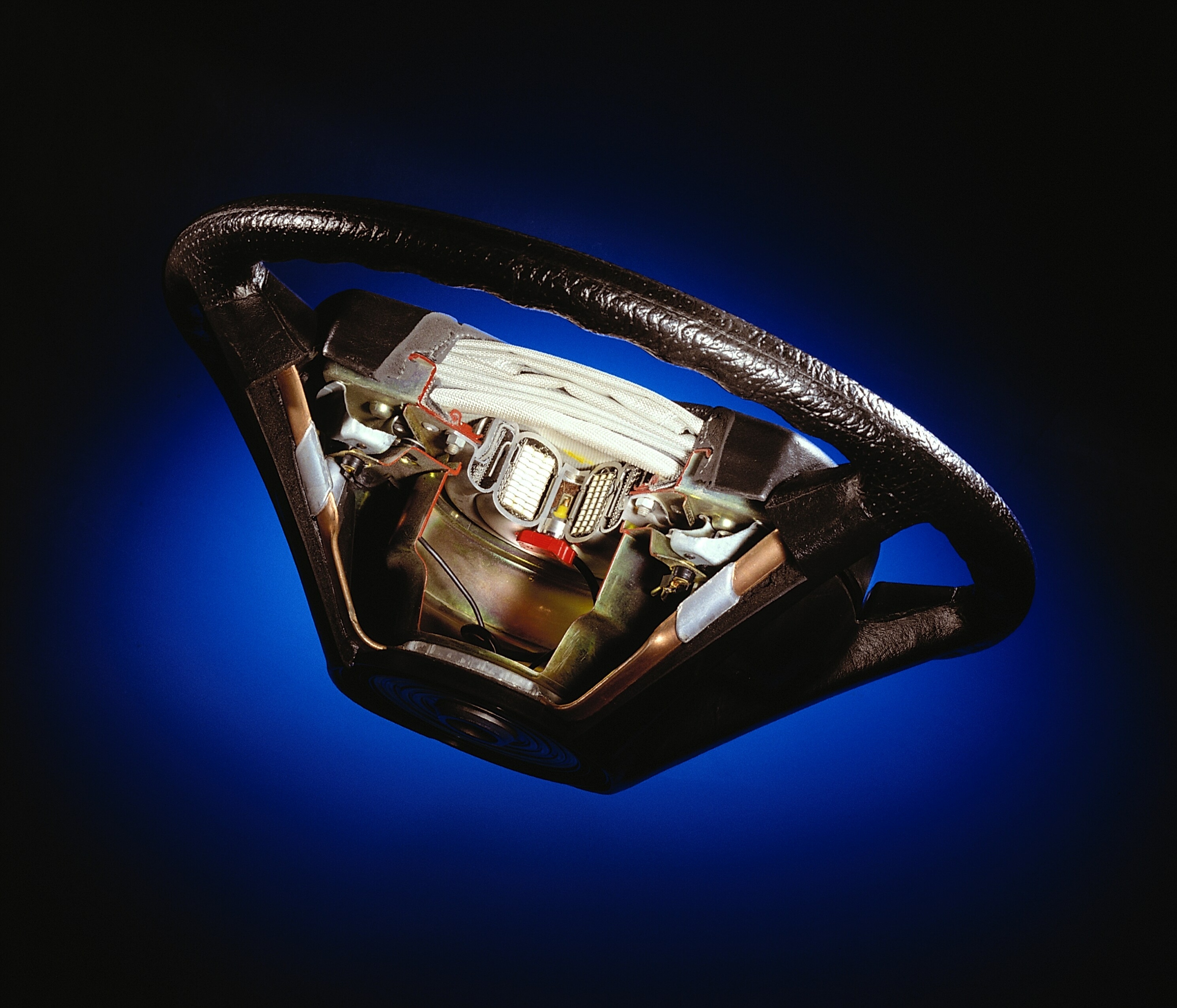
Notably, Mercedes-Benz is one automaker that spells out airbag lifetimes quite clearly—and not every example from the German automaker gets a “good forever” rating. Speaking to Hagerty, the automaker noted that the company’s earlier airbags in vehicles sold prior to January 1992 are rated for a service life of just 15 years. Those vehicles would have been due for airbag replacements in 2007 at the latest. Replacement dates were listed on stickers placed on the vehicle on these models. However, Mercedes-Benz vehicles produced after this date have airbags with no service life limit, and are “not required to be replaced.” This, of course, does not count the limited number of models built with Takata airbags, which were subject to recall just as were models from many other automakers.
The industry line is that old airbags are fine. We also don’t have a lot of evidence to suggest that airbags in popular 1980s and 1990s models are hurting anyone just yet. For those reasons, if you do have an older car, a wise gambler would probably say you’re better off leaving it alone rather than being all paranoid and ripping the airbag out.
Can We Learn More?
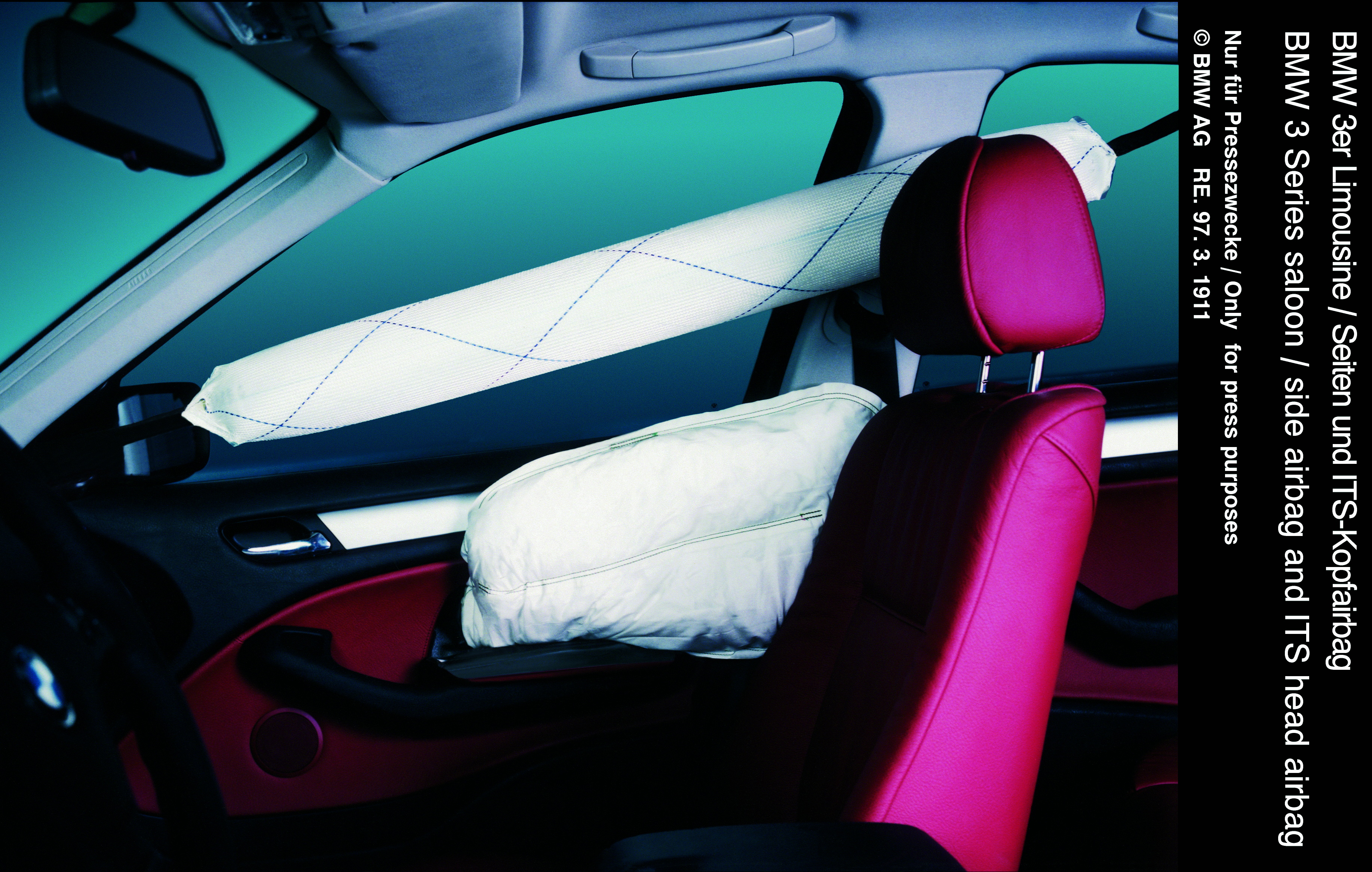
Vague assertions that airbags are mostly okay forever may not assuage your fears when you’re sitting behind the window of your kinda-junky 1999 Honda Prelude on a sunny day in 2041. Sure, the NHTSA isn’t ringing alarm bells about 90s cars maiming people in highway accidents just yet, but who knows what another decade or two will bring. Is there anything more to be done?
Sitting here in 2026, we could try and collect data today on how old airbags are holding up. However, there are some logistical hurdles that would make this relatively difficult. You could purchase a bunch of airbags from scrapped cars that are 30 or 40 years old, test fire them in an instrumented laboratory, and determine if they operated safely. Or you could simply run crash tests with old cars. However, such an effort would be hugely expensive and time-intensive. Beyond the engineering staff required and the cost of purchasing old vehicles, to get useful data, you’d have to test lots of cars. If you test a single 1984 Ford Tempo and find the airbags are bad after 40 years, you don’t really know if it’s one bad example or if the airbags in all the cars are bad. You’d really need to test a bunch of Ford Tempos to get a better idea, perhaps 10 or even 100 cars. Even then, the data would still be very limited in application. You’d have found that Ford Tempo airbags from 1984 were okay, but what about when Ford switched to a new inflator design in 1989? What about the larger Ford models, or any of the thousands of other airbags in other models from other manufacturers? Each design could perform differently over time, based on conditions of manufacture, how well the airbags are sealed, and the type of propellant used.

The issue doesn’t even stop with the airbags themselves. They must be triggered by a dedicated electronic module which detects a vehicle impact and determines when and how to fire the airbags in the vehicle. One thing we do know is that a lot of 40-year-old electronics start to fail when their capacitors leak or dry out, to say nothing of other age-related failure modes due to vibration or heat cycles. For an airbag to work, both the inflator and the control system need to be fully functional.
Ultimately, you’ll never quite know if your airbags are going to work until they do… or don’t. But the best indications we have are that the majority of automotive airbags are proving functional and reliable over long periods of time. There may be a day sometime soon when we learn that those old airbags from the 1980s and 1990s are no longer to be trusted, and that will be the time to start dealing more carefully with vehicles of that vintage. For now, though, it seems the safest move is to leave well enough alone, and trust that even a decades-old airbag will still do the job safely and effectively.












Or replace the airbag with a big sharp spike aimed at your face. People would drive much more carefully! :-P
Chevrolet Impaler
It’s called a Tullock Spike
The article is literally about the fact that there is a bomb in every steering wheel. People still drive like morons.
I think about this a lot when I get behind the wheel of my 36-yr-old car. I figure either it will work, or it will kill me, either by not deploying or exploding in my face. I’m hoping for survival.
Or, like my low speed crash – they didn’t deploy. I was not injured and spared the face punch.
As George Carlin said (not with his words that include some of the 7 forbbiden ones), what is life for if you don’t take any risks?
Not so much worried about deployment. Explosives from WW2 still are found in working condition. However the friable container holding the airbag might go brittle and break with sharp pointies aimed at your soft parts. Survive the collision, but the horn cover plastics shredded your chest? Not good.
the potential problem with that is that the old explosive might work but explode with much more force than intended turning the container into a fragmentation grenade
Another consideration is the strength and brittleness of the plastic cover. In my car the passenger airbag has to rupture the fascia (presumably there are weak points to guide the tear lines).
Should have read to the end before commenting.
What actually goes bad is the clock spring.
We have to replace them about once every 20 years.
If you don’t replace your clock spring when it opens up, your airbag won’t work at all.
I’d say it’s survivorship bias. It only takes one late detonation to make the news whereas you need 100% of the airbags to work all the time.
I absolutely will not make that assumption. I expect enshittification will have taken effect as businesses consider any use beyond warantee to be a waste of their resources.
In that case, degradation is prevented by the threat of a tsunami of lawsuits.
I wouldn’t in this case expect enshittification by design, that is a PR disaster of parent company killing levels waiting to happen, and that could end up biting you really darn soon if you get the deliberate enshittification even slightly wrong…
But assuming the material more modern airbags are made of even if they are vastly better when new but age more poorly in that second decade the car shouldn’t still be on the road in the manufacturer’s eyes seems pretty plausible – the bag itself might well be made thinner and tougher material so it has less inertia, can take a higher pressure, so faster deployment and the same volume can deploy a larger volume airbag that will spread the impact out further for us squashy meat bags for instance. At least while it lasts, as all that experience with the technology means less over-engineering is likely and its new materials that might well age out quicker, but so far beyond the 10-15 year expected lifespan that nobody cares…
In reality, it may be very cost effective to continue using the same product, made the same way, out of the same materials for decades.
Planned obsolescence and enshittification are different, but both happen because they either lower costs or increase profits without business-destroying side effects. Anything with a significant risk of financial harm to the company in the short-term is going to be a no-go in most contexts
I worked at the Takata factory that made the bad airbag inflators. The problem with that particular line was the design decision to use a less expensive explosive (yes, its an EXPLOSIVE) that got more energetic in the presence of moisture. These things are very carefully sealed, but a 20 year old module that has lived in humid climates can occasionally leak and allow atmospheric moisture to infiltrate the explosive pellets inside. The particular lower-cost explosive Takata used exploded much more forcefully when moisture was present, and the entire metal inflator would rupture, sending schrapnel into the unlucky occupant. As far as I know, the modern explosives (or “propellants” as they are known in the industry) do not have this hydroscopic nature.
Incidentally, the Hollywood vision of airbags is totally wrong. It’s the DE-flation that saves your life. The bag has to explode so that it’s in place before your body slams into the dash or steering wheel. There are large (~3″ diameter) vents in the back side of the bag that allow air to escape, cushioning your body against injury. When these things were tested (which happened all the time during production), you couldn’t blink because you’d miss the entire inflation/deflation cycle.
Airbags are tested quite extensively. We routinely baked them at 100 C for days and/or froze them at -40C for days and then tested them in both the extreme temperatures and after returning to room temperature. We also conducted accelerated aging by cycling hot to cold over weeks and months. The moisture seal failure rate was so low, we never detected it in our (extensive) testing. Unfortunately, with a large population and the rather harsh and variable environment of automobiles, this seal problem was only detected by some of our unlucky customers. The failure rate was very low, but not zero. So even with a potentially lethal airbag, your chances of survival were MUCH better to have one if you had a crash. That’s why no auto maker ever said to disable the suspect airbag, even though they had potentially lethal ones mixed in the fleet.
Thanks so much, an awesome response, stuff like this is what keeps bringing me back to HAD.
One of them exploded and beheaded a child sitting next to the mother I heard.
That stuff is just unforgivable.
So this brings up the question: did the people who made the decision go to jail?
If that’s the incident I remember, it was one of the first generation airbags that would fire at full power even if the occupant was belted in. Also, the possibility of severe injury to a child is the reason children are now supposed to ride in the back seat.
Yes, it was tragic, but has very little to do with modern airbags.
i appreciate and often agree with the sentiment but unfortunately “unforgivable” has no space in safety engineering. There Will Be Failures And They Will Be Bad. We’re in a world of trade offs.
” The problem with that particular line was the design decision to use a less expensive explosive (yes, its an EXPLOSIVE) that got more energetic in the presence of moisture. ”
So yeah, in such a case unforgivable, they can be fancy ‘safety engineers’ in freaking jail.
As for the reply of children in front seats, the law allows it past a certain age, if need be with booster seats, so the car should be designed for it. And if shrapnel can behead a child it’ll also go through your heart if you are a little taller, yay?
The decapitation in question did not involve shrapnel. Not like a sword, like a wrecking ball.
I left the company several years before this change, but we all know that Takata went bankrupt as a result of this change. The owner, Jiro Takada (note the “humble spelling of his company) presumably also went personally bankrupt. While not real punishment, I can tell you that the culture of Takata at the time was STRONGLY influenced by “face” and position in their engineering department. More than we Americans, causing the collapse of a large company is an absolute disgrace for it’s owners and senior engineers.
BTW, their Japanese engineers (who controlled these types of decisions) always struck me as obsessively cautious. We Americans often chafed under the Japanese engineers’ refusal to allow simple cost reductions, such as using North American fasteners instead of expensive Japanese fasteners. I’m frankly surprised they would have ever made the propellant change simply for cost savings.
Hey, this is pretty cool to have someone involved with the matter chime in.
The story I always heard was that while sodium azide was the standard energetic compound used at the time, a decision was made for (insert reason here) to switch to an ammonium nitrate based composition. As a result of poor risk-management, it was unrecognized that while functioning for its stated purpose, said mixture was hygroscopic and would eventually react with its aluminum housing creating a more energetic compound in a corroded and therefore less-predictable container.
Is this the right story? It makes sense, but I have never been able to wrap my head around why anyone would replace an azide with a nitrate in this use case to begin with, so it’s never quite added up completely.
Even when billions upon billions are thrown into the R&D you will not catch every edge case, and accelerated ageing and other such ‘environmental’ tests can never match the real world entirely – if the airbag deployed perfectly but in this particular car with this particular car seat it happened to be positioned badly so the seat moved under the deployment forces and the child got smothered by it etc who is to blame?! There was in that case nothing wrong, quite possibly with any of the safety gear involved in its own right, but that particular combination wasn’t a good one (though in that case these days 99% it would be blame the driver as most if not all vehicles I’ve seen in ages tell you when to turn the passenger airbag off, and this would likely count).
It is only if they knowingly put inferior materials in, made false safety claims, or didn’t even try to test the product and any changes made exhaustively that anybody is actually guilty of anything – which applies quite well to Boeing in recent history, or to the tobacco/Asbestos companies who kept calling their products ‘healthy’ and ‘miracle’ long after the facts were known. But does not as far as I’ve ever read actually apply at all the Takata airbag, or any of the folks involved in creating selecting the cladding used at Grenfell towers, or the RAAC concrete stuff etc – they were tested, and past the tests, but sadly nobody thought of the right edge case to test.
Some of the people involved in creating the cladding used at Grenfell knew it was a fire risk. They should be prosecuted.
What?
The cladding was fine, for a two story house.
Which is what it was made for, explicitly not for high rises.
It was the GD council that decided to cut that corner.
Yes, they should to prison.
But they won’t.
They are leading the charge to find someone outside government to prosecute.
Completely typical of the incompetents in English local government.
Posted from England!
Prosecute me!
Spare no expense.
Put Scotland yard on it.
Do it!
‘I love bacon!’
The cladding was not so much a problem as building a big chimney out of it surrounding the building.
The people involved in marketing the cladding and designing the attachment system are very much to blame.
If the cladding was just the flammable plastic without the fire resistant aluminum, it probably wouldn’t have killed people.
The cladding was sold for one or two story houses.
For which purpose it is fine.
Still sold.
The owner of the building (the council) decided to cut the corner and use the cladding ‘off label’.
They specified it, in violation of the building code they should have been enforcing.
Now someone, outside government, must be found to blame.
what a great reply – thanks for commenting!
I can confirm that 25+ year old Miata airbags like the one pictured will still detonate reliably, although the testing was neither in a real crash nor under lab conditions.
The one pictured is from a Tempo, but the same design was also used in early airbag-equipped Ford Probes. Ironically, the photo of the Ford Tempo interior they posted does not have an airbag
Don’t call my Honda Prelude “Junky Looking”!
There are lots of collisions out there. What does the data say.
I was thinking exactly the same thing. Surely the insurance companies have the data on this, and a good reason to study it as serious injury from a failed airbag must be more costly. Maybe their silence is an indicator that airbags really do last, otherwise I’d expect premiums to go up or policies invalidated if you didn’t replace at the correct time.
I crashed a 94 Camry in 2008 and the airbag failed insurance didn’t take notice or document it was at 50mph straight on but as I was the only damaged party no one cared. They really only take notice when they have to pay.
The problem with that rationale is that companies in the insurance business are notorious for finding any number of reasons to simply deny a claim altogether…
And frankly at some point the airbag not deploying or failing to sufficiently protect the passenger may well be blamed on the age of the equipment…
Then they would be on this data like wolves on steak. If they could amass data that says “20 year old airbag failures are statistically more likely” that would let them sue the airbag makers for not having expiry dates on their products, and pass liability claims off to the manufacturers.
pedant mode: ON
Did, uh, any 2nd gen F-bodies have an airbag? I don’t think so. Even the 3rd gen didn’t get ‘bag(s) until like 1990-1991? Going just by memory here, I refuse to cheat and go look it up.
Nope, 2nd gens did not. 90+ firebirds had them, not sure all 90 camaros did, but 91-92 did. I daily a 92, I’ve always had mixed feelings on whether the airbag is more likely to help or harm…
Third gens really are the best… 4th gens are just awful to work on. Hate them with a passion.
Airbags? Airbags? They aren’t nice soft fluffy bags of air which will cradle you in the event of a collision. They are a high explosive device which uses a shock wave to firmly push you into the seat. The only reason the bag is there is to prevent the shock wave from dissipating too quickly. A more accurate name would be high explosive restraint.
they are not a restraint, they are collapsing cushion between you and the hard parts off the car
Many airbags have to break through a pre-made weak point in a plastic cover. But from experience I know that automobile plastics that are soft and somewhat malleable when new, become very brittle with very sharp edges when breaking when older. I wonder if that becomes a failure mode for airbags, where they are sliced open so as to not being able to provide the coushioning action.
That’s what i said wayback in comment # 4 ish
One side-effect of air bags you may not think about: Hearing Loss.
I was in a freeway accident in a new (2024) car. All six airbags (two front, two on each side) went off at once. Loudest noise I’ve ever experienced.
Since I have mild tinnitus, I had a detailed hearing exam done several years before the accident. One taken after the accident shows a 15-20% loss in hearing. There is also a qualitative difference – before the accident I could easily understand somebody talking to me from the next room over, now I can’t.
I can confirm that a 10 yr old air bag in a 98 camaro convertible still worked. Don’t remember it being loud. But I too have tinnitus now. Though I always thought that riding on the highway with the top down didn’t help.
some? newer cars have a feature to try to lower the risk of hearing damage. Right before the airbag is triggered a loud but not damaging noise is played over the speakers triggering the acoustic reflex that tighten the muscles in the ear before the louder noise of the airbag
Funny that this kind of report, which I’ve never seen anywhere else-certainly not in the mainstream media-should appear just as I plan to have them removed from my 2013 Honda Accord. Long ago my mom and dad were driving and collided with another car. My dad was okay but after the air bag triggered my mom said her hearing was never the same. I’ve been putting this off for years but as soon as my car gets inspected this month I’m getting them all removed. Thank goodness it’s legal to do this in NY state. I already have tinnitus, which is a direct consequence of partial hearing loss. And I’d rather be killed in a car crash than lose more auditory response. Luckily, I hate driving and so only do ~ 7k miles/year. But despite all of the absurd promises from Harvard’s Edge Lab, Stanford and Rinri it will be at least a decade before a safe and affordable cure for the most common causes of hearing loss arrives.
What about putting a newer steering wheel and airbag in your older car?
Weren’t air bags originally intended to restrain people not wearing seat belts? Seat belts also fire tensioners to further restrict forward movement. Are the FRONT air bags redundant now? Very different for side impact which still requires a curtain bag.
The first generation of GM cars with the Air Cushion Restraint System option omitted front shoulder belts because they were considered a seatbelt replacement
i would be quiet happy to REMOVE all the all air bags from my cars. The risk of “needing” it and not having in my opinion is lower than the risk of it unexpectedly deploying or deploying in a dangerous manner
It still blows my mind that it was harder to convince people to simply wear a seatbelt than it was to engineer all vehicles to have an actual bomb inside the steering wheel, aimed at the driver.
Best endgame.
Bedazzeled steering wheels.
We need to encourage it.