
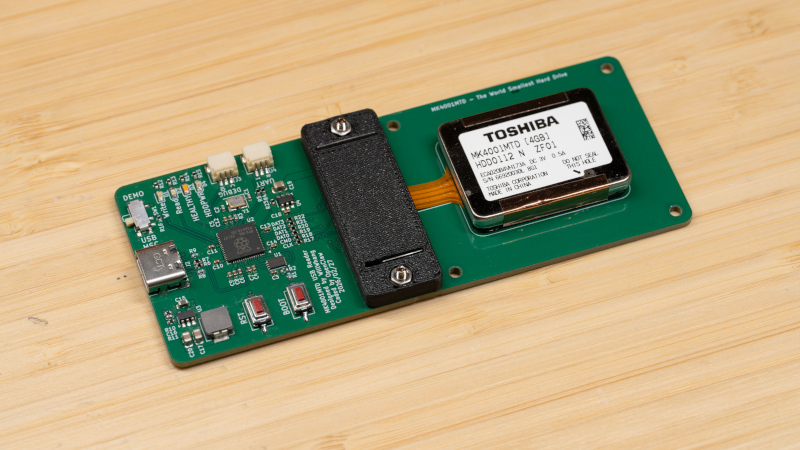
You have a tiny twenty-year-old hard drive with a weird interface. How do you read it? If you’re [Will Whang], by reverse engineering, and building an interface board.
In many of our portable, mobile, and desktop computers, we’re used to solid-state storage. It’s fast and low power, and current supply-chain price hikes notwithstanding, affordable in the grand scheme of things. It wasn’t always this way though, a couple of decades ago a large flash drive was prohibitively expensive. Hard drive manufacturers did their best to fill the gap with tiny spinning-rust storage devices which led to the smallest of them all: the Toshiba MK4001MTD. It crammed 4 GB onto a 0.85″ platter, and could be found in a few devices such as high-end Nokia phones.
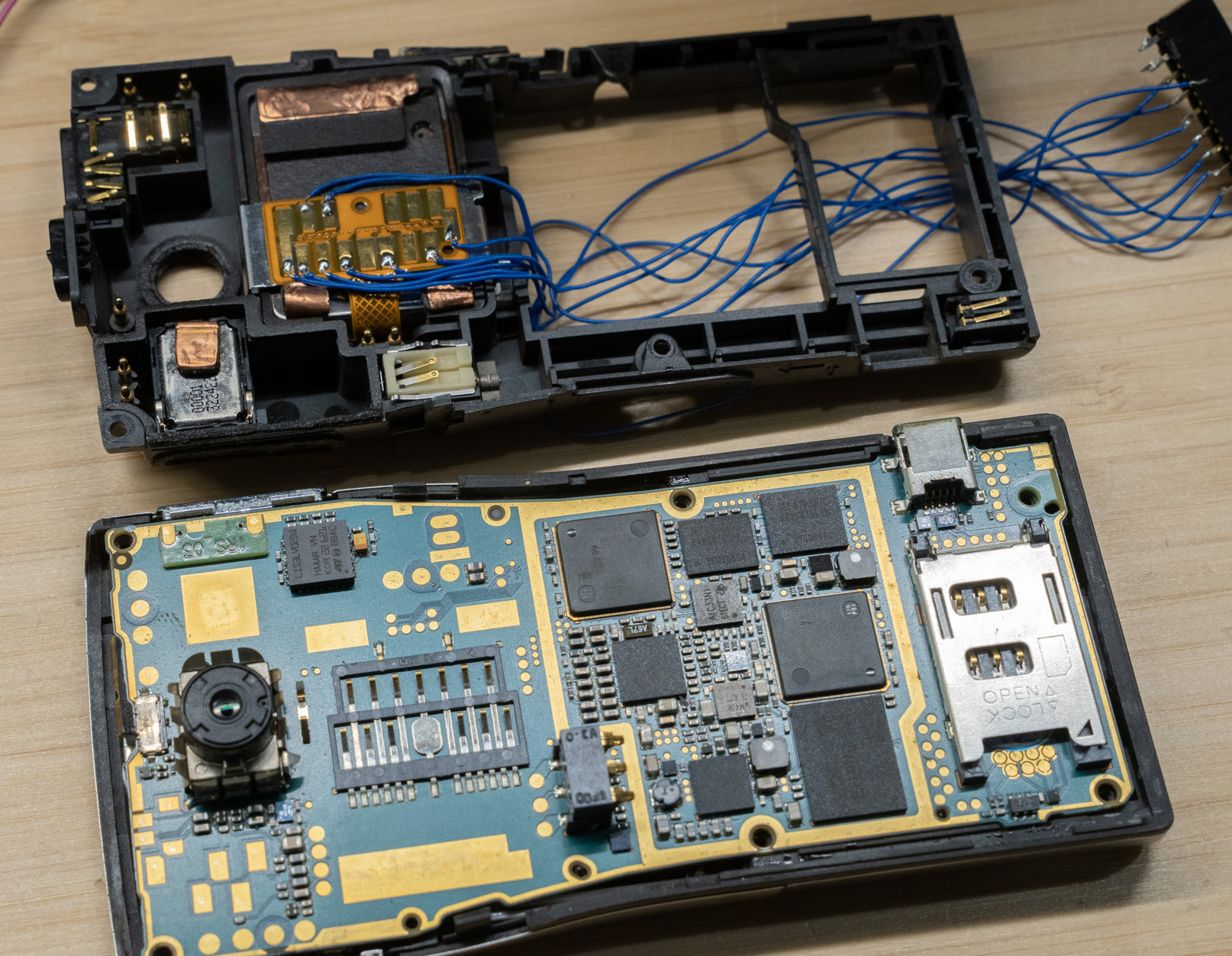
The drive’s connector is a pattern of pads on a flexible PCB, one he couldn’t help noticing had a striking resemblance to an obscure SD card variant. Hooking it up to an SD reader didn’t work unfortunately, so a battered Nokia was called into service. It was found to be using something electrically similar to the SD cards, but with the ATA protocol familiar from the world of full-size hard drives.
The interface uses the PIO capability of the RP2040, and the board makes a tidy peripheral in itself. We’re guessing not many of you have one of these drives, but perhaps if you do, those early 2000s phone pics aren’t lost for good after all.
These drives are rare enough that this is the first time we’ve featured one here at Hackaday, but we’ve certainly ventured into hard drive technology before.












I had a Lacie Carte Orange (https://news.softpedia.com/news/LaCie-Introduces-Credit-Card-Sized-8GB-USB-Key-8914.shtml) an 8GB credit card sized thing with internally a 1″ hard drive.
That drive was then touted as being the smallest in the world, it was also made in CF format, but the thicker 5mm type-II that did not fit in most consumer devices.
I never realized that drives were made that were even 27% smaller!
I remember one of those surplus houses in the 90s or early 2000s had similar sized HP hard drives, possibly with an ATA laptop interface, but on it’s side instead of it’s end. I believe they were about the size of a matchbox. Also, in my data recovery days I came across a CF drive. From memory, it was easier to put the platter into a different drive, rather than replace the heads. I could be wrong, but recall one of the earlier MP3 players having a CF or proprietary hard drive instead of flash.
A few different mid-2000s mp3 players used internal CF-sized hard drives, like the Rio Carbon and the iPod Mini. Meanwhile, the regular-sized iPod used 1.8″ hard drives. (Incidentally, I’m fairly sure that the 1.8″ form factor was originally developed to fit inside PCMCIA slots, making it sort of a longer, older sibling of the CF-compatible microdrives).