
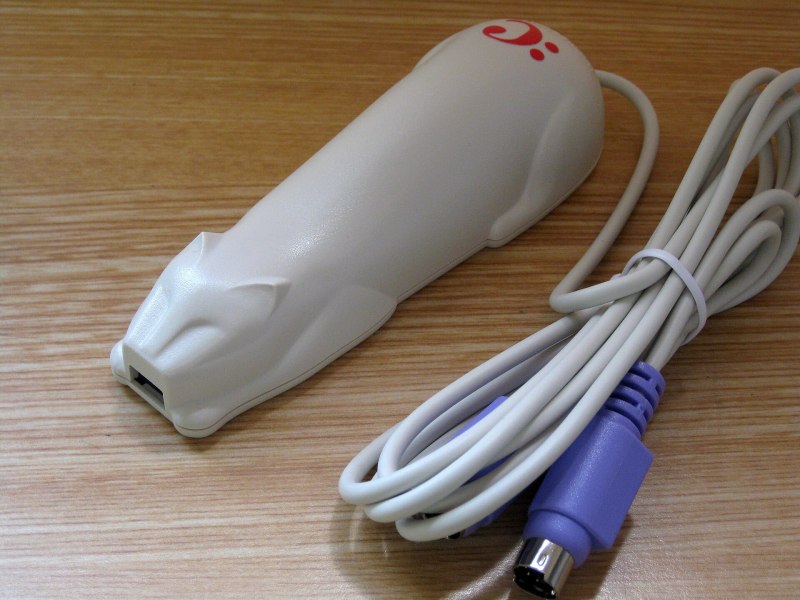
Digital Convergence Corporation is hardly a household name, and there’s a good reason for that. However, it raised about $185 million in investments around the year 2000 from companies such as Coca-Cola, Radio Shack, GE, E. W. Scripps, and the media giant Belo Corporation. So what did all these companies want, and why didn’t it catch on? If you are old enough, you might remember the :CueCat, but you probably thought it was Radio Shack’s disaster. They were simply investors.
The Big Idea
The :CueCat was a barcode scanner that, usually, plugged into a PC’s keyboard port (in those days, that was normally a PS/2 port). A special cable, often called a wedge, was like a Y-cable, allowing you to use your keyboard and the scanner on the same port. The scanner looked like a cat, of course.
However, the :CueCat was not just a generic barcode scanner. It was made to only scan “cues” which were to appear in catalogs, newspapers, and other publications. The idea was that you’d see something in an ad or a catalog, rush to your computer to scan the barcode, and be transported to the retailer’s website to learn more and complete the purchase.
The software could also listen using your sound card for special audio codes that would play on radio or TV commercials and then automatically pop up the associated webpage. So, a piece of software that was reading your keyboard, listening to your room audio at all times, and could inject keystrokes into your computer. What could go wrong?
Of Interest
You might think this was some tiny startup that died with a whimper, but Radio Shack, Forbes, Wired, and several major newspapers were onboard. The :CueCat cost about $6.50 to produce, but most people never bought one. Radio Shack, Forbes, and Wired were giving them away.
The problem is, even free was too high a price for most people. To use the device, you had to register and complete a long survey full of invasive questions. Then the software showed you an ad bar. Digital Convergence had your demographic info, your surfing habits, and knew what you were scanning.
Even then, the scanner solved a non-problem. If you saw something in a Radio Shack catalog, for example, it was probably not so hard to go to their website and search for it by title or stock number. Especially if you were sitting in front of your computer. If you weren’t… well, then, the :CueCat didn’t help you in that case, anyway.
The Next Big Thing?
It is easy to look back on this and think, “What a bad idea?” But Digital Convergence and its investors were in a full-blown media blitz. The video below shows a contemporary demo of the technology.
If you still aren’t sold, look at how happy the woman in the Radio Shack commercial is that she didn’t have to manually search the web for her next phone purchase.
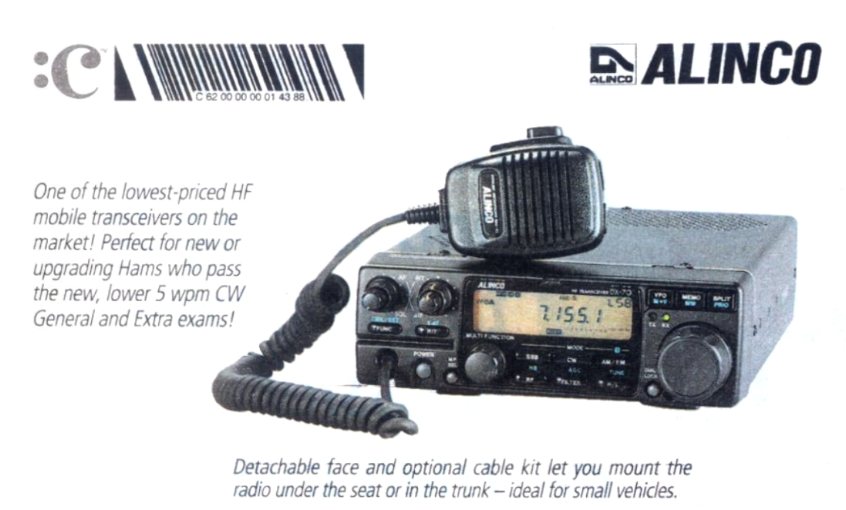
Problem solved, right? Want to buy that new ham radio? Scan the code, and you don’t have to type “Alinco” into a search box! Even the table of contents in the 2002 RadioShack catalog was festooned with barcodes.
The RadioShack catalog might have been an exception, though. A 2001 issue of Forbes magazine showed sparing use of the barcodes and no obvious ones linking to big advertisers. You would think the advertisers would have been a prime target, even if you had to make deals to get them onboard.
Hackers
Naturally, hacks immediately appeared. Drives from [Pierre-Philippe Coupard] and [Michael Rothwell] allowed you to use the :CueCat without the invasive software or registration. You could even scan normal barcodes like UPC codes. Radio Shack and others wound up simply giving away $6.50 barcode scanners.
While people were already prickly about the amount of information gathered and the tracking, hackers found a report file on a public server that revealed personal info about 140,000 users — a huge number for the year 2000.
With hackers attacking both the hardware and the company’s website, Digital Convergence had to act. They changed their license, claiming that you didn’t own the scanner and forbidding reverse engineering. There were no real lawsuits, but there were threats and, as you might imagine, that just made things worse.
The Decline
By 2001, there were a very few USB-native :CueCats distributed. But the bad publicity and the lack of usefulness took its toll. By mid-year, most of the 225 employees at Digital Convergence had been let go. Later in the year, the investors decided to stop using the tech entirely.
By 2005, you could buy the now-surplus devices for $0.30 each, as long as you agreed to take 500,000 or more of them. You can still find them on the used market if you look. Open source software is still around that can make them do useful things, but honestly, unless you’re hacking it into a custom hardware setup, your phone is a better barcode scanner.
Hardware
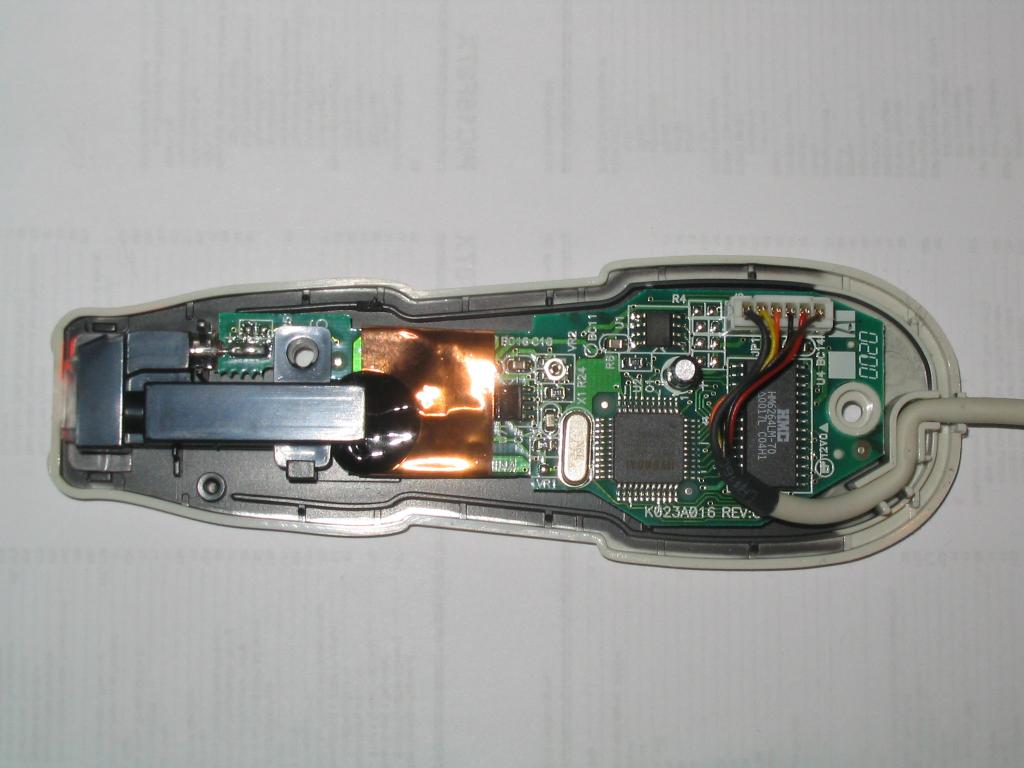
You can still find some of the contemporary teardowns of the :CueCat online. There were, apparently, several revisions of the hardware, but at least one version had a cheap CPU, a serial EEPROM, an 8 KB static RAM, and a handful of small parts. For a free device, the insides looked pretty good.
Aftermath
Of course, now we have QR codes. But these are somewhat more private, work with the ubiquitous cell phone, and even then haven’t caught on in the way Digital Convergence had planned.
Was it a good idea? That’s debatable. But giant privacy grabs usually go poorly. Granted, in 2000, that might not have been as obvious as it is today. But it still doesn’t keep companies from finding it out all over again.
Featured image: The :CueCat. Photo by [Jerry Whiting]











“J. Hutton Pulitzer (formerly J. Jovan Philyaw), the inventor of the failed 1990s barcode scanner known as the CueCat, appeared on The Curse of Oak Island as a guest treasure hunter. Often self-styling as “Commander,” Pulitzer brought his own artifact detection technologies to the show, aiming to solve the mystery.”
“So, a piece of software that was reading your keyboard, listening to your room audio at all times, …” so (HaD readers excepted) basically every single cellphone everywhere.
The only reason this failed was people cared more about privacy then. Now they give it away.
And I disagree- QR codes literally blindly ask you to go to a totally unknown website. Often to buy stuff! I’d rather buy a real Rolex down on Canal Street.
This thing was just ahead of its time.
Automatic navigation via QR definitely requires more faith in humanity than I have.
The barcode scanner app I use doesn’t default to automatic navigation to whatever was scanned. I’m not even sure if it has that option.
I still have one of these somewhere. I can’t remember how or where I got it. But knowing me as I do, I can say for certain that I did not buy it and did not register it.
I had a friend that used the cuecat to manage his vast Orchid collection. Taking watering needs and history, and other such plant things, with each plant to having it’s own bar code.
To be fair, the big surprise that probably escaped most investors back then was that the general public would become very good at keyboard typing.
Most people were atrocious at typing in 2000, and this made it painful to do anything online. But all the internet users learned to type and then it was a non-issue.
Not really no, giant companies have always been out of touch with reality and Radio Shack somehow simultaneously held the beliefs that paid minimum wage clerks could type “940-0827” into the cash register but assumed “mere customers” could never be trained to do so advanced of a task, so we’ll implement a ridiculously overcomplicated bar code reader because people who can’t figure out how to type 7 digits are clearly expert PC sysadmins.
The Radio Shack catalog example from the article above is on page 90 of the 2002 catalog, the catalog number really was 940-0827 and its a lot simpler to type that into a web browser than to install a cue cat and get it working.
The DX-70 was a good radio that I considered buying back in the day, although I ended up buying a Yeasu 817, both long since discontinued I’m sure. I’m not sure if anyone post 1990 or so would buy a HF ham radio transmitter from Radio Shack, despite the store name, which surely contributed to their downfall. Toward the end, Radio Shack was truly a store without a purpose, but their prices were staggeringly higher than any alternative.
Its the QR code reader for the desktop. The desktop requirement somehow made it even less successful than QR codes.
The other problem they had, was they ONLY wanted to partner with billion dollar companies at an absolute minimum. I worked at a “hundreds of millions of dollar” company at the time and had a pretty novel idea for corporate IT network management and it barely made it past daydream stage when they were crystal clear we were far too small to even bother having them talk to us as a mere fraction of a billion dollar company; this was a product solely for billionaire to consumer advertisement, everyone else needs to go away they forbid the use of this product for anything else. Rather sad. A decade later, Brady sells network cable label makers that print QR codes. If you know what a BMP61 is and you know what IPAM means in a corporate IT context, well, now you know what I was thinking a quarter century ago. Its a good idea, its just Brady has better management than the cue cat crowd had back in the day.
It’s a repeated lesson in business that it doesn’t matter how good the hardware is, if the company is a flaming dumpster fire to deal with.
I used mine i got for free at radio shack to make a excel sheet of all my music movies and games (once the cat was out of the bag that is … it sat around doing nothing for the first while)
“We can’t even get a form letter sent to us,” lamented Mark Topham, author of BeCode. “That’s like saying we’re not good enough to receive junk mail. What does that say about their level of respect for BeOS?”
http://www.bedope.com/stories/0122.html
I was good friends with the manager of the local RS back in the day and he gave me the “CueCatalog” package just before they were released to the public, curious what I could do with it. By the time I got internet service at home and could get into it, the work had already been done. Using that info, I converted a bunch of them to regular barcode scanners and sold them to local businesses for $20 a pop, far cheaper than those Symbol et al barcode scanners were selling for.
I happened to see one of the cats I modded at the local thrift store some years later and I occasionally wonder how long each one stayed in use, why they were retired (growth, not closure, I hope), and when the last one was retired and why.
The weak point on the cat was where the cable entered the case. They weren’t designed for heavy use.