

Although it may be hard to believe for current generations, there was a time when the Internet and the World Wide Web were not as integrated into society as it is today. The only forms of online ‘social media’ that existed came in the form of IRC, forums, BBSes, newsgroups and kin, while obtaining new software for your PC involved generally making your way over to a physical store to buy a boxed copy, at least officially.
In this era – and those before it – age-verification already existed, with various goods ranging from tobacco and alcohol to naughty adult magazines requiring you to pass some form of age check. Much like how movies also got age-gated, so did video games, with a sales clerk taking a very good look at you before selling you that naughty puzzle game or boxed copy of Quake 3.
Today we’re seeing a big fuss being made about online age-verification, with the claim being that it is ‘for the children’, but as any well-adjusted adult can attest to, this is essentially a big bucket of hogwash.
Pearl Clutching
The concept of restricting certain types of drugs, entertainment, and the operating of automobiles and trucks to specific age groups is a popular one. The general reasoning is that you have to set a limit somewhere because you cannot have toddlers driving lifted 4x4s, smoking a big fat cigar, and chugging down a cold one. As for where set this limit, there is rarely more than scarce evidence for a particular age past childhood being more reasonable than any other, with claims of harm often being dubious at best.

In the case of exposing children to ‘harmful content’, whether in the form of video games or audiovisual entertainment, things get if possible even fuzzier, as proving that such content is indeed harmful is a tough ask. Realistically what we should primarily focus on as responsible adults and parents is the prevention of childhood trauma, as any reasonable person ought to be able to agree that inflicting trauma on a child is a certifiably Bad Thing.
In addition to this, there is also the importance of teaching children why certain types of behavior and excesses are bad, such as why you cannot drink soft drinks exclusively, why you need to eat your vegetables, why torturing small animals to death is absolutely not okay, and that Being Nice to Others is totally something to strive for.
Because children since time immemorial have sought to escape the suffocating hold of age restrictions, this raises the question of whether we can prove that this is in fact traumatic or in any way affects their behavior in a negative manner.
Dodging Restrictions
Although in the case of the pre-digital-everything age, sales clerks and adults had a lot more insight into what content you consumed, nobody really believed that with the right contacts you couldn’t get access to all the dirty magazines, violent video games and Parental Guidance (PG) or Adult Only (AO) rated movies.
The reason that I was playing Doom, Doom 2, Duke Nukem 3D and similar titles as a kid in the 1990s wasn’t due to me somehow passing as a certified adult or having an adult purchase it for me in a store, but because a computer-enthusiastic older cousin would copy them zipped up with ARJ across a bunch of floppy disks for me and my younger brother to enjoy. Think warez, but with a personal touch.
This kind of black market culture has always been pretty strong, from 1980s mix tapes and copy parties to buying copied audio CDs off someone at school by the late 90s, whether filled to the brim with explicit lyrics or not. This made ‘age restrictions’ mostly limited by one’s technological means and in how far one’s parents were aware of your illicit activities. Having your own TV and VHS/DVD player or multimedia-capable PC in your bedroom really broadened one’s horizons.
Considering that as a child I was also reading adult literature of the (mostly) non-nekkid variety, including the works of Stephen King and Jan Wolkers, as well as Lord of the Rings, there were many things that I did back then that were age-inappropriate. The main question remains whether any of that harmed or benefited me. This is a highly subjective question to ask, of course, but we do have some science to provide a more objective take on this subject.
Doomed To Violence
Back in the 1990s the idea that violent video games were causing children to become more violent got a lot of traction, mostly due to fighting games and first person shooters like Doom entering the scene. To some people, the premise that playing these games in which you use a variety of weapons and techniques to violently turn pixelated monsters and opponents into pixelated piles of viscera would not have any effect on the developing brain of children and teenagers seemed inconceivable.
The 1993-1994 US Senate hearings on video games came in the wake of the release of controversial games like Night Trap, Mortal Kombat, and by the 1994 hearing, also Doom. Effectively this is where video game ratings became an integral part of this new kind of media, with the Entertainment Software Rating Board (ESRB) being established for the US and Canada.
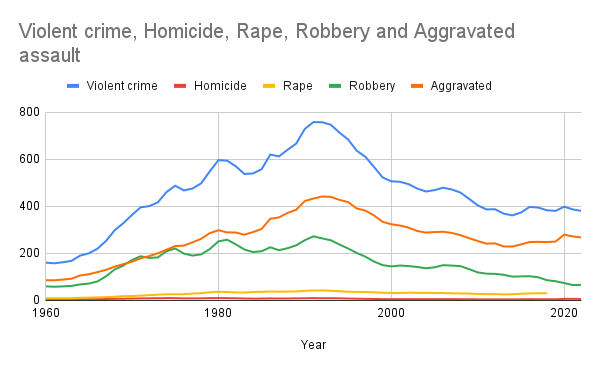
Yet despite the premise being that exposure to violence and pornography at a young age causes individuals to perform criminal behavior, the crime statistics do not bear this out. In fact, there was a much sharper rise since the 1950s in violent crime across the US, peaking at around 1990, when incidentally lead in the form of tetraethyl lead as a gasoline additive was phased out. This lends credence to the hypothesis that exposure to significant amounts of lead from a young age in one’s environment impaired cognitive development and resulted in said crime wave.
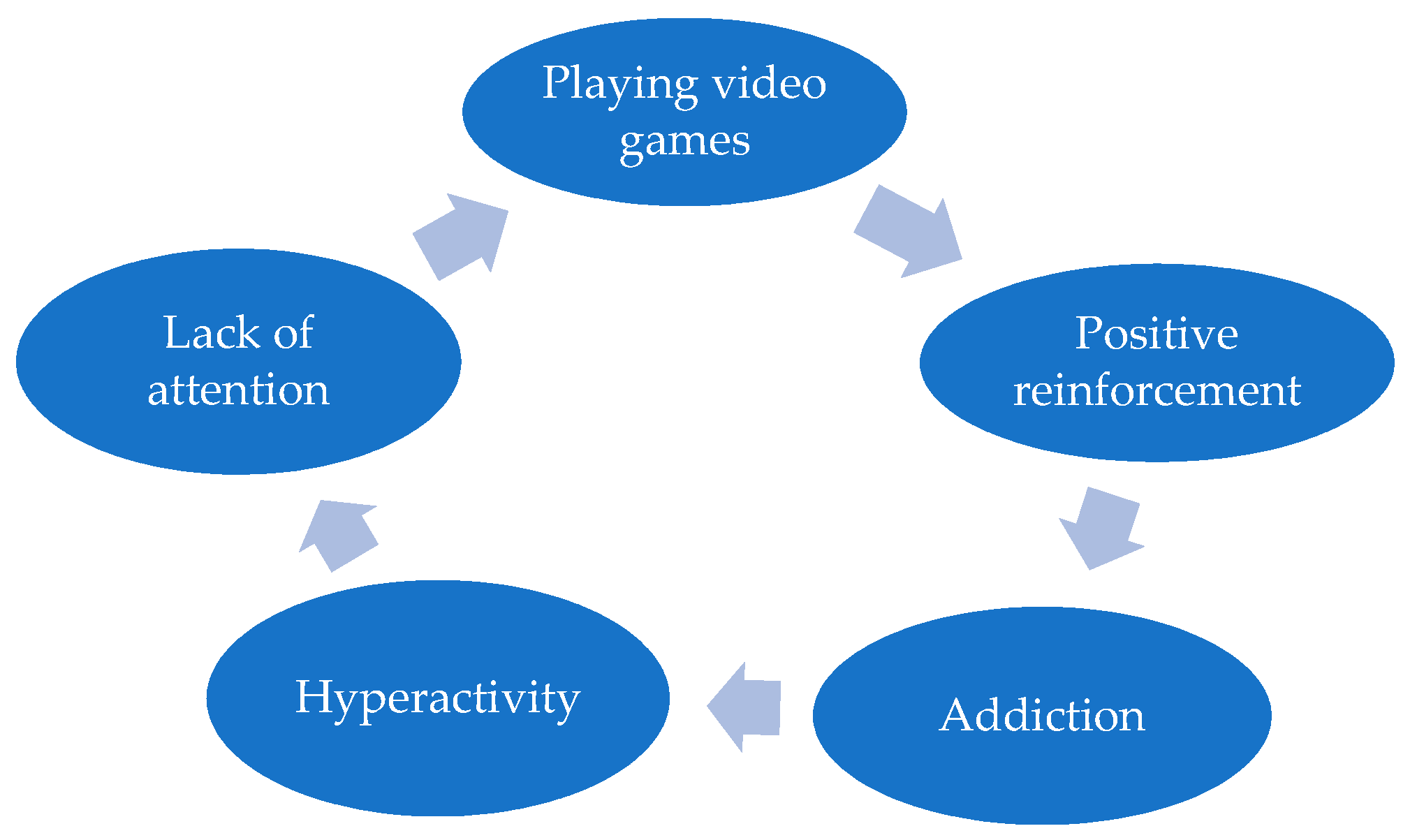
In a 2023 systematic review article by Virginia Lérida-Ayala et al. the causes of behavioral disorders in children and teenagers within the context of internet and video games are considered. Of note is that Internet Gaming Disorder (IGD) is featured in the DSM-5, involving compulsive use of video games to the point that it impairs one’s ability to function.
This negative aspect is of course also contrasted with the positive effects of video games when it comes to things like socializing, cognitive skills and improved self-esteem.
In the review article it is found that playing a very large number of hours of video games per day is correlated strongly with negative effects, yet with the caveat that it’s important not to confuse the order of causality. A strong connection is found between ADHD and escaping into video games, in order to avoid the complexities of emotional and social interactions.
Much like with other types of addictions and substance abuse, they can often act as an escape from reality, in which case the solution does not lie in technological solutions like age restrictions or forcefully limiting the number of hours that a user can play as doing so would merely force the individual to find other forms of escape.
Yet even in these extreme cases of IGD the result is generally not violent or even criminal behavior, but rather a withdrawal from society. This contrasts with the final point being raised, with that of aggression and other forms of dysfunctional behavior, which when left uncontrolled can result in negative feedback from the child or teen’s environment. Yet here too underlying psychological issues such as OCD, depression, social anxiety disorder and so on would seem to be generally present.
In short, it would appear that violent and otherwise age-restricted content do not reprogram a child or teenager’s brain, but it can provide a coping mechanism for those who are dealing with certain mental and psychological issues. Or in other words, when a child or teen is feeling generally happy and content, there should be no negative effects from them indulging in video games and movies, even if they may be deemed to be not quite age-appropriate.
Traces Of Trauma
There are many ways in which a child can suffer trauma, but the primary question is whether exposure to age-restricted content can actually induce trauma. This somewhat goes back to the previous section where it’s important to not confuse the order of causality, as after all often trauma can precede problematic behavior rather than be caused by it.

Yet if we look at the list of the types of trauma, it’s not immediately obvious in what way voluntarily opting to listen to explicit lyrics, play violent or erotic video games, would in any way be ‘traumatic’. When contrasted with the list of childhood traumas, such a thing would seem to be rather benign as it’s done out of curiosity tinged with a hint of adventure due to it being ‘for adults’ or at least much older children.
When I look back upon my own experiences playing those violent games – with an occasional stop to pass a stripper in DN3D a few bucks to have them show me some very naughty pixels – it fills me more with a feeling of nostalgia rather than an overwhelming urge to acquire firearms or frequent a strip club.
I will admit that catching that the scene from Child’s Play where Chucky has been thrown into the lit hearth and comes walking out whilst on fire caused child me to fear walking into the dark garage later on. I would fortunately quickly get over that, though I’m still not a fan of snuff-type films like the Saw ones.
Ultimately, when it comes to childhood trauma, this doesn’t appear to be much of a reason to age-restrict certain types of content.
Anonymity Is Good
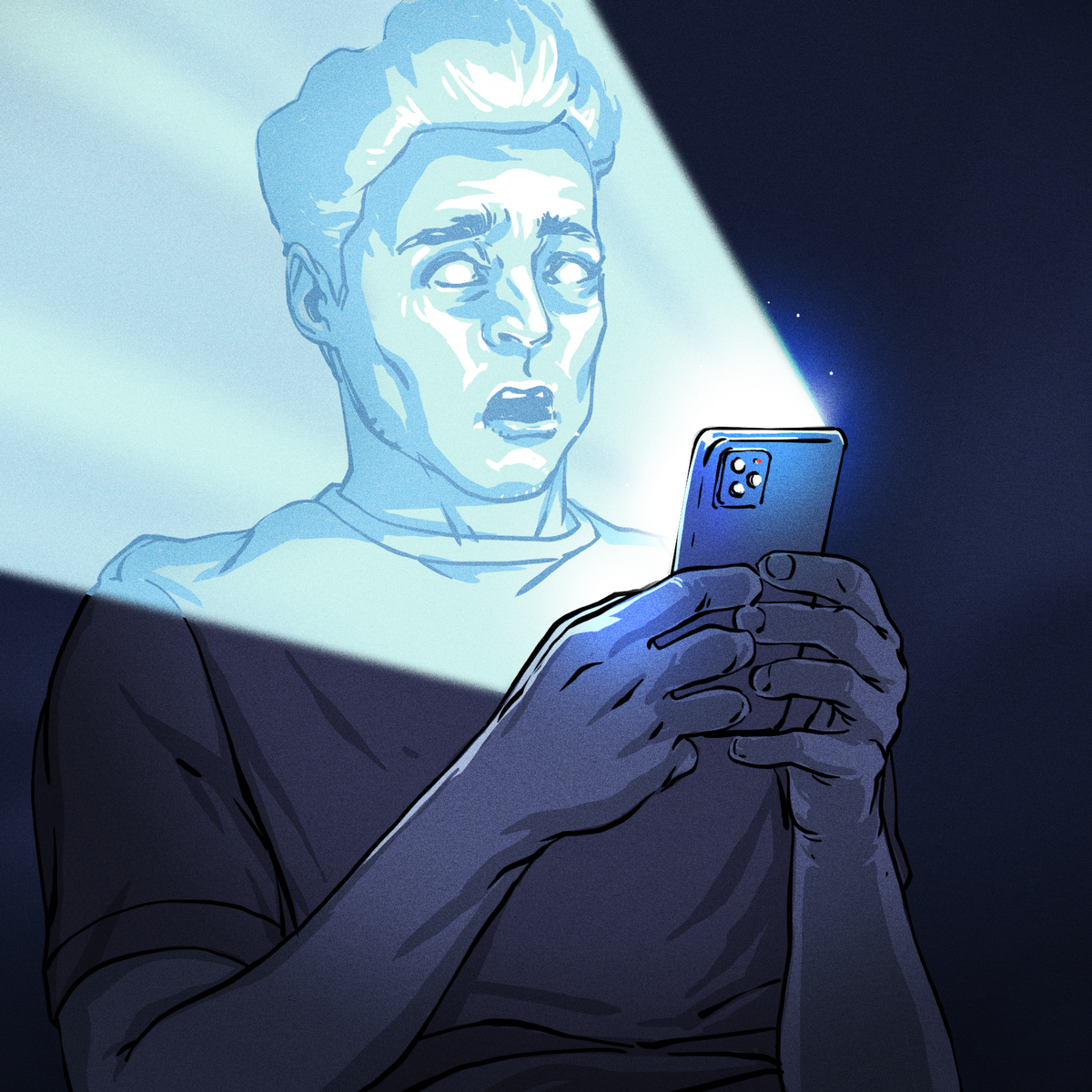 Since the arrival of so-called ‘social media’ the central tenet of never giving out your personal information which was front and center during the 1990s and 2000s got quite literally flipped around. Suddenly we had massive corporations practically begging you to give every last scrap of your personal information, every intimate detail of your daily life and with it every last second of your attention span. They even made an ‘everything device‘ for it in the form of a smartphone that practically ensures that you’ll never be alone with your thoughts again.
The upshot of this reversal is that instead of a mostly comfortable anonymous experience, suddenly every second that you’re awake has been turned into the equivalent of a schoolyard during recess, the watercooler banter at the office and similar social interactions. Along with this comes social anxiety, real-life bullying, and worse, with multiple studies indicating the real harm to children and teenagers in particular, but also to adults.
A recent response to this has been the introduction of social media bans for under-16 year olds, which by itself sounds like a good idea, but this fails to address the many problems that this introduces: from illicit access as demand remains, to the privacy nightmare that ensues as suddenly access to social media requires more stringent identification than accessing a pornographic website.
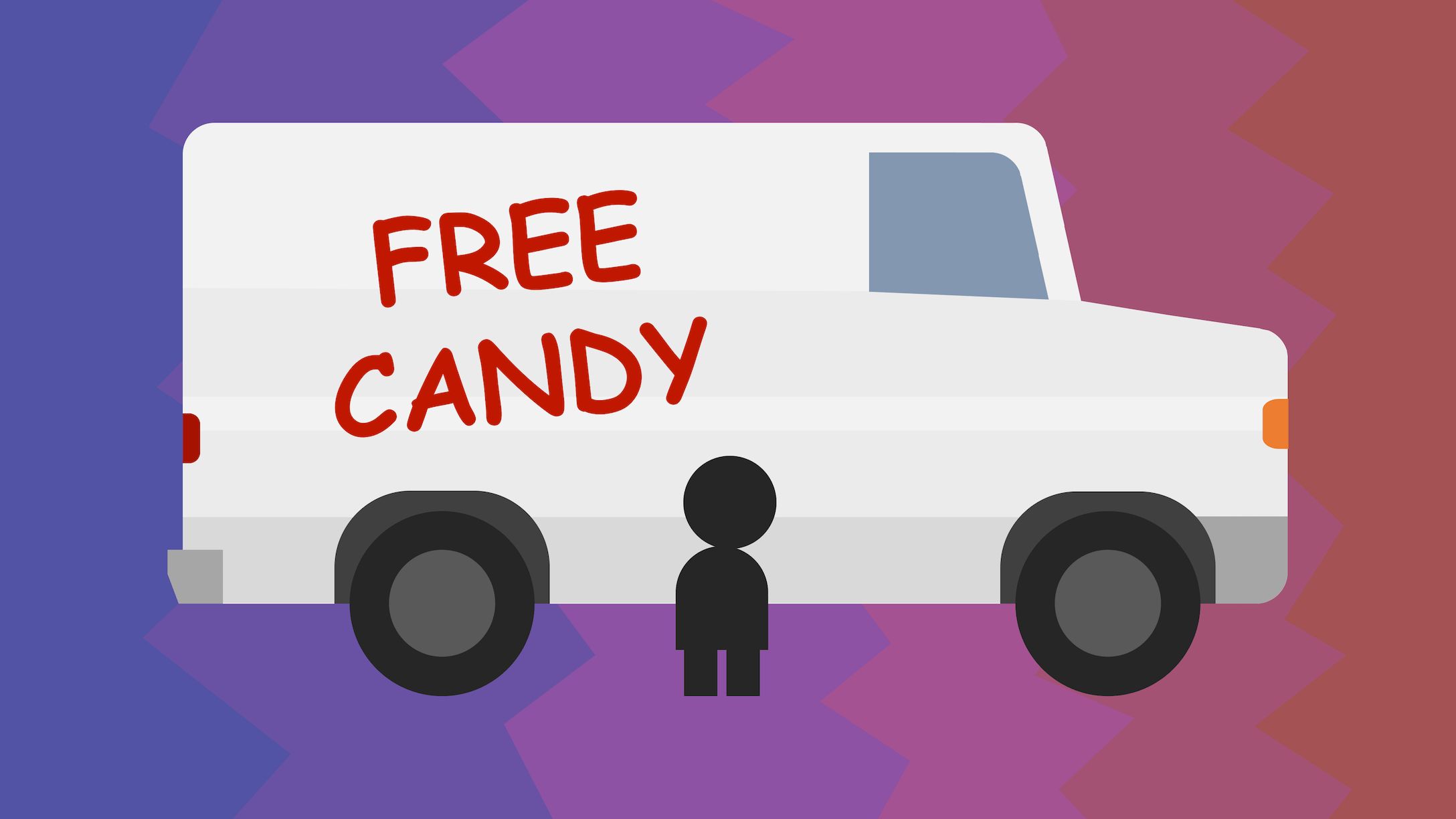
This raises many questions, such as whether ‘social media’ and the FOMO it introduces is a legitimate addiction, and whether we shouldn’t make being online more anonymous rather than enforce a rather dystopian ‘real name’ policy onto the populace. Contrast this to the old ‘don’t trust strangers’ adage that used to get hammered into the minds of young children, to prevent them from taking up offers from overly friendly people with candy-filled vans.
Modern-Day Safety
In how far do children today understand the dangers of the Internet? In a 2019 research article by Jun Zhao et al. a group of UK school children aged 6 – 10 were asked a range of questions in focus groups to see how they see these risks. Now that many children are practically raised by iPads and equivalents, it’s more relevant than ever that the adults in their environment teach them to be safe and to reinforce good online privacy behavior.
The paper was also summarized in an article by Chun Fei Lung, for those whose attention spans are beginning to drift at this point. A major take-away is that children will generally recognize situations that feel ‘scary’ or ‘annoying’, and they agreed that they should ask one of their parents about it before doing anything else.
Perhaps the scariest part is how trusting these children were when it came to platforms they were familiar with. We have seen issues recently pertaining to platforms like Roblox where such trust was exploited by unscrupulous adults, leading to age verification being implemented through the services of Persona. This same identity verification company has also been hired by Discord and has seen its services used in the UK and Australia for their respective online safety legislation.
This then gets us to the crux of modern day online safety, where online anonymity has been replaced with identity verification through private companies. It’s hard to shake the feeling that parental involvement and education campaigns by governments wouldn’t be significantly more effective here. As well as pose a significantly lower risk of having your identity stolen.
Of course, none of this is an easy issue to solve, and there will always be unscrupulous folk around, but treating age verification as some kind of technological silver bullet to a societal issue will always end in tears.












If consuming alcohol causes cancer then why are cancer rates higher in Oman, Congo or Saudi Arabia compared to Belarus?
Correlation vs. causation?
Seems like you try to turn things around.
If jumping out of the window on the fourth floor can cause death, why are more people dying in places where there are no tall buildings?
I dunno, maybe you should write a research paper on it!
Because there are many causes of cancer.
Can you provide data? Mentioned countries provide high sunlight exposure – which means they may be dealing with skin cancer while Belarusians may have higher liver cancer rates.
So, I thought you were from Europe M. Posch, but you talk like you grew up in the US.
But anyway. we act like all the new laws are actually really thought out by many and have the stated purpose, when in fact they are thought up by a few creepy dudes in a think tank and are unlikely to have anything to do with the stated purpose. And thus solving the fake purpose won’t stop them.
Yeah, these sorts of laws are data-mining for profit. The politicians promoting them are being paid to do so. Saying “think of the children” is just manufacturing consent.
Seeing as Meta has been lobbying hard for these laws, it is a creepy lizard man
I have couple of people involved in politics (on local level) in my friends circle (Europe – smallish country, not that unheard of) and i talked to them once (after consuming certain amount of ethanol together of course) about “right to repair”. Their answer changed my perspective on politics a lot. Essentially their answer was “great idea, but nobody cares, so no way to push this”. Essentially they explained that the main goal is of course to win elections. If you don’t, you can’t influence anything and than what’s the point. Now for this you can divide various topics into 2 categories. Those who enough (like more than half, maybe bit less but really mainstream enough) people care about. On these topics you need to communicate your position and than try to push this position – these are the important topics like taxes, public spending, immigration, housing, social programs, pensions and so on. Those are “political topics”. Than there are topics people don’t care about. And if your goal is to win elections, you don’t talk about these as you should use your limited attention you get to talk about “political topics”, those that influence elections.
You will also find that if you try to convince people that the non important topics are important, then especially for things like “right to repair” or “online privacy” you will find out that people find this (and you) annoying. People don’t like to be lectured about things they don’t care.
So how are the non-political topics decided? Well by lobbyists. Why? Because if people don’t care, that topic doesn’t influence your chance to win elections and therefore it is better to decide it in favor of somebody, who will give you money for your campaign that will influence your chance to win elections. (yes, there are still politicians with spines and values, but they tend to lose to those, who are willing to take as much money for campaigns as possible from anybody willing to give).
TLDR; This is happening simply because
a) not enough people care
b) there are lobby groups that are willing to throw money at this
this will change only after enough people start to care, after enough people will clearly say “this is important to me and i will take this into account in next elections”. And honestly? I don’t see this happening. Not yet. Sad.
https://www.youtube.com/results?search_query=john+oliver+australia+gun+control
What defines a “good” politician?
Making society better / improving the lives of ALL constituents.
If that is the goal they are garbage politicians – at least if they are already in a political position.
That is only allowed to be a goal when you’re running for 1st election – not re-election.
-> Sometimes politicians need to make decisions that might loose them the next election (eg. gun control).
What happens if the “only” goal is to win elections is plainly visible in USA (and elsewhere but not as obvious).
Assuming there is such an ultimate good or even a justifiable compromise. You’re begging the question that there is a correct solution that the politician should attempt to achieve.
If there isn’t an ultimate right answer, then the goodness of a politician actually is just about whether they manage to get elected and re-elected. A system, such as politics, always serves its internal goals first.
Well my main message was that if people want to see change on topics like “online privacy” than more people needs to care about “online privacy” because until it is real political topic for the masses, current state of affairs will continue. And it doesn’t look like significantly more people are staring to care. I tried some campaigning on very small scale (friends / family …) and did’t get too far. Many people find it “not a problem” and “annoying”. Maybe my methods was not good, who knows.
Now as for “winning elections”. In all countries of EU we have “Representative democracy” where we as people vote our representatives, who than make decisions on our behalf, mostly based on what they promised before elections (i know it is kind of naive take, but at least in theory that’s how it should work). Politicians that are elected gets to make decisions and politicians that does not get elected make no decisions. So one would say that to for “Making society better / improving the lives of constituents.” they first need to get elected. They need to win elections to at lest try to fulfill that goal. Also in “Representative democracy” a politician does not represent “ALL” people. He / she represents certain values, believes and ideas how to move the country forward. Yous as a voter than choose politicians that best aligns with your ideas on how to manage the country. Other people can choose completely different direction. Even direction you may completely dislike, or one that can have negative outcome for you. That’s democracy. Politician in democracy does not represent “ALL” people. That would be impossible. Politician in democracy represents his own voters. If he gets elected and than does something different than he promised, that’s bad. But if he does exactly the hing he promised and people wanted but you don’t like – well that’s democracy. One may say that the politician that represent ideas you like but lost is at fault as it is his job to secure enough support so he can represent you and people like you (or me).
Oh, yes, people don’t care.
I tried to convince people to not use Facebook for club organisation – a friend would send me the updates, I’m not on Facebook.
I managed to convince a small group of people to not use WhatsApp for organising a certain group – but they moved back when new people came along.
People don’t care. Readers of these pages might, but we are outliers.
OK, thanks for your anecdotal info on what drunks say and seem to think.
Today a lot of age-restricted content, be it porn or video games or social media, is intentionally being designed to be addictive. It would be great for everybody if it wasn’t, but it’s pretty difficult to formulate a law that would stop it.
With the modern tools of automated tracking, a/b testing and personalized feeds, the addiction business is more effective than ever.
As weird as it sounds, guess I should be glad that I grew up fapping at Google Images, then 4chan and finally ImageFap; instead of OnlyFans or whatever it is that poisons the horny teens nowdays.
Oh, and most importantly, I’m glad I got to fap before came the smartphones with their 24/7 network connectivity (be it WiFi or 3G). Good old Nokia 6230 doesn’t really cut it.
Every fap session was a ritual – wait until no one’s home, find interesting content, do the job, wipe your stick clean and clear browser history. Pumping the shotgun at bed was imagination-only experience – and many times even better than watching prawn!
This ‘addictive’ BS is getting a bit old.
You are responsible for your own gluttony, not some mysterious mega corporation.
“I like to sit in this chair, it’s a lounge chair and they deliberately made it addictive by making it comfy and I’m suing!!”
They should put these people in a bare concrete cell with no heating or cooling and only water and dry bread, so as to make sure there is nothing ‘addictive’ getting near them you know, to help them.
Leisure suit Larry……. That had amazing age verification 😂
Didn’t it just. Loved the “Is this software pirated” question. It was the most entertaining part of the game. As part of a mainframe support team many a long evening maintenace session had the game fired up as a kind of pub quiz session. Half a dozen twenty somethings regularly failed the test.
Jan Wolkers! Thumbs up from all Dutch people of a certain age. Here’s mine: 👍
Up where?
Wolkers would approve of this comment.
Swamp German rudders.
Thanks :) I really got to read all the Dutch literature classics courtesy of my parents having them on the bookshelves. Definitely shaped my literary style, I’ll say.
So much this ^^ ;-)
Children aren’t allowed in bars, erotic shops and whatnot.
WHO is allowing them “in to the WWW”? The Internet/WWW isn’t “just there” in the children’s bedrooms, it’s not on the playground or out in the field.
Children must have access to a device to “get in to” the WWW. Usually they can’t just obtain such a device for themselves.
-> It’s the parents responsibility.
But it should be easier for them – maybe a HTTP header flag that tells the browser if, what kind & maybe a severeness score (0-10) of “danger” it posses to children (eg. porn, gambling, violence, etc.).
Make a rough standardization and make it possible (for parents) to create non-root accounts where those flags can be blacklisted (or required for the “save for children flag”) and browsers (& eg. Steam) automatically adhere to. No age verification nonsense at all.
Dunno how exactly to enforce such a flag be set on all relevant sites but at least commercial ones shouldn’t be a problem – and/or combine it with a block/allow list for domains, IP ranges, geo location etc.
A functional used android phone costs less than $20. Free wifi is everywhere. A prepaid 5g sim from Helium mobile costs $1.50. The Internet IS everywhere and it is damn hard to keep someone off it. The homeless people sleeping on my street have cell phones.
And even if you could, your kid will have one friend whose parents are too busy to police their devices. That’s how I was playing Mortal Combat in kindergarten.
Besides, there are massive massive healthy educational things to do on the Internet. It shouldn’t be all or nothing. We can create a world where a 13-year old can read Wikipedia but cannot trivially access hardcore porn.
Sure, any system can be defeated. But if you make it hard enough, it reduces the audience to a smaller number of kids (and filters out the least savvy).
You know, that’s exactly what they’re trying to do in Moscow right now, except in reverse.
Moscow is not representative the whole Russia, in fact only a minor fraction of its total population lives there. It’s like calling america is banned alcohol because some evangelical church in Goatfuckville, Ohio closed its liquor stores after reading one too many of those Jesus fariy tales.
Whoosh goes the point over your head.
You don’t want to grant the state the power to “create a world” of your liking, because the same power enables them to ignore you and do the opposite because they have their own agendas.
yes, for teenagers it’s (even) easier to get their own phones.
Getting a phone number in some (how many?) countries requires the buyer to identify themselves (not necessarily a good thing to eliminate possibly anonymity but that’s another topic).
Okay, friends / other kids on the playground is a valid counter (to a degree).
We played Doom as young teenagers in an internet cafe (until one complained about bad dreams – we switched to Descent 1/2).
Have you read the rest of my comment? I never said it was all or nothing.
I said it was the guardians responsibility to set the appropriate rules in/for the non-root account on the kids device and browsers+websites respecting those rules.
Wikipedia is a good example of a website that could even change “those” flags depending on the article requested (eg. if parents want to keep their kits from anything even remotely sexual their “thresholds” would be set so low even sex-ed articles on Wikipedia wouldn’t get through (not my opinion)).
Another layer I forgot: Instead of enforcing age-verification (mass surveillance) politicians could force SM companies (“social” media) to offer a “kids-safe” mode of “their service”. Not necessarily in the sense it blocks pornography/violence etc. but that it disables all the addictive “feed” algorithms and what not.
Facebook example:
(1) Only communication with verified contacts you have met and personally exchanged cryptographic keys (QR-codes, maybe NFC).
(2) nothing in your “feed” (or is that more of a TwiXter thing?) but form (1)
(3) parents accounts allowed to do more? (add friends etc.)
So basically “real” SOCIAL media (like Facebook was before enshittification?) with stricter rules on who you can friend.
Incentive for young people to learn hacke
Most restrictions work like this. You can’t buy alcohol if you are under certain age yet young people get drunk. Drugs are simply illegal for everyone yet people get addicted at any age. What really makes sense is parents who look after their kids. I grew up in place where parents sent kids as young as 8 for shopping with cigarettes or beer on the shopping list and they could buy it. Yet only few of my friends tried alcohol before 14. Age restriction did not improve the statistics but social and economy situation worsen them a lot.
You should say “Children aren’t allowed in bars, erotic shops and whatnot in my country.”
I’m not sure what country though, most countries do allow children in bars with their parents.
And most allow them in whatnot. Unless you mean whatnot and not whatnot perhaps, but even then they allow them in whatnot.
Ah, the “good old” times :-)
I introduced PowerZIP (1998) back then and soon we were sharing games (Descent 1, maybe 2) via floppies on the schoolyard.
Anyone who thinks that this is “for the children” is naive at best. This is all about CONTROL, just as is every other “protect you from yourself” law. Plain and simple.
the 90s was wild. i never had a problem buying violent video games. they may sometimes, rarely, ask if you are over 18, which you calmly say yes and the transaction continues. none of the adults understood computers. you could download music, burn cds and trade them for weed. porn was everywhere. even weird stuff, like if you wanted to see a woman have sex with a zebra. fortunately modern porn sites leave out the bestiality section. i watched horror movies with the older kids while in kindergarten and by age 10 i was completely desensitized to the genre. i had also watched all 5 death wish movies while other kids my age were watching disney films. i grew up on war movies as well. i was listening to ’80s death metal while everyone else was listening to grunge. i even witnessed a murder. none of these things were nearly as traumatic as some of the crap teachers and members of my own family pulled. all the violent movies did was turn me into a life long cinephile. video games got me interested in modding and then game dev (and all the math that entails). i have never been to jail and i have never had sex with a zebra (though some of the women have been questionable).
Yes, I’m also happy being a survivor of my youth.
And I wish that youth of current days will tell some day proudly about their younger years
Let’s find out how this site treats anonymous tor-users…
I think that especially in europe the attempts to end online anonymity hat little to do with protecting children, even though that’s how it’s being sold to the public.
IMHO the real reason for these attacks on online-anonymity on social media are botswarms, that are run by hostile state actors, which are trying to shape the political environment via mobbing campaigns against politicians and influential people, by spreading malcontent, misinformation, and propaganda, by shifting the overton window into a more and more extremist direction, and of course by astroturfing influencers that push the narratives of the governments that are running these botswarms. See:
https://www.science.org/doi/10.1126/science.adz1697
LLMs do not tire and do not sleep, and they can overpower humans on social media.
Of course good and competent governance might be the best way to counter such attempts, but since when do competent people join politics or seek employment in the state. So bullshit like age verification it is.
Instead of age verification (which is basically only another try for total surveillance), there should be “ethical” rules against all these engagement algorithms that are f*cking us over as a social species right now by force feeding us with bullshit that triggers us and erode our empathy…
I don’t know about Europe, but I live in Australia. I am a grownup. Age verification for social media has been here for almost a year now. I still browse the web, conduct business and bank online, just like I have for decades. Nothing has changed. I haven’t had to share selfies, ID or biometrics.
I think all this stuff about “surveillance” is a strawman pushed by the social media companies themselves to make us nerds fight on their side.
I also see a lot more kids playing outside in the fresh air than there were a year ago.
If you can call reading a book like Lord of the Rings age-inappropriate then you are completely failing to account for the variation in development speed, intellect and maturity – a book like that really has no inappropriate age. Each individual simply has an age before which they would not have been developed enough to comprehend enough of it to enjoy it! Which for some folks might be they will never get there, while if your 4 year old is that much of a savant are you really going to force them to keep reading only whatever passes for ‘age appropriate’ that will have less words in the entire book than Tolkien has in a paragraph probably…
It’s definitely a notion that society tries to enforce, though. Hence libraries having the children’s and adult sections, as if you’re not allowed to even look at such more ‘mature’ literary works.
As approximately an eight-year old I decided to push my luck and ask the librarian (via my mother) whether I could maybe borrow books from the ‘adult’ section, as I had practically read everything of interest in the sections targeting children and young teens.
So yes, I absolutely agree that the notion of ‘age-appropriate’ books is rather silly. It’s more of an average thing, and some of the children will happily enjoy works that the average adult would struggle through. It really ought to be promoted more that such a thing is more than just okay, though.
As a child I was heavily bullied for liking to read, and as a teen I stood out like a sore thumb at school for reading so many books. Resulting in even more bullying. Anti-intellectualism certainly seems to be a vibe here, making you feel that you’re committing some kind of social faux pas.
I think you just misunderstood the point of the adults’ vs. children’s section. It’s not about censoring things from children, but about sorting out different categories of writing and content much the same as you would between e.g. fiction and non-fiction.
There was nobody to actually stop you from wandering over to the adults section and picking up a book to read, and you didn’t need to ask, unless you had some weird librarians with their own weird agenda.
In my observation, there are people who are so “rule bound” that they get anxious in new situations and places if there aren’t any rules to spell out how you should behave and what you should do there.
So, in the absence of explicit rules, they make up their own – such as figuring that you’re not supposed to go into the adults section of the library because you’re a child. Then there’s a kind of mix-up between what you think the rule is, and who’s actually enforcing it, so it feels like it’s other people enforcing the rules, when there isn’t any rule.
The Germans and Swiss are bat shit rules crazy.
Even the Germans will agree about the Swiss.
Exact opposite of Israelis who improvise and break the rules all the time (while not succumbing to chabuduo).
They have to, because otherwise they would not survive being surrounded by quran-wielding hordes of savages.
This “age related” post triggered a memory of the (beautiful) video of Lillymae’s first solo flight:
https://www.youtube.com/watch?v=PMG1trzznHg
If you’re curious, her age at that time is mentioned in the video description.
The devil is in the details and the implementation of all these age-verification rules suck. Here’s what I’d do, and I think you’ll all agree it’s “good enough” — sell a passkey device with the exact same age controls as alcohol and cigarettes (and cannabis where available). Require porn and gambling sites to get a hash from the passkey and you’re covered for age in the exact same way dirty magazines were.
We’re obviously happy enough as a society with the degree of friction this places on minors getting alcohol. You don’t need to log the ID or anything else about the transaction; indeed, I would suggest making that illegal as part of the rules. That passkey can be as anonymous as your internet connection is.
Are kids going to slip their allowance to anyone who’ll pick them up an access key? Yes. Kids used to hang out outside the liquor store and do the same thing. It’s not about a perfect solution; it’s about presenting a solution that shuts down the “think of the children!” justification for destroying internet anonymity.
I do have a lot of sympathy for “think of the children,” being a father myself. My kids aren’t old enough for unsupervised screentime, but when they are I’m going to lock down the home network. Once junior can get around it, I’ll consider his brain developed enough for rule34, but not before. I do think keeping our kids out of casinos and strip joints was a very good idea, and am going
I hear that Meta contributed a lot of money towards buying this legislation.
No doubt they like the idea of responsibility and maybe some liability for age-checking users being shifted to someone else’s shoulders.
A lot of it came from the Heritage Foundation too. They have that holier than thou thing going on where they want to force their morals on others while really it’s all about wanting first crack at corrupting every child for themselves.
yeah Meta wants to shift the burden of age verification. They’re all for it … if its someone else’s responsibility.
Online age verification could theoretically actually work pretty fine. I think it requires “just” a few things:
(1) government ID card with digital authentication/verification capabilities. (many countries have that to at least some degree – not USA of course)
(2) a private+public key system with certificates (some similarities to HTTPS certs & cert-authorities) and theses roughly outlined components/steps:
A) A website requiring some age verification generates a cryptographically signed token with the required knowledge in cleartext (eg. “DATAREQUIRED=older18” or “=exactAge”).
B) this token is send to you (in browser or App or whatever).
C) you copy this text-only token into the government App or website where you auth yourself digitally via your ID card + PIN and the required information gets attached to the token and signed with the gov’s / your ID’s keys.
D) copy the new token back to the service/website from A).
E) Website checks signature against public keys of cert authority.
The website only gets the information transparently it asked for.
Depending on how the certificate authorities chain/tree is build they may not even learn which government is yours (not sure).
Your gov. doesn’t know which service asked you for age verification.
No Palantier collecting your data.
That still sounds like a really bad idea – it sounds like you want the government to create the honeypot of all honeypots containing all your information in a way that is actively meant to be interactive so malicious users will have an easy ride.
I have no great problem with the government database having a hash of your details for a similar system to allow verification against all the real data on your own device. But still to me given how few things actually need ID for these systems should just be your UUID (also stored on your device/passport etc) and your passcode/2FA method stored by the government in databases – so UUID x is in the over 18 database and that can be passed back when ID is required – the database doesn’t know anything about you and only passes back a binary saying you are or are not in those ID milestones.
And then that hash will become the new identifier.
Yes a hash can be traced some, but that Hash will change over time, folks will end up on benefits, reach 18, 21, 65, 66 or whatever ages count for adult/retired, get married, or just change their name etc and more importantly it isn’t directly tied to your real identity – your real details are not low hanging fruit sitting in a doubtlessly insecure meant to be interactive database making stealing your id easy, vastly better than the proposed systems.
Don’t they already do something similar for business/legal/tax purposes? I went to a local post office, presented my ID card and got a QR code that activated an online account in an 2FA-ish app which I use to digitally sign stuff and authenticate with. Of course, that particular service isn’t anonymous and it can’t be because of its purpose, but for age verification something similar should work fine. It wouldn’t confirm the authenticity of your personal data, only of your age.
Every generation says “the next generation is screwed”. Internet users screamed in pain in 2007 as the iPhone trivialized access and flooded in unwashed mashes to their private forums. Yet the world is still spinning.
Banning information doesn’t stop anything, censorship in all forms is just the screaming angst of those who refuse to change. What you call an innocent mind, the next generation will call a slave.