

Although vapor-compression refrigeration is a simple concept, there are still a lot of details in the implementation of such a system that determines exactly how efficient it is. After making a few of such systems, [Hyperspace Pirate] decided to sit down and create a testing system that allows for testing of many of these parameters.
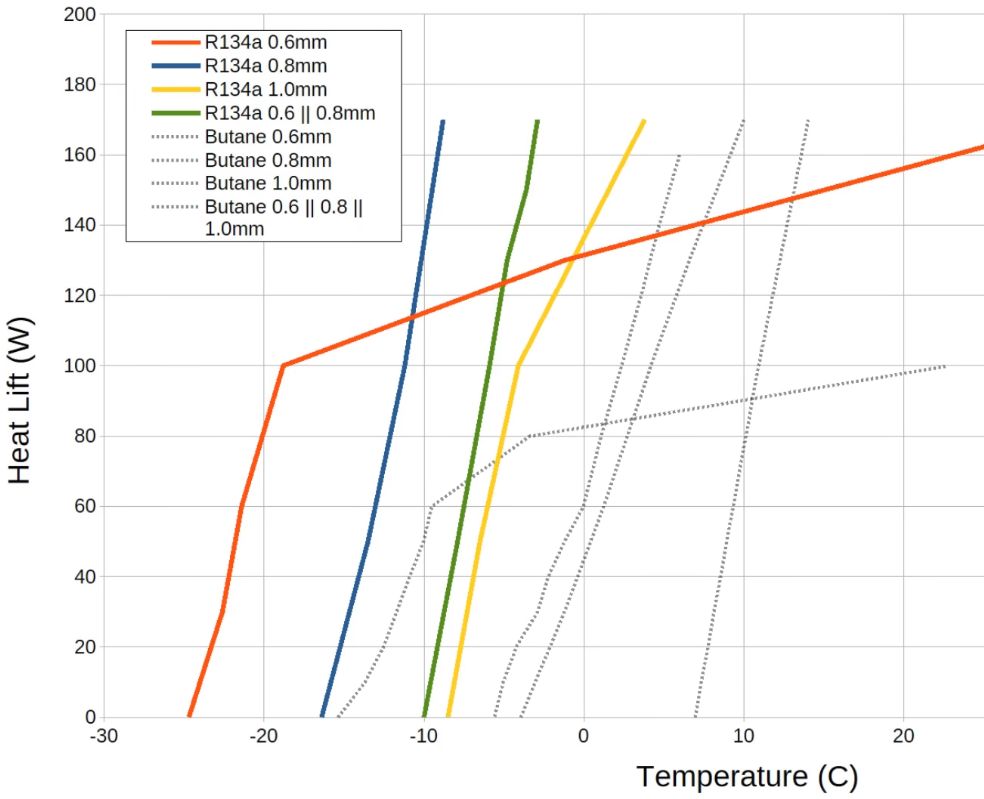
Some of the major components that determine the coefficient of performance (COP) of a heat pump or similar system include the used refrigerant, as well as the capillary tube diameter or expansion valve design. For the testing in the video three refrigerants are used: R600 (N-Butane), R134a (tetrafluoroethene, AKA Freon) and R290 (propane), with R134a being decidedly illegal in places like the EU. The use of R600 instead of R600A is due to the former allowing for a lower pressure system, which is nice for low-power portable systems.
The test rig has the typical fresh-from-the-scrap-heap look that we’re used to and love from [Hyperspace Pirate], but does exactly what it says on the tin, and is easy for any DIY enthusiast to replicate. Which compressor to pick for a specific refrigerant is also covered in the video, along with oil type and more.
For basic systems you’d use a simple capillary tube, whereas an airconditioner or similarly more complex system would use an adjustable valve design. With the rig you can test the efficiency of different tube diameters, with three sizes available in this version. Unfortunately the electronic expansion valve (EEV) that was going to be used didn’t get a chance to shine due to unforeseen events.
With the R134a and butane a COP of 2.0 – 2.5 was achieved when taking power factor into account, which was reasonable considering a compressor was used that targets R134a. Regardless, if you have ever felt like repurposing that old compressor from a fridge or AC unit, this might be a fun afternoon project.












Dude, you need to vary the LENGTH of the capillary tube as well. And be careful, it’s not a linear effect.
I think hyperspace pirate knows this. I also think the point of this is having a rig to test these things. Geometry also matters.
I’m just going to say it. Hsp is my brother/sister from another mother. Huge respect for all their work doing thermodynamics experiments at home. People ignore thermo, I think because it’s kind of dangerous, but there is a lot to be explored
Could you elaborate on that?
the capillary tube is there to regulate the flow of the refrigerant, both the diameter and the length affects the flow rate
On a quick search, two capillary tubes should have equivalent effect on fluid flow if their r^4/L is equal.
For refrigeration, the equivalence is very approximate because the working fluid boils inside the tube and it’s essentially two different fluids that behave differently, but the equivalence is still much more sensitive to the inner diameter of the tube than the length of it, so it makes sense to test different diameters rather than different lengths.
” R134a AKA Freon” Absolutely false. There are several refrigerants that fall under the Freon trademark. It was originally for R12 but expanded to include others. Also it was a DuPont trademark prior to Chemours purchasr of Duponts refrigerant division.
yep, and plenty people wrongly called all refrigerants freon
I still Xerox stuff all the time, and ask for a Kleenex when I get a runny nose…
Well Chemours (spin-off from DuPont that coined the name Freon) – they call it Freon, soo … https://www.freon.com/en/-/media/files/freon/freon-134a-product-information.pdf?rev=c1c8d6f1c66441fd872f74a0580e0e70
R134a is not illegal in the EU. You are free to use existing machines that have it, but you won’t be able to buy a refill. Production, import, and sale are restricted, not possession.
existing systems can still be refilled