
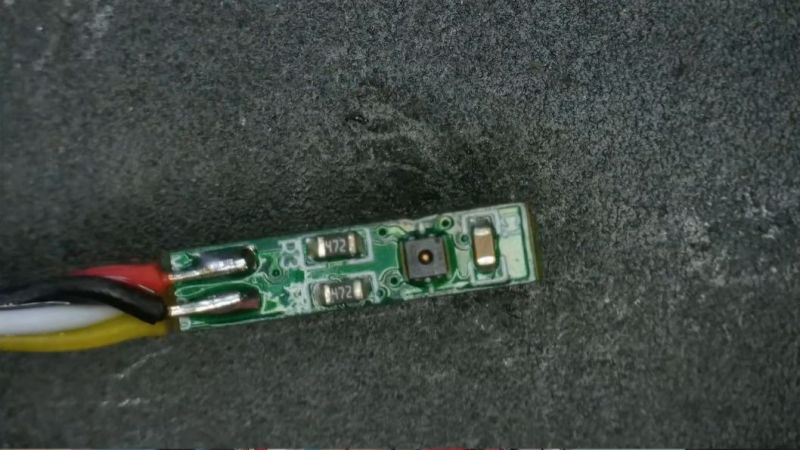
An often overlooked section in the datasheets for popular humidity sensors like the BME280 and DHT22 is the ‘non-condensing humidity’ bit, which puts an important constraint on which environments you can use this sensor in. This was the painful lesson that [Mellow Labs] recently had to learn when multiple of such sensors had kicked the bucket after being used in a nicely steamed-up bathroom. Fortunately, it introduced him to sensors that are rated for use in condensing humidity environments, such as the SHT40 that’s demonstrated in the video.
This particular sensor is made by Sensirion, and as we can see in the datasheet it features a built-in heater that allows it to keep working even in a condensing environment. This heater has three heating levels which are controlled via the I2C interface, though duration is limited to one second in order to prevent overheating the sensor.
Of note is that you cannot take measurements while the heater is operating, and its use obviously increases power draw significantly. This then mostly leaves when to turn on the heater as an exercise to the engineer, with [Mellow Labs] opting to start the heater when relative humidity hit 70% as a conservative choice.
In the comments to the video other options for suitable sensors were pitched, including the Bosch BME690 which is similarly rated for condensing environments. All of which condenses down to the importance of reading the datasheet for any part that you intend to use in possibly demanding environments.












I haven’t had any problem running BME680s, BME280s, and DHT11s in a basement that is routinely at 98% humidity, if not more. Nor do I have problems with running ESP8266s and Arduino Nanos in those environments. Generally electronics are not the places humidity condenses because they tend to be slightly warmer than the environment even without a heater.
If RH is always below 100%, you’re not going to have condensation, by definition.
It’s only when RH goes above 100% that there’s a problem, and that happens when there are large temperature swings which drop the ambient temperature below the dew point. A basement, which has relatively constant moisture and temperature levels, is rarely if ever going to have that happen.
A bathroom, which artificially drives the room temperature, humidity, and dew point up temporarily and then drops the temperature back down to external ambient quickly, will absolutely cause condensation unless you actively control the humidity (via a fan-driven exhaust) or you control the temperature (by keeping a heater on.) Self-heating from electronics is not sufficient in that environment.
I would call 98% humidity in the basement, a problem in itself.
Could orientation of the sensor mitigate failure in these environments? Facing the sensor down for instance? Haven’t used these sensors much, so don’t know if this is a silly question.
Solution is easy, gonna use a BME280 in condensing moisture? Wrap one layer of white plumbers tape (PTFE) over the hole
A coat of epoxy glue over the sensor solves all condensation problems and also protects it from accidental bumps etc
that is totally not a solution… tape will soak up humidity and report error value… but i used BME280s, 680s and sht3x and 4x in outdoor enviroments and they are fine for over years of usage… just put a coating around on the PCB and it will be fine.
Wait, how does that help? Is PTFE tape letting the air through?
Yes it does. The moisture resistant sensors often have a PTFE membrane on top. One layer and white not pink, it has zero impact on response time too. Lookup Goretex for how it works. I regularly fly these in thunderstorms with PTFE tape on, and also go into rain at ground level on top of a vehicle, it works.
Ten bucks, no need to re-invent the wheel. HM1500LF.
https://media.digikey.com/pdf/Data%20Sheets/Measurement%20Specialties%20PDFs/HM1500LF.pdf
The response curve and error for the HS1101LF are not defined under 10% and over 95% RH.
I have long since capitulated to the elements, so replace all of my Bosch sensors annually. All of my weather stations and controller boards get changed out. Where I live, we have approx 39 day/year where a 100%RH is legit and condensing, and approx 8 day/year of single-digit RH.
Starting last summer, I am testing Sensiron stuff in parallel with my existing designs.
That is an entirely different part.
But the point applies to both. It’s not defined because getting so close to condensing conditions makes this type of a sensor unreliable anyhow. It actually shows values beyond 100% RH which have some relation to how much water is condensing on the sensor, but the exact amount is unknowable. The issue is that condensation isn’t strictly on/off at 100% RH – it depends on how hygroscopic the sensor surface is, or whether it’s colder or hotter than the air… etc.
Have been using BME280 in my cold garage for probably four years now and not one has failed. I have the sensor mounted with the hole downwards to prevent condensation from dropping in. Two identical measurement nodes so I swap them out after a high moisture period and let it dry out properly indoors.
DHT22 did fail despite this.
I live in an environment that for many months of the year does 98%+ humidity – and have never had a problem with esp32’s etc, or BME280.
And it IS typically a condensing environment – if I leave the doors and windows open overnight I’d get up in the morning to find both the walls and floor wet..
So the 70% mentioned in the article is actually pretty low – we are down to that today but only because we are at the start of the dry season..
What we do have problems with is most TV’s don’t last anywhere as near as long as they should, and some brands are completely no go.
He missed a great opportunity… “The rest of this clip is on my onlyfans!” :-)