It’s difficult to overstate just how transformative the RTL-SDR project was for the hobbyist. It wasn’t that software-defined radios didn’t exist before that, of course. It’s that folks like us didn’t have access to them. Suddenly any hacker or maker with $20 to spare could peek in on how all sorts of devices were talking to each other, and we’re still seeing the practical applications of this new capability more than a decade later.
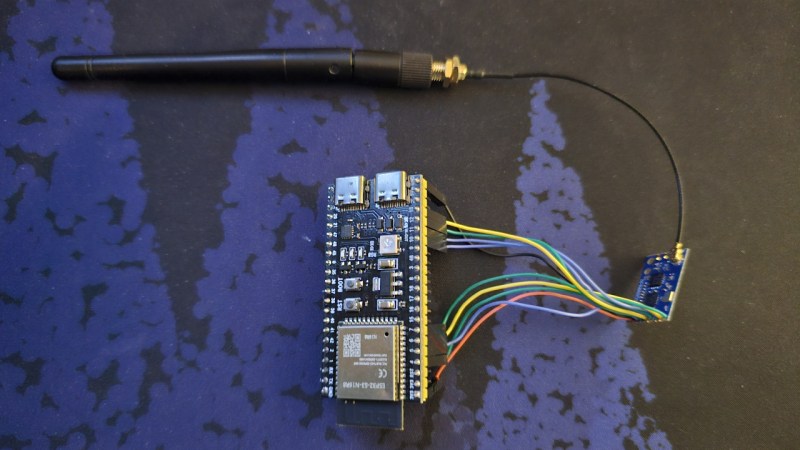
But snooping on higher frequencies usually requires considerably more expensive gear, which is the problem that [Henrikbiscuit] recently ran into. He wanted to hook the Lindby Velua ceiling light into Home Assistant, and that meant cloning the signals being sent by its 2.4 GHz remote. Without the benefit of an SDR that could listen in on something that high, he ended up doing it with nRF24 and CC2500 transceiver chips connected to an ESP32.
Conceptually, this would seem fairly straightforward. After all, these are the sort of chips that would normally be used for consumer gadgets that wanted to talk on 2.4 GHz. But you’ve still got to figure out what the remote is sending out over the air, and doing that without the benefit of something like Universal Radio Hacker can be daunting.
Continue reading “RF Remote Cloning Without The Benefit Of An SDR”