
Shmoocon 2006: Cardbus Bus-Mastering: 0wning The Laptop

shmoocon

David Hulton (h1kari) talked about the implications of cardbus bus-mastering. It goes pretty much hand-in-hand with David Maynor’s USB direct memory access work. The idea is using bus-mastering to take over other PCI devices, download passwords and keys from memory, unlock screensavers, and plant memory-based or firmware-based trojans. So, what kind of device could do all this? David works for Pico Computing which is developing cardbus based FPGAs. They’re pretty cool little devices and for dedicated tasks like brute force cracking they’re really efficient. Check out OpenCiphers for details on using FPGAs with modern cryptography. Unfortunately h1kari didn’t have a demo, but David Maynor was there to talk about his USB stuff. An interesting tidbit was what USB device he used for his exploration: a Motorola MPx200. It was released before the USB 2.0 spec was finalized so the phone was designed to have its USB firmware upgraded, handy for hacking.

Continue reading “Shmoocon 2006: Cardbus Bus-Mastering: 0wning The Laptop” →
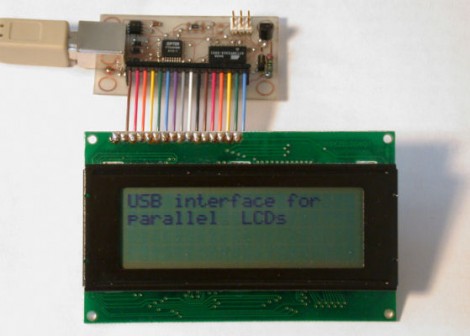
USB Interface For Parallel LCDs

Pontus Frönder has put together a really simple USB interface for any LCD that uses the HD44780 controller. He used a USB chip from FTDI that creates a virtual COM port on the host computer. This is connected to an Atmel ATtiny2313 which controls the LCD. The AVR has two PWM outputs that are used to control the backlight and contrast. If the current draw of the backlight is low enough it can be driven directly from the USB and since it looks like a standard serial display you can talk to it using programs like LCD Smartie.

Continue reading “USB Interface For Parallel LCDs” →

Shmoocon 2006: VoIP WiFi Phone Security Analysis

shmoocon

Shawn Merdinger gave a presentation on his personal research project covering the security of VoIP WiFi phones. For his initial investigation he is employing a “level one” methodology. These would be attacks from a low to medium skilled hacker, a hacker’s “first look” at the device: looking for open ports, finding developer left-overs, and misusing features. One thing that was common across all phones is how easily they succumb to DOS attacks. He talked about the issues with several specific phones. Many left open port 17185, which is the VxWorks database debug port. The favorite was the Clipcomm CPW-100E which provides unauthenticated access to debugging accounts letting you read call logs and even place calls, turning it into a remote listening device. You can hear Shawn talk about his project on Blue Box Podcast #13. Blue Box also has a copy of Shawn’s detailed slides. Here’s a list of the new phone security threats released a Shmoocon.

Continue reading “Shmoocon 2006: VoIP WiFi Phone Security Analysis” →

Shmoocon 2006: Anonym.OS: Security And Privacy, Everywhere You Go

shmoocon

kaos.theory’s Anonym.OS was probably the most widely covered project to come out of this year’s Shmoocon. This was spurred by Wired’s article which was picked up by Slashdot, Ars, and others. Anonym.OS is a live CD based on OpenBSD 3.8 that provides anonymous internet access and aims to be usable by anyone. On the network it appears as a Windows machine to hide among the majority of internet users. The CD does several things to protect the user, starting with secure operating system. The main component is Tor, which we’ve covered before, All traffic is sent through Tor and since the disk uses local DNS look-up you don’t have to worry about DNS requests leaking. I really like this project because kaos.theory has done all of the dirty work like setting up really strict packet filter rules and forcing everything through Tor. Of course, I would have liked it even if it was just an OpenBSD live CD that used Fluxbox. The only two apps it has now are Firefox and GAIM. They are taking suggestions for what to add in the future and will probably be adding cryptographic filesystem support so that users can save safely. If they added Gimp and a hard drive install script I would be using this at every con I attended.

Continue reading “Shmoocon 2006: Anonym.OS: Security And Privacy, Everywhere You Go” →

RoboMaid Robot

robomaid

The RoboMaid (warning sound) really has nothing robotic about it. The website proclaims “smart sensor technology” and “programmable”. It’s actually just a Weasel Ball in a cage. Reader [Perry Cain] decided to keep the cage and add some real electronic brains if the form of a Prallax kit. The robot has 5 IR pairs: 2 in front, 2 on the side and one in the back. He says it works pretty well, but he hasn’t added detection to keep it from going down the basement steps yet.

Continue reading “RoboMaid Robot” →

How-to: PSP 2.00-2.60 Homebrew With ELoader

eloader
Thanks go to sometimes hacker, C.K. Sample, III, author of PSP Hacks for contributing this how-to.

So you’ve heard about this homebrew thing that all the cool kids have been doing, but you have already upgraded to version 2.6 of the firmware so that you could play all the latest and greatest games on the PSP. Fortunately for you, some very diligent hackers have been working round the clock to discover ways to get around the limitations put in place by the latest firmware.

The solution isn’t in the form of a downgrader, but rather in the form of an eLoader (EBOOT loader) that lets you use Grand Theft Auto: Liberty City Stories to run homebrew on a PSP with version 2.0, 2.01, 2.5, and 2.6 of the firmware. Not all homebrew will run via this method, but there is a rather easy to read compatibility chart and I’m sure more things will begin working in future releases of the eLoader.

To help you along in your quest to homebrew, here’s a step by step (with pictures!) guide to using the eLoader:

Continue reading “How-to: PSP 2.00-2.60 Homebrew With ELoader” →

Shmoocon 2006: A Young Gentleman’s Primer On The Reading And Emulation Of Magnetic Cards

shmoocon

If you payed attention to the comments on our story about a Magnetic stripe card emulator you would have seen Abend announce his Shmoocon talk. It was a pretty interesting talk about the basics of mag cards and some of the tricks employed by companies to obfuscate the data. To get the feel for the talk I suggest you listen to SploitCast #004 which features Abend as a guest. That combined with his slides and tools should give you a fine crash course in the technology. He also recommend’s Count Zero’s “A Day in the Life of a Flux Reversal“. Billy Hoffman, who did the Covert Crawler, has also worked with mag stripes and developed the program Stripe Snoop.

Continue reading “Shmoocon 2006: A Young Gentleman’s Primer On The Reading And Emulation Of Magnetic Cards” →








